Free Support 24/7
011 208 1308

Free Support 24/7
011 208 1308

ratings: ★★★☆☆ (3.8/5)
Genre: Buddhist History, Comparative Religion, Religious Studies
Book Review:
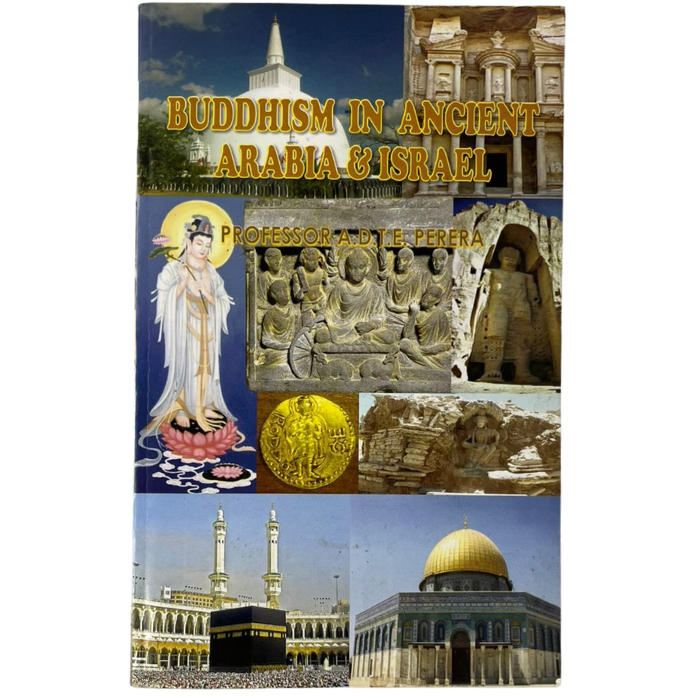
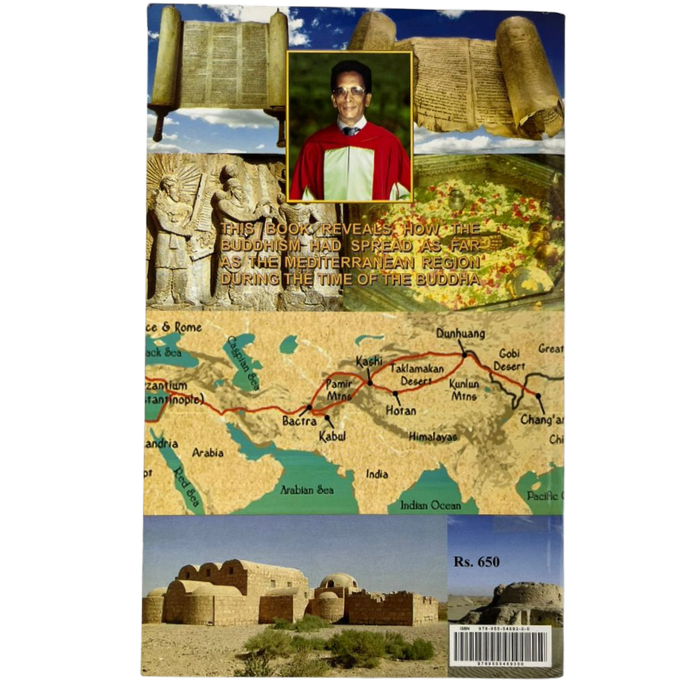
Professor Adi E. Perera's ''Buddhism in Ancient Arabia & Israel'' is a bold and provocative work that challenges conventional geographical boundaries of Buddhist history. The book's central thesis, announced on its cover, is that Buddhism had spread as far as the Mediterranean region during the time of the Buddha himself—a claim that places it firmly in the realm of speculative and diffusionist historiography.
The book's contents read like a series of exploratory essays, each chapter tackling a specific figure, place, or concept that the author believes shows evidence of Buddhist influence. Topics range from the missions of Punna Thera and the location of ancient monasteries like Samudragiri Vihara and Matulagiri Temple, to more startling propositions: that ''God and Allah is Buddha,'' that Zoroaster was a Buddhist monk, and that there are Buddhist connections to the phrase ''Allahu Akbar'' and the figure of Jesus.
Professor Perera's approach is to draw connections across vast distances and cultures, suggesting that Buddhist ideas and even monks traveled to and influenced the ancient Near East. The book includes a map that traces potential routes from the Indian subcontinent across Arabia towards Byzantium and the Mediterranean, visually representing the book's core argument.
This is not a work of mainstream academic consensus, and its conclusions will be highly controversial for most historians of both Buddhism and the ancient Middle East. The evidence presented is often circumstantial, and the methodology relies heavily on linguistic and thematic parallels that may be coincidental.
For readers interested in the farthest reaches of diffusionist theories or in exploring unconventional connections between world religions, this book will be a fascinating, if contentious, read. It is a testament to the desire to find hidden links and to imagine a more interconnected ancient world. However, it should be approached with a critical mind and read alongside more standard historical accounts.