Free Support 24/7
011 208 1308

Free Support 24/7
011 208 1308
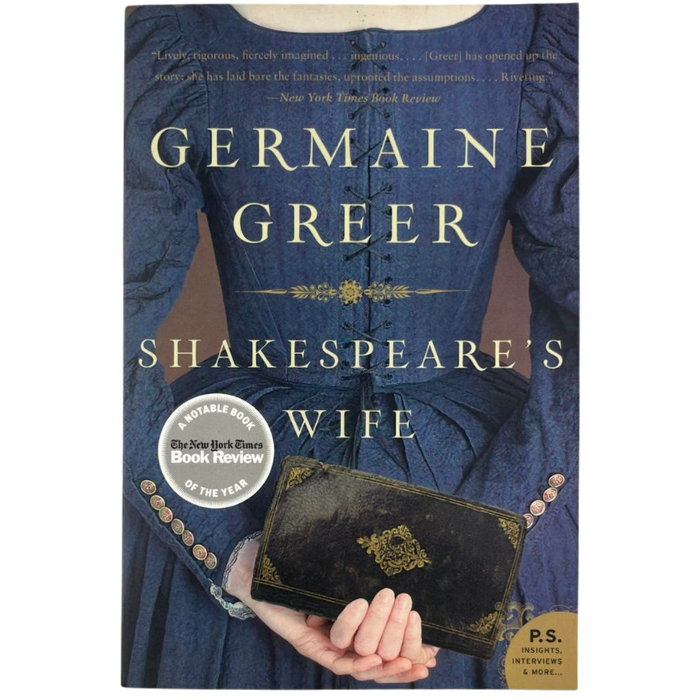

Ratings: ★★★★☆ (4.2/5)
Genre: Biography, History, Literary Criticism, Women's Studies, Non-Fiction
Book Review:
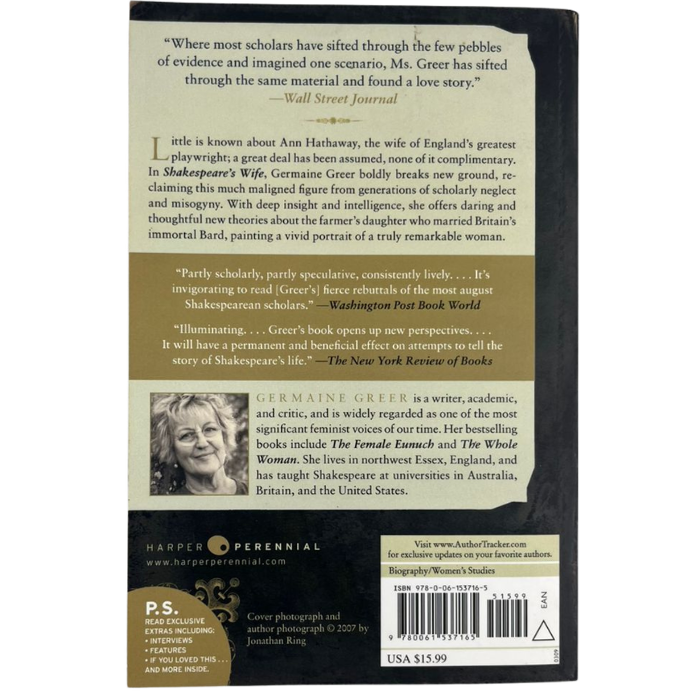
For centuries, the life of William Shakespeare has been scrutinized, analyzed, and mythologized. But what about the woman he married? Anne Hathaway has been relegated to the footnotes of history, a shadowy figure often dismissed as a much older woman who trapped the young genius into a hasty marriage. In Shakespeare's Wife, the legendary feminist writer Germaine Greer sets out to rescue Hathaway from this obscurity and misogyny, offering a daring and passionate reclamation of a life that has been unjustly forgotten.
Greer, never one to shy away from controversy, takes on the entire edifice of Shakespearean scholarship. She argues that the traditional portrait of Hathaway is based on flimsy evidence and deeply ingrained prejudice. The famous ''husband'' that Shakespeare supposedly left to his wife in his will—his ''second-best bed''—has been interpreted as a snub, but Greer shows that this was a common and meaningful bequest. The assumption that their marriage was unhappy is based on little more than the fact that Shakespeare spent most of his working life in London, but Greer points out that this was a common arrangement for men of his profession, and that Hathaway was likely a capable and independent woman managing the family home and business in Stratford.
Greer is not a conventional biographer. She admits that there is little direct evidence about Hathaway's life, and she fills in the gaps with imaginative speculation, drawing on a deep knowledge of Elizabethan social history. She paints a vivid picture of what life was like for a woman of Hathaway's class—the daughter of a yeoman farmer, a mother, a household manager. She explores the realities of marriage, childbirth, and daily life in a small market town. She shows us a world where women were far from passive, where they worked hard, made decisions, and held families together.
The result is a book that is partly scholarly, partly speculative, and consistently lively. Greer's prose is energetic, witty, and fiercely intelligent. She is not afraid to challenge the most august Shakespearean scholars, and her arguments are always thought-provoking, even when they are not entirely convincing.
Shakespeare's Wife is not a definitive biography; it is a brilliant and provocative essay, a feminist intervention in a field that has long been dominated by male assumptions. It will change the way you think about Shakespeare, about his marriage, and about the invisible women of history. As the Wall Street Journal noted, ''Where most scholars have sifted through the few pebbles of evidence and imagined one scenario, Ms. Greer has sifted through the same material and found a love story.'' A fascinating and essential read.