Free Support 24/7
011 208 1308

Free Support 24/7
011 208 1308

Ratings: ★★★★★ (5/5)
Genre: Science / Cosmology / Physics
Book Review:
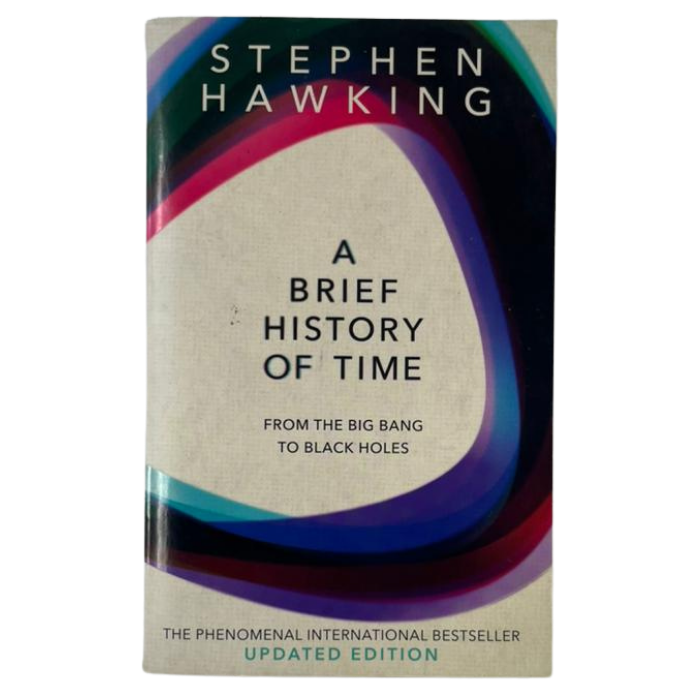
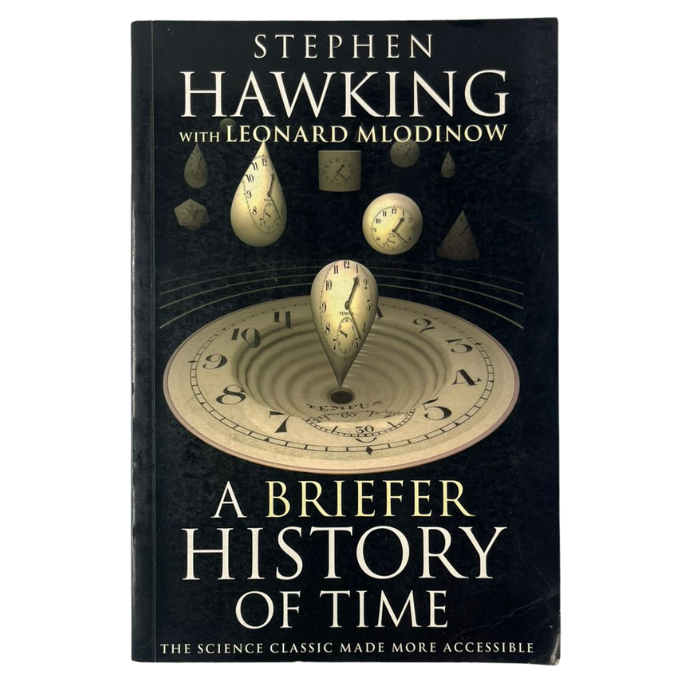
When Stephen Hawking's ''A Brief History of Time'' was published in 1988, it became a phenomenon—a book about the most complex questions of modern physics that sold millions of copies and spent years on bestseller lists. But as Hawking himself acknowledged, many readers found it challenging. The concepts were difficult, and some struggled to follow the argument. ''A Briefer History of Time,'' written with physicist Leonard Mlodinow, is Hawking's response to those readers: a revised, reorganized, and more accessible version of the classic work.
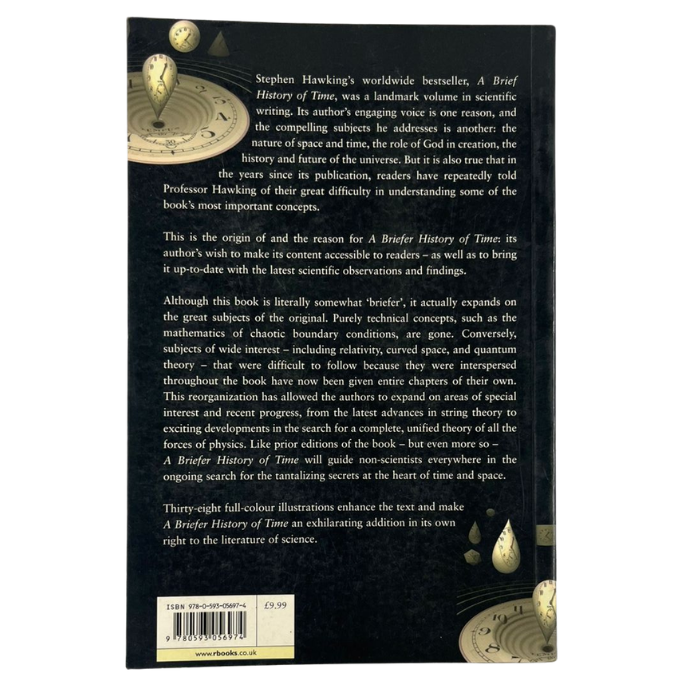
The book covers the same ground as the original: the nature of space and time, the expansion of the universe, the Big Bang, black holes, quantum mechanics, and the search for a unified theory that would explain all the forces of physics. But the presentation has been transformed. Purely technical concepts, such as the mathematics of chaotic boundary conditions, have been removed. Topics that were scattered throughout the original—relativity, curved space, quantum theory—now have their own chapters, allowing readers to focus on what interests them most.
The result is a book that retains the sweep and ambition of the original while being genuinely easier to follow. Hawking's voice—wry, curious, humble in the face of the universe's mysteries—comes through clearly. He writes not as a distant authority but as a fellow explorer, sharing what we know and acknowledging what we don't.
The addition of thirty-eight full-color illustrations is a significant enhancement. Diagrams help visualize curved space and black holes. Images from telescopes show the universe at different scales. These illustrations aren't decorative; they're integral to the explanation, making abstract concepts concrete.
For readers new to Hawking's work, this is the ideal starting point. It covers the essential ideas without the technical density of the original. For those who struggled with ''A Brief History of Time,'' it offers a second chance to engage with these profound questions. And for longtime fans, it provides updates on recent developments, from string theory to advances in cosmology.
What makes Hawking's writing so powerful is his ability to convey both the wonder of scientific discovery and the humility of scientific ignorance. He shows us how much we have learned about the universe—and how much remains unknown. The questions he addresses are the biggest ones: Where did we come from? How did the universe begin? Will it ever end? Is there a God who set it all in motion? He doesn't pretend to have all the answers, but he illuminates the path we've taken in seeking them.
''A Briefer History of Time'' is a gift to curious readers everywhere. It reminds us that science is not a collection of facts but a way of asking questions, a journey into the unknown. Hawking's voice, so distinctive and so human, guides us on that journey with clarity and warmth. This book deserves a place on the shelf of anyone who has ever looked up at the stars and wondered.