Free Support 24/7
011 208 1308

1 ×LKR 800.00
1 ×LKR 2,000.00
1 ×LKR 800.00
1 ×LKR 700.00
Free Support 24/7
011 208 1308

ratings: ★★★★★ (4.7/5)
Genre: Autobiography, Political Biography, Indian History
Book Review:
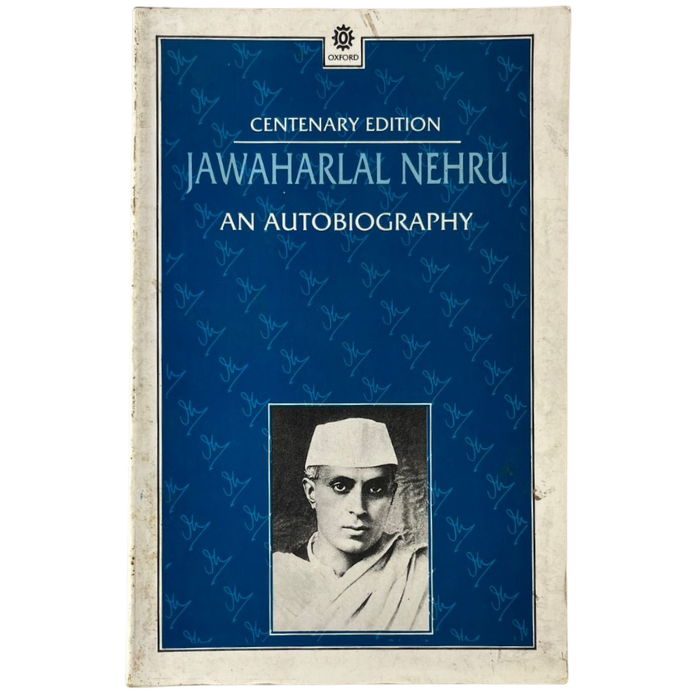
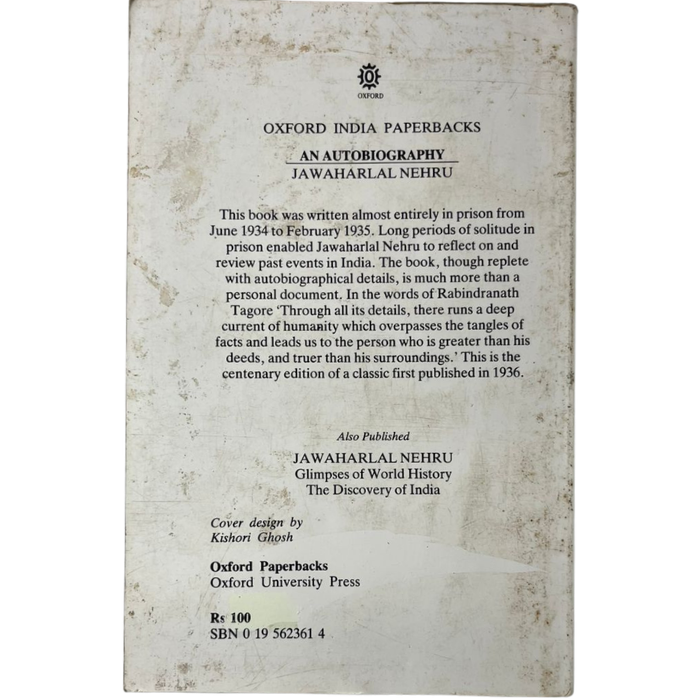
Jawaharlal Nehru's ''An Autobiography'' is far more than the personal recollections of a political leader; it is a classic of modern Indian literature and an indispensable window into the soul of a nation in the making. This Centenary Edition from Oxford University Press, first published in 1936, restores a foundational text to its rightful place.
Written almost entirely during Nehru's imprisonment between June 1934 and February 1935, the book is a product of enforced solitude and deep reflection. The long periods away from the political fray allowed him to step back and review not only his own life's journey but the tumultuous events unfolding in India under British rule.
While rich in autobiographical detail—tracing his education at Harrow and Cambridge, his entry into the legal profession, and his deepening involvement in the Indian National Congress—the book transcends the personal. As Rabindranath Tagore beautifully expressed, ''Through all its details, there runs a deep current of humanity which overpasses the tangles of facts and leads us to the person who is greater than his deeds, and truer than his surroundings.''
Nehru writes with a remarkable blend of intellectual honesty, emotional depth, and political passion. He grapples with his own doubts and evolving ideologies, offering candid portraits of his colleagues, including Mahatma Gandhi, and his complex relationship with the movement for independence. The reader gains insight into the inner conflicts, the strategic debates, and the profound human cost of the freedom struggle.
This is not merely a historical document; it is a deeply human story of conviction, sacrifice, and the shaping of a political consciousness. For anyone seeking to understand modern India, the mind of its first Prime Minister, or the universal experience of striving for freedom, Nehru's ''Autobiography'' remains an essential and profoundly moving read.

183931-img.png)