Free Support 24/7
011 208 1308

Free Support 24/7
011 208 1308

ratings: ★★★★☆ (4.4/5)
Genre: Buddhist Studies, Indian History, Epigraphy, Archaeology
Book Review:
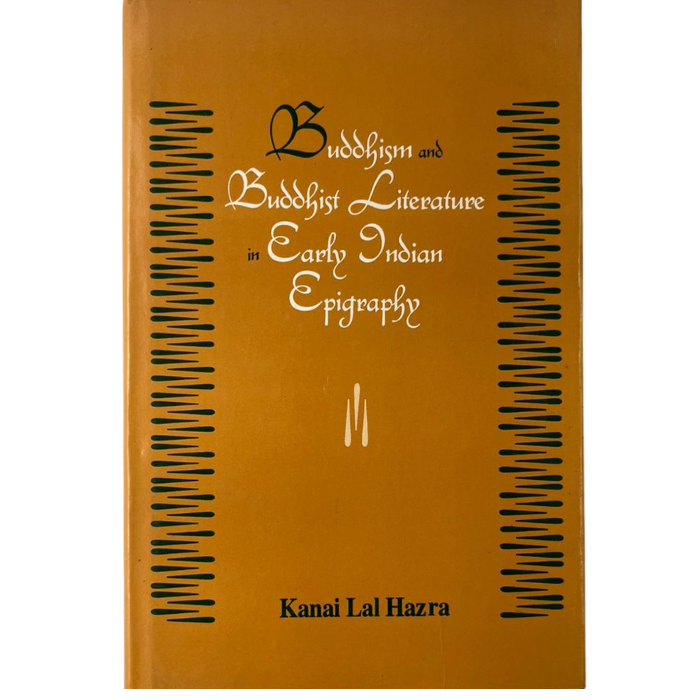
Kanai Lal Hazra's ''Buddhism and Buddhist Literature in Early Indian Epigraphy'' is a meticulous and erudite work that bridges the fields of Buddhist studies and epigraphy. For scholars and serious students, this book offers an invaluable deep dive into the primary source material that illuminates the historical development of Buddhism on the Indian subcontinent.
The book's central premise is to read Buddhism through its own stone records. Hazra systematically examines a vast range of early Indian inscriptions, from the famous edicts of Emperor Ashoka to numerous other donative and dedicatory records found at stupas and monastic sites. By analyzing these texts, he reconstructs a detailed picture of Buddhist history that complements and often enriches the literary traditions preserved in the Pali Canon and other scriptures.
The reader gains insights into the spread of the Dharma, the organization and evolution of the Sangha, the patronage of different Buddhist schools, and the social and economic contexts in which Buddhism flourished. The book also explores references to Buddhist literature found within the inscriptions, shedding light on which texts were valued and disseminated in different periods and regions.
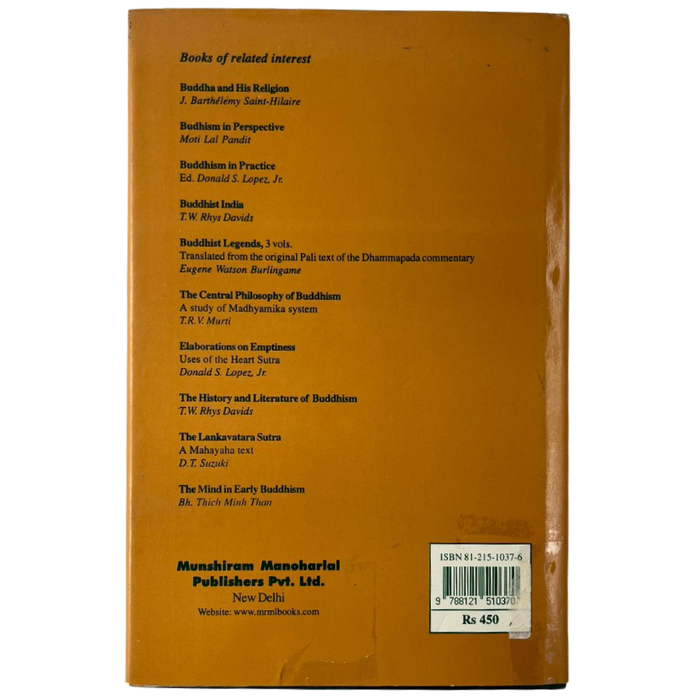
This is a work of serious scholarship, dense with information and carefully argued. It is an essential resource for anyone seeking to ground their understanding of Buddhist history in tangible, non-literary evidence. Published by the prestigious Munshiram Manoharlal, known for its high-quality academic publications, this book is a must-have for university libraries and the personal collections of historians and epigraphists specializing in ancient India and Buddhism.


110606-img.png)