Free Support 24/7
011 208 1308

Free Support 24/7
011 208 1308

ratings: ★★★★☆ (4.3/5)
Genre: Sri Lankan History, Colonial History, Kandyan Kingdom
Book Review:
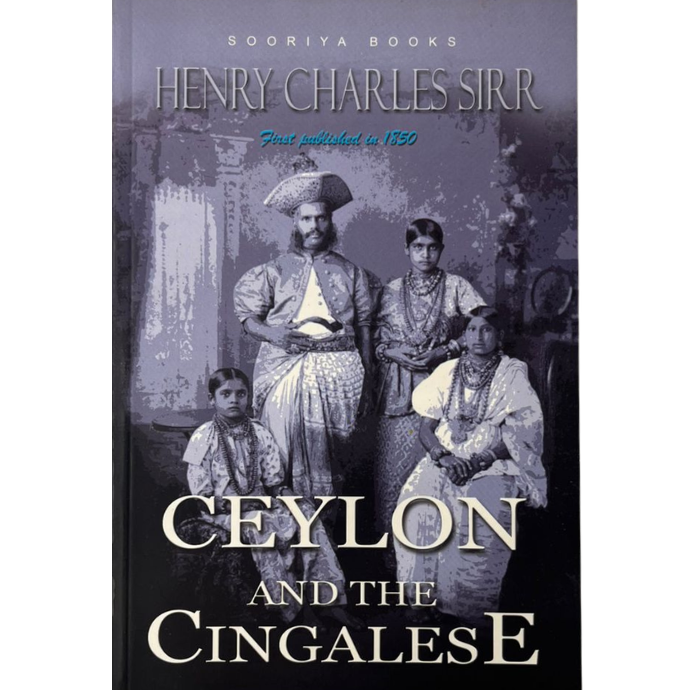
Henry Charles Sirr's ''Ceylon and the Cingalese,'' first published around 1850, is a fascinating historical document that offers a window into both the final days of the Kandyan Kingdom and the perspective of a 19th-century British observer. This reprint by Sooriya Publishers makes this valuable, if sometimes harrowing, account accessible to modern readers.
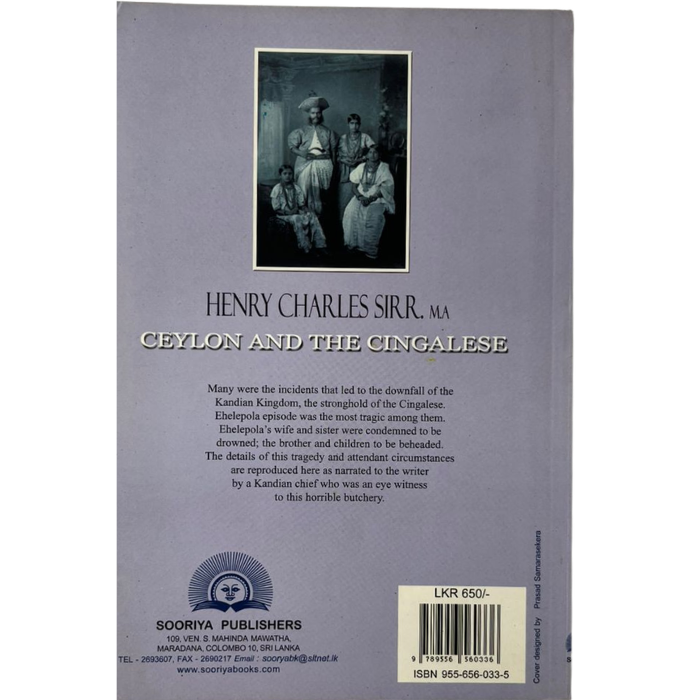
The book's most compelling and enduring section is its detailed narration of the tragic events surrounding the downfall of the Kandyan stronghold. Sirr focuses intently on the Ehelepola episode, one of the most dramatic and brutal incidents in Sri Lankan history. He recounts the story of Ehelepola's wife, sister, brother, and children, who were condemned to a horrific death—the women to be drowned, the men and children to be beheaded—as punishment for the rebel leader's actions.
What gives this account its chilling power is Sirr's claim to have received the details directly from a Kandyan chief who was an eyewitness to the ''horrible butchery.'' This lends the narrative an immediacy and a raw, personal quality that dry historical summaries lack. The reader is confronted with the brutal reality of royal punishment and the tragic human cost of the kingdom's collapse.
While the book must be read with an awareness of its colonial-era context and potential biases, it remains an invaluable primary source. It captures not only a pivotal moment of transition in Sri Lankan history but also the manner in which these events were recorded and interpreted in the mid-19th century. For historians and anyone with a deep interest in the fall of the Kandyan Kingdom, Sirr's work is an essential and gripping read.

182150-img.png)
