Free Support 24/7
011 208 1308

1 ×LKR 400.00
1 ×LKR 1,500.00
1 ×LKR 250.00
1 ×LKR 300.00
1 ×LKR 1,000.00
Free Support 24/7
011 208 1308

Ratings: ★★★★☆ (4/5)
Genre: Biography, Military History, British History, Indian History, Non-Fiction
Book Review:
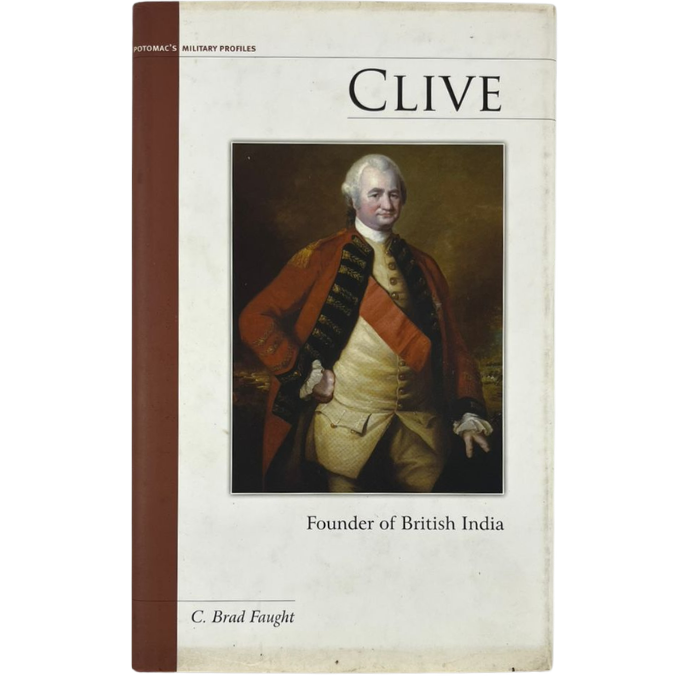
Robert Clive is one of the most controversial and consequential figures in the history of the British Empire. To some, he was a brilliant military commander and statesman, the ''founder of British India'' whose victory at the Battle of Plassey in 1757 laid the foundation for two centuries of British rule. To others, he was a greedy and ruthless imperialist, a man who plundered India's wealth and whose personal excesses symbolized the worst aspects of colonial power. C. Brad Faught's Clive: Founder of British India, part of Potomac's excellent Military Profiles series, offers a concise, balanced, and highly readable introduction to this complex and fascinating man.
Faught traces Clive's remarkable life from his humble beginnings as the son of a minor Shropshire gentleman. As a young man, he was sent to India as a lowly ''writer'' (clerk) for the East India Company, a position he hated. But he soon discovered a talent for military command that would change his life and the course of history. The book vividly recounts Clive's dramatic exploits: his daring defense of Arcot during the Carnatic Wars, his return to England as a hero, and his triumphant return to India, culminating in the decisive Battle of Plassey.
Faught does not shy away from the darker aspects of Clive's career. He discusses the controversial jagir, a large personal fortune that Clive acquired after Plassey, which led to accusations of corruption and a parliamentary inquiry. He also explores Clive's personal demons, his long struggles with depression, and his eventual suicide at the age of 49.
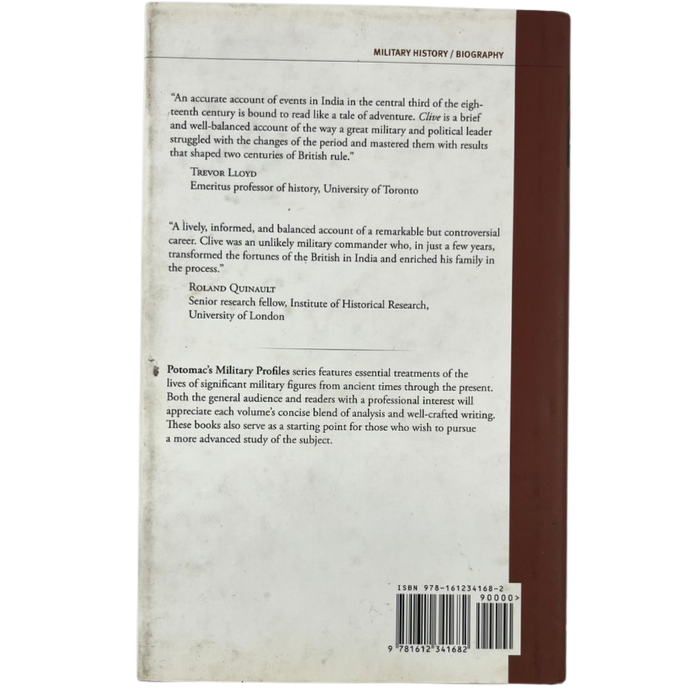
Clive is a well-crafted and informative biography that will appeal to both general readers and students of history. It is a perfect starting point for anyone who wants to understand the life of this pivotal figure and his role in the founding of British India. As Trevor Lloyd, Emeritus Professor of History at the University of Toronto, writes, it is ''a brief and well-balanced account of the way a great military and political leader struggled with the changes of the period and mastered them.'' A solid and engaging read.