

Free Support 24/7
011 208 1308


1 ×LKR 800.00

1 ×LKR 1,000.00

1 ×LKR 400.00
Free Support 24/7
011 208 1308


Ratings: ★★★☆☆ (3.5/5)
Genre: History / Legal History / Criminology
Book Review:
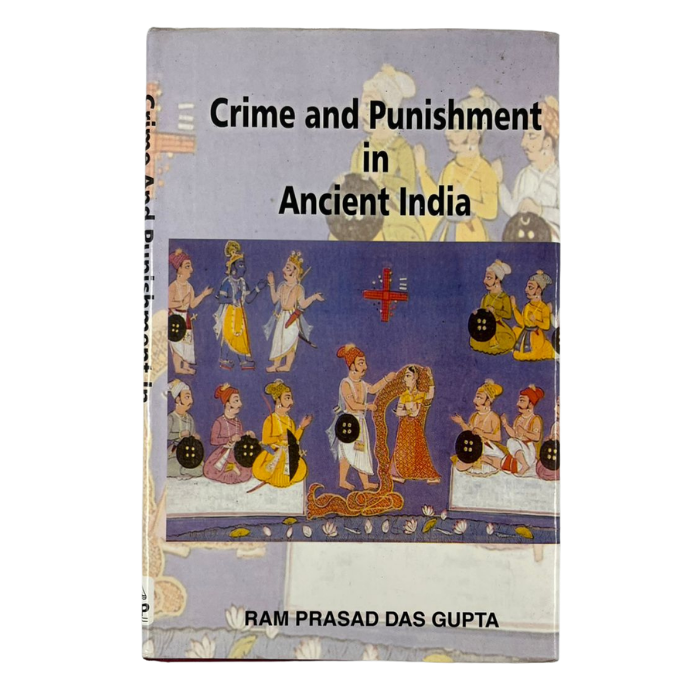
Ram Prasad Das Gupta's ''Crime and Punishment in Ancient India'' is a scholarly exploration of how justice was conceived and administered in the Indian subcontinent thousands of years ago. For readers interested in legal history or the development of social institutions, this book offers a window into a world both distant and surprisingly familiar.
The book draws on ancient Indian texts—the Manusmriti (Laws of Manu), the Arthashastra (treatise on statecraft), the Dharmashastras, and others—to reconstruct the legal systems of ancient India. Das Gupta examines how crimes were classified, from theft and assault to more complex offenses against social order and religious purity. He explores the evidentiary standards, the role of witnesses, and the procedures of judgment. And he catalogs the punishments, which ranged from fines and penance to corporal punishment and execution.
What emerges is a picture of a sophisticated legal tradition that was deeply embedded in broader religious and philosophical frameworks. Law in ancient India was not separate from dharma (righteous duty); it was an expression of it. The punishment for a crime was not merely a penalty but a form of cosmic balancing, a way of restoring order that had been disrupted.
The book's strength is its systematic approach. Das Gupta organizes his material clearly, making it easy to find information on specific topics. His reliance on primary sources gives the work authority, and his citations allow readers to pursue further study.
However, the book shows its age in some ways. The prose is academic and sometimes dry, lacking the narrative flair that might bring the subject to life for general readers. The analysis is descriptive rather than critical; Das Gupta presents what the texts say without much interrogation of their context, bias, or application. And the book assumes familiarity with Indian history and religion that some readers may lack.
The publisher, Bharatiya Kala Prakashan, is a respected Indian academic press, and the production quality is adequate for a scholarly work. The ISBN and barcode indicate a professional publication.
For students of Indian history or legal systems, this book is a useful resource. For scholars specializing in ancient law, it provides a foundation. For general readers, it may be too specialized, though those with a strong interest in the subject will find it rewarding.
''Crime and Punishment in Ancient India'' reminds us that questions of justice are timeless, even as answers vary across cultures and centuries. It is a solid contribution to the history of law in the Indian subcontinent.