Free Support 24/7
011 208 1308

Free Support 24/7
011 208 1308

Ratings: ★★★★☆ (4.3/5)
Genre: Mythology, Cultural Studies, Sociology, Philosophy, Non-Fiction
Book Review:
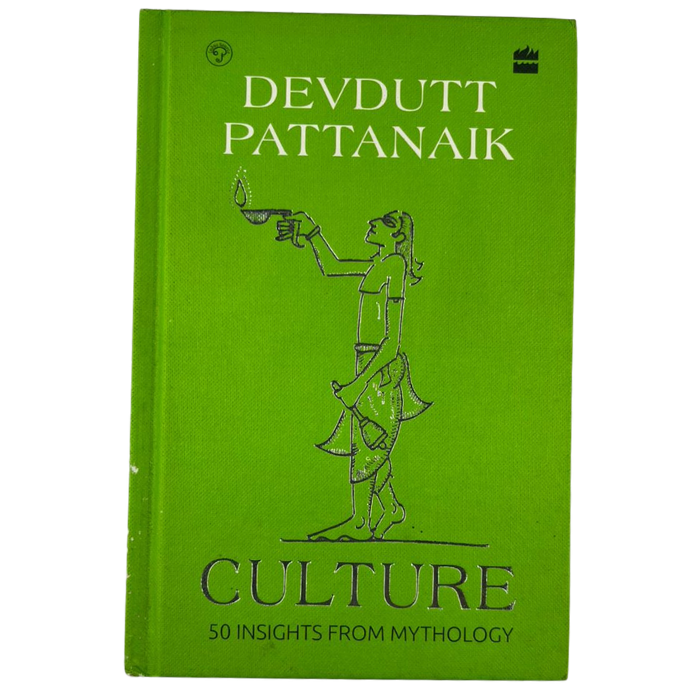
Devdutt Pattanaik is India's most beloved and prolific mythologist, a writer who has dedicated his career to unlocking the secrets of our ancient stories and revealing their profound relevance to modern life. In Culture: 50 Insights from Mythology, he turns his attention to one of the biggest questions of all: how do myths shape the way we live, think, and see the world?
The book is structured as a series of 50 short, accessible essays, each one exploring a different insight into the relationship between mythology and culture. Pattanaik draws on his encyclopedic knowledge of Indian myths—from the Vedas and Puranas to the Ramayana and Mahabharata—as well as stories from Greek, Norse, and other world mythologies. He shows how these ancient narratives are not just entertaining tales, but powerful frameworks for understanding the world.
He explores how different cultures have developed different ideas about good and evil, about the role of the hero, about the nature of time (cyclical in India, linear in the West), and about the meaning of life and death. He examines the role of symbols and rituals in shaping our perceptions and reinforcing cultural values. He asks why some cultures are more individualistic while others are more community-oriented, and he traces these differences back to the stories they tell.
Pattanaik's writing is clear, engaging, and often witty. He has a gift for making complex ideas accessible without oversimplifying them. He doesn't just present information; he invites the reader to think along with him, to question their own assumptions, and to see the world through a new lens. The book is filled with ''aha!'' moments, where a familiar story or concept is suddenly illuminated in a new and surprising way.
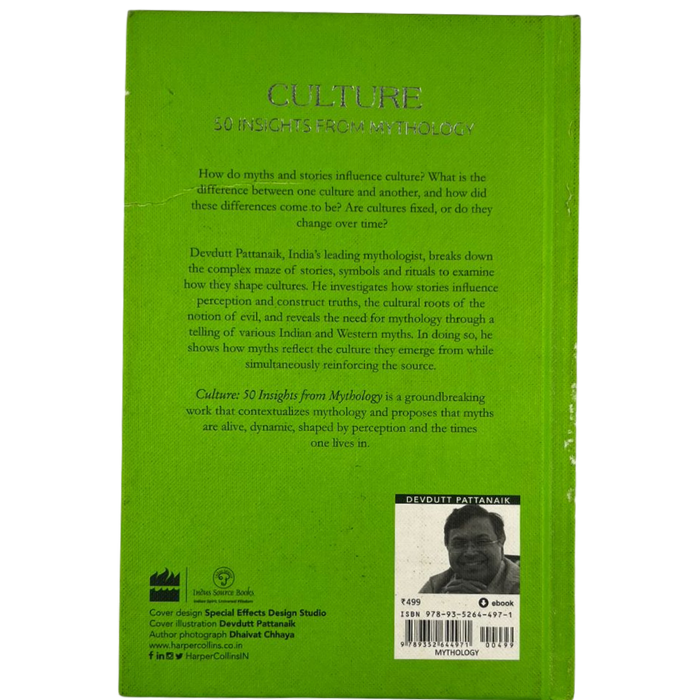
Culture: 50 Insights from Mythology is a groundbreaking work that will appeal to a wide range of readers. It is perfect for anyone interested in mythology, in understanding the roots of their own culture, or in exploring the deep connections between stories and the way we live. It is a book that will make you think, and it will stay with you long after you've turned the final page. As always, Pattanaik proves that myths are not just stories from the past; they are alive, dynamic, and essential for understanding our present and shaping our future.