Free Support 24/7
011 208 1308

Free Support 24/7
011 208 1308


ratings: ★★★★☆ (4.3/5)
Genre: Drama, Tragedy, Classic Literature
Book Review:
If Sophocles shows us the way men ought to be, and Aeschylus shows us the cosmic order, Euripides shows us the world as it really is: messy, cruel, and full of suffering. He was the most controversial of the great Greek tragedians, a playwright who challenged his audience's assumptions, gave voice to the voiceless, and refused to look away from the darkest aspects of human nature. This Penguin Classics collection of five of his plays is a perfect introduction to his troubling, brilliant, and deeply moving work.
Electra is a grim and powerful reimagining of the classic myth of revenge. Years after the murder of their father Agamemnon, Electra and her brother Orestes are reunited. But this is not the heroic, triumphant reunion of Aeschylus's version. Euripides's Electra is bitter and hardened, living in a miserable hut, married off to a peasant. Their plot to kill their mother Clytemnestra is not a glorious act of justice, but a bloody, morally ambiguous act that leaves them shattered.
Trojan Women is perhaps the most famous play in this collection, and one of the most powerful anti-war statements ever written. The play has no real plot. It is simply a series of laments. The Trojan women, after the fall of their city, wait to be assigned as slaves to the Greek conquerors. Hecuba, the aged queen, has lost her husband, her sons, and her city. Her daughter, Cassandra, the prophetess who is never believed, is destined for the bed of Agamemnon. Andromache, the widow of Hector, learns that her infant son is to be thrown from the walls of Troy. The play is a devastating portrait of the human cost of war.
Hecabe continues the story of the Trojan queen. Having already lost everything, she now suffers the loss of her last remaining son, Polydorus, who has been murdered by a supposed ally. Grief-stricken and driven by a thirst for revenge, Hecabe takes matters into her own hands in a shocking and unforgettable climax.
What unites these plays is Euripides's profound sympathy for the victims of war, particularly women. He gives voice to their grief, their rage, and their despair. He shows us the world from their perspective, and he refuses to offer easy answers or comforting moral lessons. His gods are distant and indifferent. His heroes are deeply flawed. His world is a place of suffering and injustice.
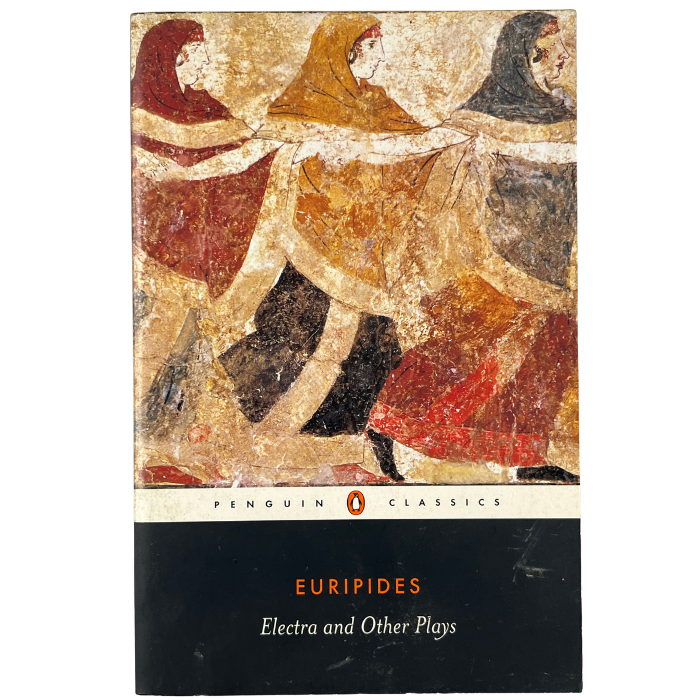
This Penguin Classics edition is superb. John Davie's translation is clear, readable, and captures the emotional power of the original. Richard Rutherford's introduction and notes are scholarly and accessible, providing invaluable context. The cover, a detail from a Roman fresco of women performing a funeral dance, perfectly captures the play's themes of mourning and loss.
Electra and Other Plays is an essential collection for anyone interested in Greek tragedy, classical literature, or simply great drama. Euripides is not always easy, but he is always rewarding. He is the most modern of the ancients, and his plays speak to us across the centuries with undiminished power. Highly recommended.