
Free Support 24/7
011 208 1308

Free Support 24/7
011 208 1308
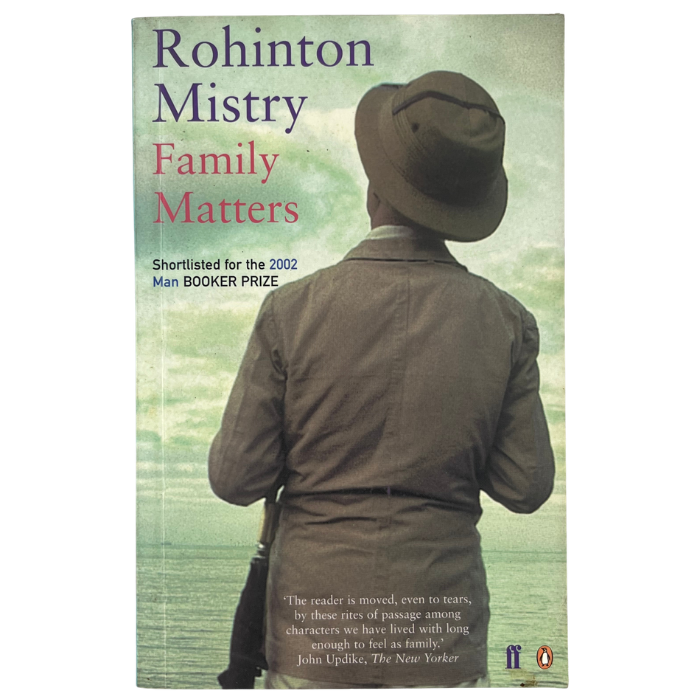
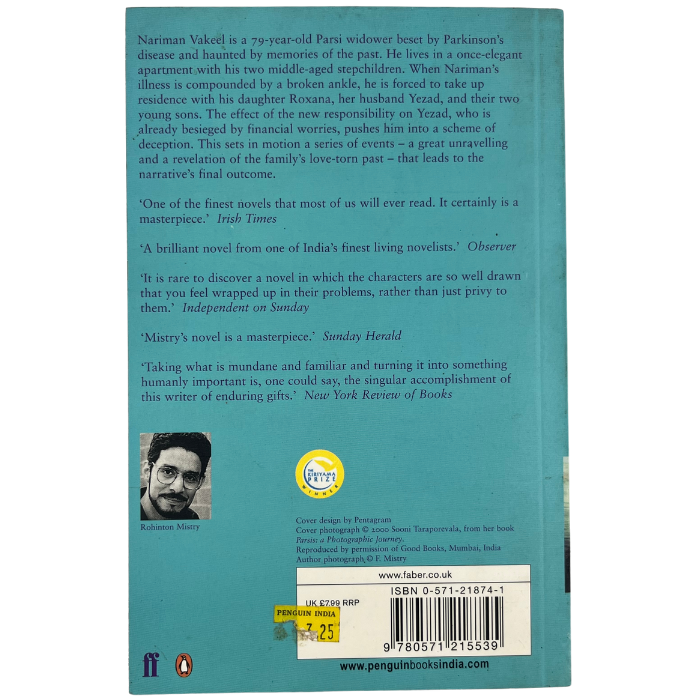

Ratings: ★★★★★ (4.7/5)
Genre: Literary Fiction, Family Saga, Indian Literature, Contemporary Fiction
Book Review:
Rohinton Mistry's ''Family Matters'' is one of those rare novels that reminds you why you fell in love with reading. Shortlisted for the Man Booker Prize in 2002, this is a masterpiece of literary fiction—a deeply moving, exquisitely crafted exploration of family, duty, love, and the quiet tragedies of ordinary life.
The novel opens with Nariman Vakeel, a 79-year-old Parsi widower, living in a spacious but crumbling Mumbai apartment with his two middle-aged stepchildren, Coomy and Jal. Nariman is afflicted with Parkinson's disease, his body betraying him while his mind remains sharp, haunted by memories of a lost love from his youth. When Nariman falls and breaks his ankle, his condition worsens, and Coomy—resentful and burdened—contrives to move him to the cramped quarters of his other daughter, Roxana.
Roxana lives with her husband Yezad and their two young sons in a small apartment, already struggling to make ends meet. Yezad works at a sporting goods store, dreaming of better things but trapped by circumstance. The arrival of Nariman transforms their household—physically, emotionally, and financially. The strain of caring for an elderly, ill parent pushes Yezad toward desperate measures, and his descent into deception forms the novel's central drama.
But ''Family Matters'' is much more than its plot. It's a novel about the weight of the past on the present—the way family history, with all its secrets and wounds, shapes who we become. Through flashbacks, we learn of Nariman's great love for a woman named Lucy, a love thwarted by family pressure and societal expectation, leading to a marriage of convenience that brought misery to everyone involved. These revelations cast long shadows over the present, explaining the resentments and tensions that simmer beneath the family's surface.
Mistry's prose is extraordinary—precise, luminous, and deeply humane. He writes with a patience and attentiveness that allows even minor characters to come fully alive. The boys, Jehangir and Murad, are rendered with particular tenderness; their perspective on the adult world—its mysteries, its injustices, its moments of unexpected grace—provides some of the novel's most poignant passages.
The Mumbai setting is vividly realized. Mistry captures the city in all its chaos and beauty—the crowded streets, the political tensions, the communal violence that periodically erupts, the stark contrast between wealth and poverty. But he never lets setting overwhelm character; the city exists as it does for all of us—as the background against which our private dramas unfold.
What makes ''Family Matters'' truly great is its moral seriousness. Mistry takes seriously the questions that most of us face but rarely articulate: What do we owe our parents? Our children? Ourselves? How do we balance duty and desire? How do we live with the choices we've made? These are not abstract philosophical questions but lived realities for his characters, and Mistry explores them with wisdom and compassion.
John Updike wrote in The New Yorker that ''the reader is moved, even to tears, by these rites of passage among characters we have lived with long enough to feel as family.'' That's exactly right. By the end of this novel, you will feel that you know the Vakeels—that you've laughed with them, worried for them, mourned with them. And you will be richer for the experience.
''Family Matters'' is a masterpiece—one of the finest novels of the twenty-first century. If you haven't read Rohinton Mistry, start here. You'll be grateful you did.