Free Support 24/7
011 208 1308

Free Support 24/7
011 208 1308
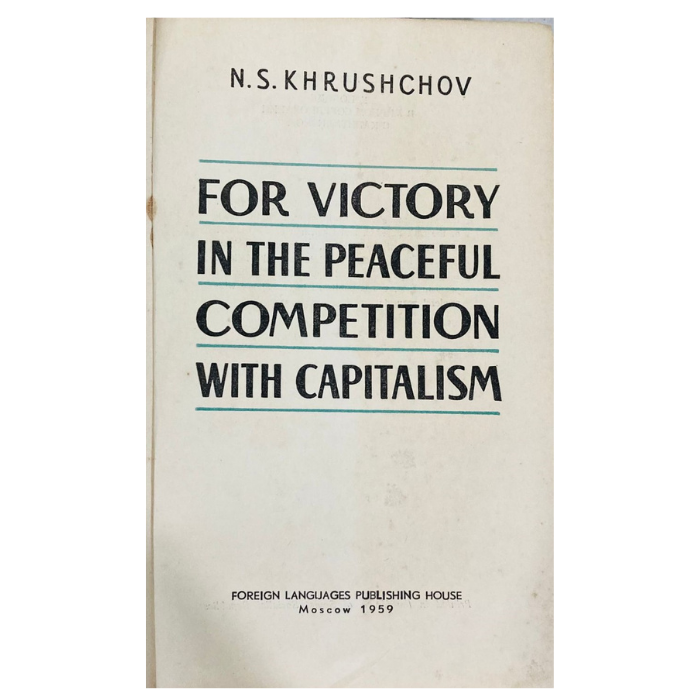

Genre: Political Speech, Communism, Cold War History, Propaganda, Non-Fiction
Rating: ★★★☆☆ (3/5)
Book Review:
For Victory in the Peaceful Competition with Capitalism is a translated collection of speeches or writings by Soviet Premier Nikita Khrushchev, published in 1959 at the height of the Cold War. The title captures the essence of Khrushchev’s policy of “peaceful coexistence”—the idea that the Soviet Union could compete with the capitalist West economically, technologically, and ideologically without direct military conflict.
As a primary document from the Soviet state press, this book offers a direct window into the rhetoric, ambitions, and self-presentation of the USSR during a period of intense geopolitical rivalry. Khrushchev argues for the superiority of the socialist system, predicting its inevitable triumph through achievements in industry, science, and living standards. The tone is confidently polemical, blending ideological assurance with strategic messaging aimed at both domestic and international audiences.
For historians, political scientists, and students of the Cold War, this text is a valuable artifact. It reveals not only Soviet propaganda techniques but also the themes and anxieties of the era: the space race, economic planning, cultural competition, and the battle for influence in the developing world.
However, it is not an analytical or balanced work—it is a piece of political advocacy from one side of the Iron Curtain. Readers should approach it as a historical source rather than an objective study. Its interest today lies largely in its symbolic value as a relic of a bygone ideological struggle, making it a compelling addition to any collection focused on 20th-century political history or Soviet studies.