Free Support 24/7
011 208 1308

Free Support 24/7
011 208 1308
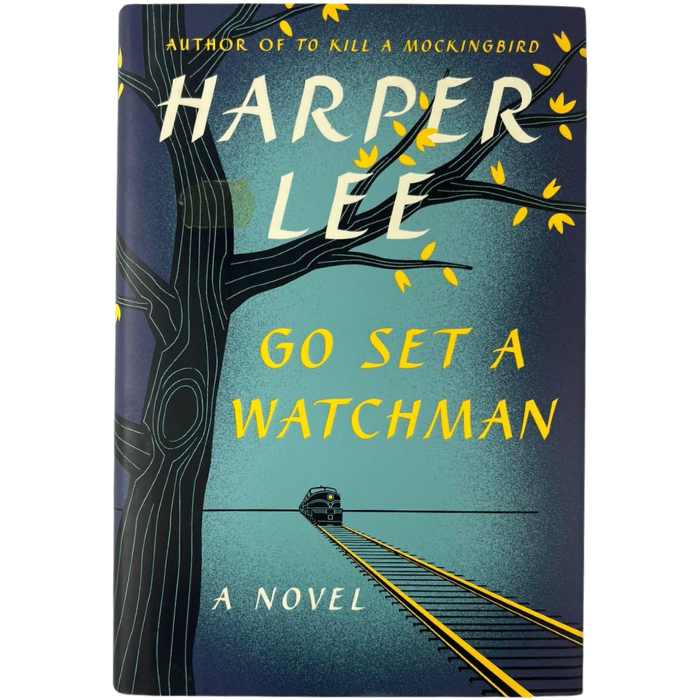


Ratings: ★★★☆☆ (3.8/5)
Genre: Fiction / Literary Fiction / American Literature / Southern Gothic / Coming-of-Age
Book Review:
Harper Lee's ''Go Set a Watchman'' arrived with a weight of expectation that few books could bear. As the long-lost ''sequel'' (or more accurately, an earlier draft that evolved into) the beloved classic ''To Kill a Mockingbird,'' it was destined to be both celebrated and scrutinized. The result is a deeply complex and unsettling book that will forever change how readers view its predecessor.
The novel returns us to Maycomb, Alabama, some 20 years after the events of ''Mockingbird.'' Jean Louise Finch (''Scout'') is now a 26-year-old woman living in New York, and she returns home to visit her father, the iconic Atticus Finch. But the Maycomb she finds is not the one she remembers, and the father she has idolized her entire life is revealed to be a more complicated, and far more troubling, figure. Jean Louise discovers Atticus's involvement in a local citizens' council that opposes integration, shattering her idealized image of him and forcing her to confront the painful gap between her childhood memories and the complex realities of her community.
The book is essentially a novel of disillusionment. It is about the moment when a child must finally see their parents as flawed, complex human beings. It is about the painful process of forming one's own moral compass, independent of the figures we have always looked up to. The title, taken from the book of Isaiah (''For thus hath the Lord said unto me, Go, set a watchman, let him declare what he seeth.''), suggests that each of us must become our own moral watchman.
The prose is unmistakably Lee's—sharp, evocative, and deeply Southern. Jean Louise's voice is witty and passionate, and her emotional journey is rendered with raw power. However, the book is undeniably a first draft, and it lacks the polish and narrative control of ''Mockingbird.'' The flashbacks to Scout's childhood, which would later become the core of the classic, are some of the most charming sections, but they feel somewhat disconnected from the main narrative.
The controversy surrounding the book's publication cannot be ignored. Questions about whether the elderly Lee truly consented to its release have clouded its reception. But as a literary work, ''Go Set a Watchman'' is a fascinating and invaluable document. It offers a deeper, more complex understanding of characters we thought we knew, and it forces us to grapple with uncomfortable truths about history, memory, and the people we choose to idolize. It is not the book many hoped for, but it is an important one. Recommended for fans of Lee and students of American literature.

034714-img.png)