Free Support 24/7
011 208 1308

Free Support 24/7
011 208 1308

Ratings: ★★★★☆ (4.3/5)
Genre: History, Ancient History, Cultural Studies, Academic
Book Review:
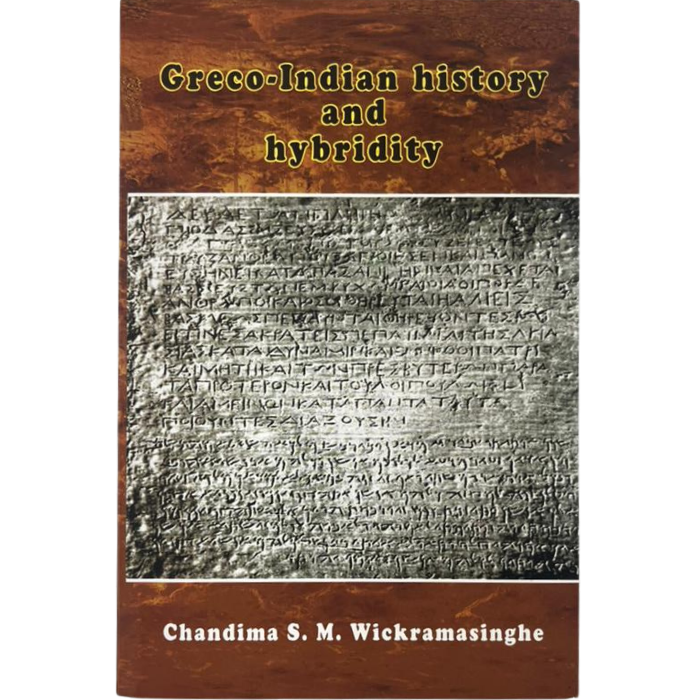
Professor Chandima S. M. Wickramasinghe's ''Greco-Indian history and hybridity'' is a fascinating and scholarly exploration of the cultural intersections that arose from the encounter between the Hellenistic world and the Indian subcontinent. This book offers a fresh and nuanced perspective on a period of history often dominated by narratives of conquest, focusing instead on the complex processes of cultural fusion and exchange.
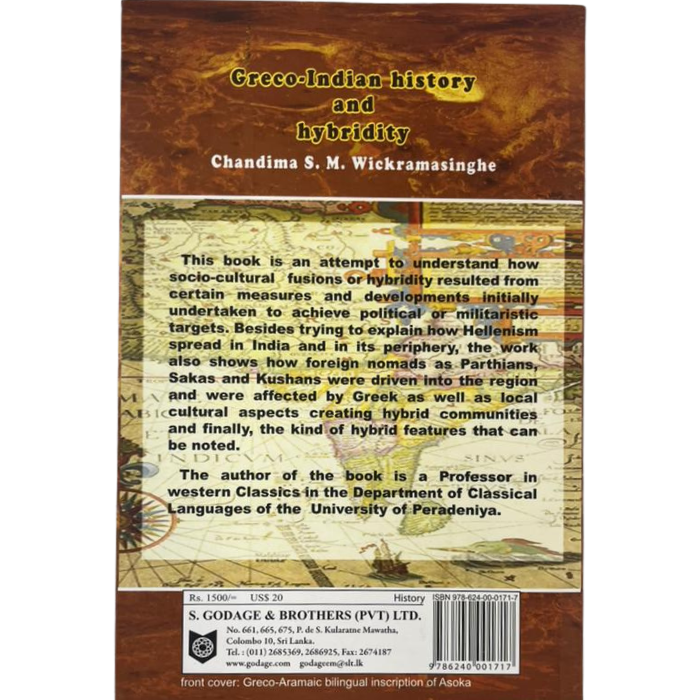
Wickramasinghe, a Professor of Western Classics at the University of Peradeniya, brings a unique dual perspective to the subject, grounding his analysis in a deep knowledge of both Greek and Indian sources. The book's central thesis is that the socio-cultural hybridity we observe in the Greco-Indian world was often an unintended consequence of political and military ambitions. The author meticulously traces how Hellenism spread not just through the campaigns of Alexander the Great, but also through the subsequent interactions with the Mauryan Empire and the Indo-Greek kingdoms.
The work also sheds light on the role of other nomadic groups—the Parthians, Sakas, and Kushans—who were drawn into the region and, in turn, were profoundly shaped by both Greek and local Indian cultural influences. Wickramasinghe examines the resulting hybrid features in art, religion, language, and society, providing concrete examples of this fascinating cultural synthesis.
''Greco-Indian history and hybridity'' is a valuable contribution to the field, offering an insightful and well-researched analysis for students, scholars, and anyone interested in the rich tapestry of ancient history. It is a testament to the enduring legacy of cultural exchange and the complex ways in which civilizations shape one another.