Free Support 24/7
011 208 1308

Free Support 24/7
011 208 1308

Ratings: ★★★★☆ (4/5)
Genre: History / World War II / Travel Guide
Book Review:
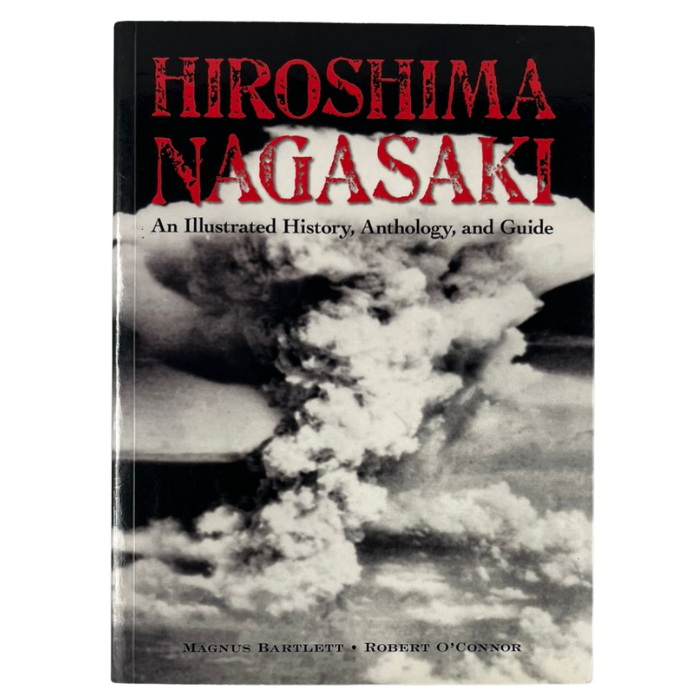
Magnus Bartlett and Robert O'Connor's ''Hiroshima Nagasaki'' is an ambitious and unusual book that attempts to do three things at once: provide a history of the atomic bombings, offer an anthology of writings about them, and serve as a guide for visitors to the two cities. Remarkably, it succeeds on all three counts.
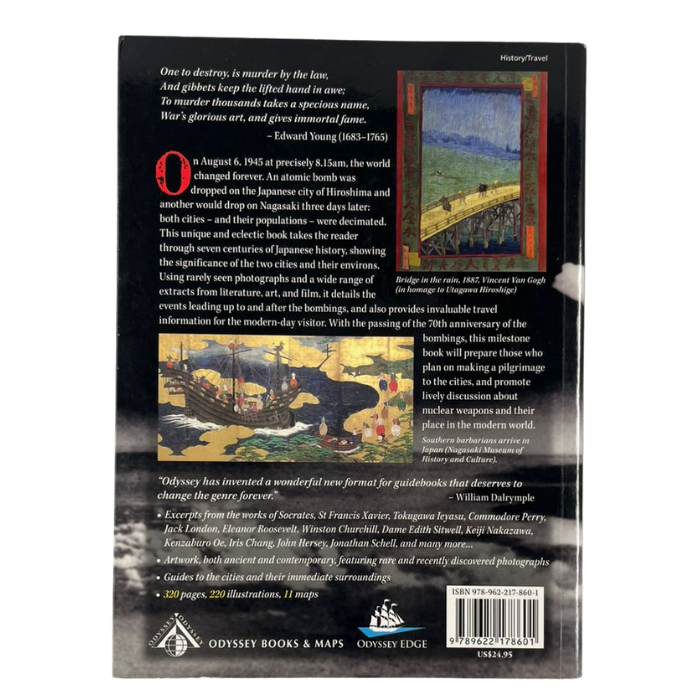
The book opens with the epigraph from Edward Young: ''One to destroy, is murder by the law, / And gibbets keep the lifted hand in awe; / To murder thousands takes a specious name, / War's glorious art, and gives immortal fame.'' This sets the tone for a work that is both historical and moral, that refuses to look away from the horror while also seeking to understand it.
The historical sections trace the development of the atomic bomb, the decision to use it, and the immediate aftermath of the bombings. But the book also reaches further back, placing Hiroshima and Nagasaki in the context of seven centuries of Japanese history. Readers learn about the arrival of ''southern barbarians'' in Japan, the persecution of Christians, the Meiji Restoration, and the rise of militarism. This deep background helps situate the bombings in a longer historical narrative.
The anthology sections are particularly valuable. They include excerpts from a wide range of voices: Socrates, St. Francis Xavier, Tokugawa Ieyasu, Commodore Perry, Jack London, Eleanor Roosevelt, Winston Churchill, Dame Edith Sitwell, Keiji Nakazawa (author of ''Barefoot Gen''), Kenzaburo Oe, Iris Chang, John Hersey (author of ''Hiroshima''), Jonathan Schell, and many others. This diversity of perspectives—Japanese and Western, pre-war and post-war, literary and political—enriches the reader's understanding.
The guide sections provide practical information for visitors to Hiroshima and Nagasaki: maps, descriptions of museums and memorials, recommendations for further reading. William Dalrymple's praise on the cover—''Odyssey has invented a wonderful new format for guidebooks that deserves to change the genre forever''—is well-deserved. This is not your typical guidebook; it's a guidebook that engages deeply with history and meaning.
The book is richly illustrated with 220 images, including rare photographs and artwork both ancient and contemporary. The 11 maps help readers orient themselves in the cities. At 320 pages, it's substantial without being overwhelming.
For anyone planning to visit Hiroshima or Nagasaki, this book is essential. For students of World War II, it offers a unique resource. And for readers interested in the ongoing debate about nuclear weapons, it provides historical grounding and moral reflection.
The passing of the 70th anniversary of the bombings, noted on the back cover, reminds us that these events are passing from living memory into history. Books like this one help ensure that we do not forget—and that we continue to grapple with the questions the bombings raise. Highly recommended.