Free Support 24/7
011 208 1308

Free Support 24/7
011 208 1308

Ratings: ★★★★★ (4.7 / 5)
Genre: History, Sri Lankan Studies, Colonial History, Journalism
Book Review:
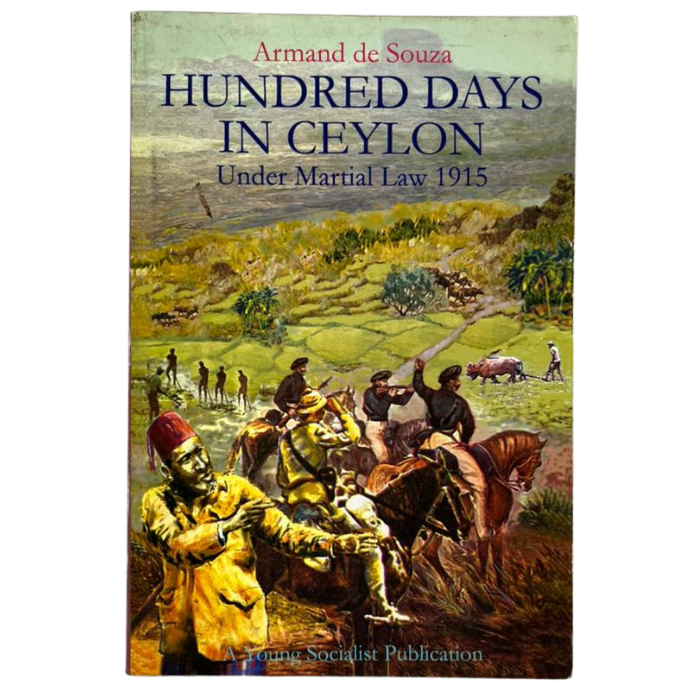
Hundred Days in Ceylon: Under Martial Law 1915 is a classic and haunting record of one of the darkest chapters in Sri Lanka's colonial history. Written by Armand de Souza, the editor of the prestigious Ceylon Morning Leader newspaper, this book is a courageous and indefatigable quest for justice in the face of unspeakable brutality.
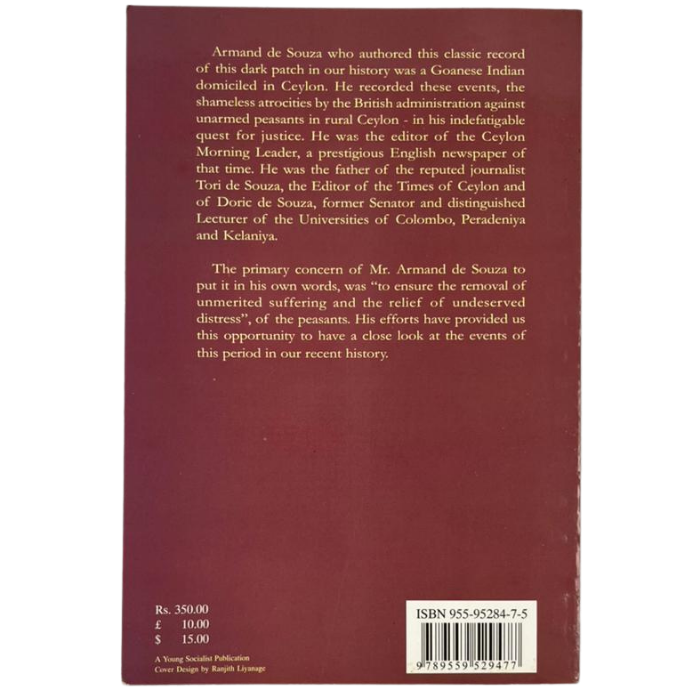
In 1915, the British colonial administration imposed martial law in response to communal riots, unleashing a wave of violence against unarmed Sinhalese peasants in rural Ceylon. De Souza, a Goanese Indian domiciled in the country, documented the shameless atrocities with meticulous detail, driven by his primary concern: ''to ensure the removal of unmetered suffering and the relief of undeserved distress.''
This book is not just a historical document; it is a powerful testament to the role of journalism in holding power to account. De Souza's efforts provide us with an invaluable opportunity to closely examine this painful period and understand its lasting impact. He is the father of renowned journalist Tori de Souza (Editor of the Times of Ceylon) and Doric de Souza (former Senator and distinguished university lecturer), carrying on a legacy of journalistic integrity.
For anyone interested in Sri Lankan history, colonial studies, or the power of the press, Hundred Days in Ceylon is an essential and sobering read. It is a reminder of the suffering caused by unchecked power and the importance of bearing witness.