Free Support 24/7
011 208 1308

Free Support 24/7
011 208 1308

Ratings: ★★★★☆ (4.4/5)
Genre: Philosophy, Religion (Islam), History, Non-Fiction
Book Review:
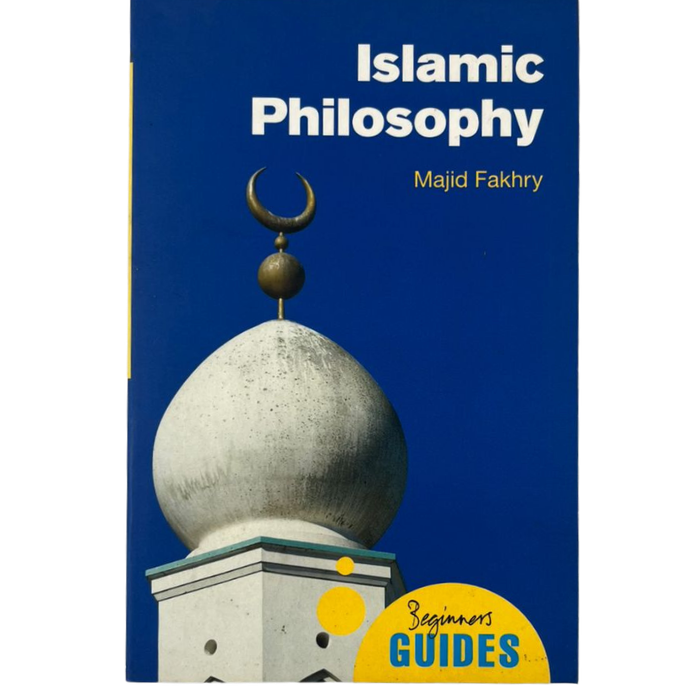
The tradition of Islamic philosophy is one of the richest and most sophisticated in human history, yet it remains largely unknown to many Western readers. For over a millennium, Muslim thinkers engaged in a profound dialogue with the Greek philosophical heritage, developing original and influential ideas about God, the universe, the human soul, and the nature of knowledge. Majid Fakhry's Islamic Philosophy, part of Oneworld's excellent 'Beginners' Guides' series, is the perfect introduction to this fascinating and complex intellectual tradition.
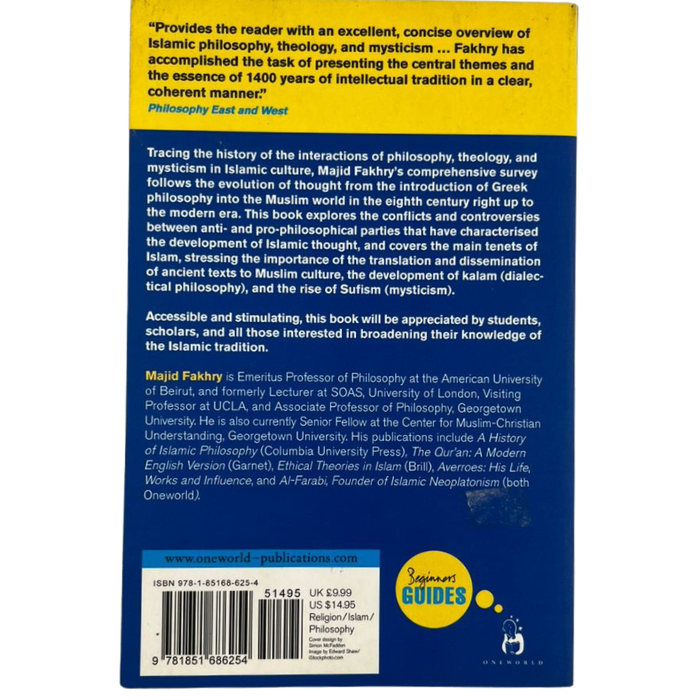
Fakhry, one of the world's leading authorities on the subject, provides a clear, concise, and comprehensive overview of 1,400 years of Islamic thought. He begins with the translation movement of the 8th and 9th centuries, when the works of Aristotle, Plato, and the Neoplatonists were rendered into Arabic, sparking an intellectual revolution in the Muslim world. He then traces the development of the two main strands of Islamic thought: kalam, or dialectical theology, which sought to defend religious beliefs through rational argument, and falsafa, or philosophy proper, which embraced the full range of Greek philosophical inquiry.
The heart of the book is devoted to the great masters of Islamic philosophy. Fakhry introduces us to al-Kindi, the ''philosopher of the Arabs''; al-Farabi, the visionary political thinker who dreamed of the ideal state; Avicenna (Ibn Sina), the most famous and influential of all Muslim philosophers, whose works shaped both the Islamic world and medieval Europe; al-Ghazali, the brilliant critic of philosophy who sought to reconcile reason and faith; and Averroes (Ibn Rushd), the great commentator on Aristotle who defended philosophy against its detractors.
Fakhry also explores the rise of Sufism, the mystical tradition within Islam, and its complex relationship with philosophy. He shows how Sufi thinkers like Ibn al-Arabi developed profound metaphysical systems that drew on both Neoplatonic and Islamic sources. The book concludes with a look at Islamic philosophy in the modern era, from the encounter with Western thought to contemporary debates.
Islamic Philosophy is an accessible and stimulating book that will be appreciated by students, scholars, and anyone interested in broadening their knowledge of the Islamic tradition. It is a masterful survey that illuminates a rich and vital chapter in the history of human thought. As Philosophy East and West noted, ''Fakhry has accomplished the task of presenting the central themes and the essence of 1400 years of intellectual tradition in a clear, coherent manner.''
