Free Support 24/7
011 208 1308

Free Support 24/7
011 208 1308

Ratings: ★★★★☆ (4/5)
Genre: Comparative Religion, Indian Philosophy, Buddhist Studies, Hindu Studies, Theology, Cultural Studies.
Book Review:
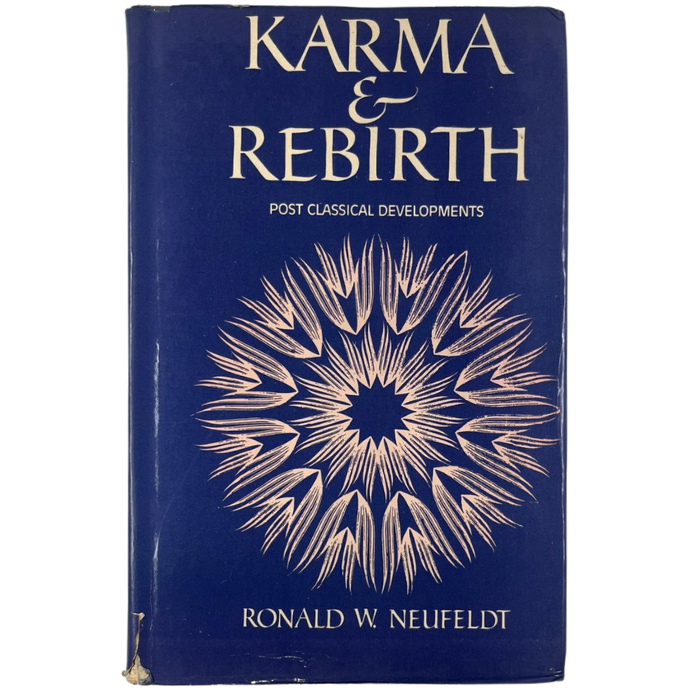
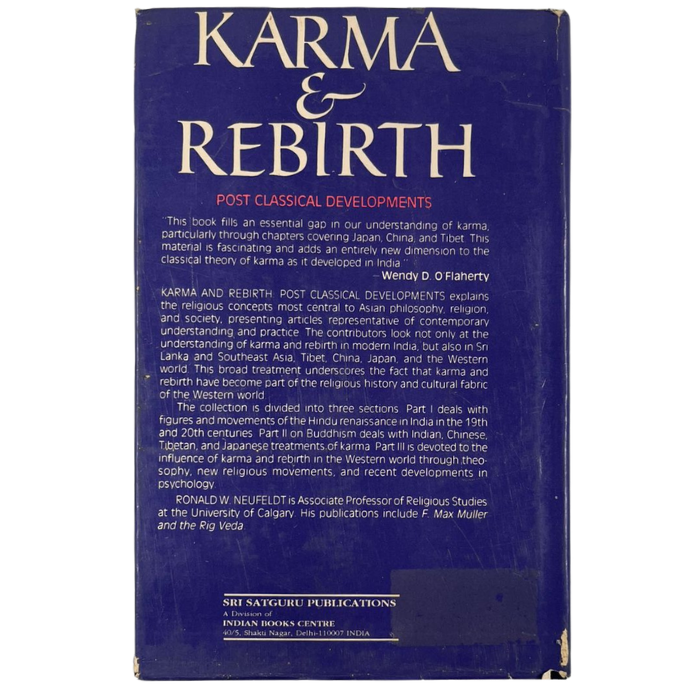
Ronald W. Neufeldt's ''Karma and Rebirth: Post Classical Developments'' is a groundbreaking collection of essays that significantly expands our understanding of these pivotal concepts. While much scholarship focuses on the classical formulations of karma and rebirth in ancient Indian texts, this volume brilliantly traces their subsequent evolution and adaptation across diverse cultural and historical landscapes.
The book is structured to take the reader on a fascinating journey. It begins in modern India, exploring how key figures of the 19th and 20th-century Hindu Renaissance—such as those in the Brahmo Samaj, Ramakrishna Mission, and the Arya Samaj—reinterpreted these ancient doctrines. The focus then shifts eastward, with illuminating chapters on the understanding of karma in Theravada Buddhist countries like Sri Lanka and Thailand, and its unique transformations in the Mahayana traditions of China, Tibet, and Japan. Finally, the collection examines the remarkable transplantation of these ideas into the Western world, through the Theosophical Society, new religious movements, and even their influence on modern psychology.
Featuring contributions from leading scholars, this volume is essential reading for students and researchers in religious studies, Asian philosophy, and theology. As Wendy D. O'Flaherty notes, the material on Japan, China, and Tibet is particularly fascinating, adding ''an entirely new dimension to the classical theory.'' This book successfully demonstrates that karma and rebirth are not static relics of the past but living, evolving concepts that continue to shape religious and cultural identity across the globe, including their growing influence in the West.