Free Support 24/7
011 208 1308

Free Support 24/7
011 208 1308

Ratings: ★★★★☆ (4.4/5)
Genre: Art History, Impressionism, Portraiture, French Language
Book Review:
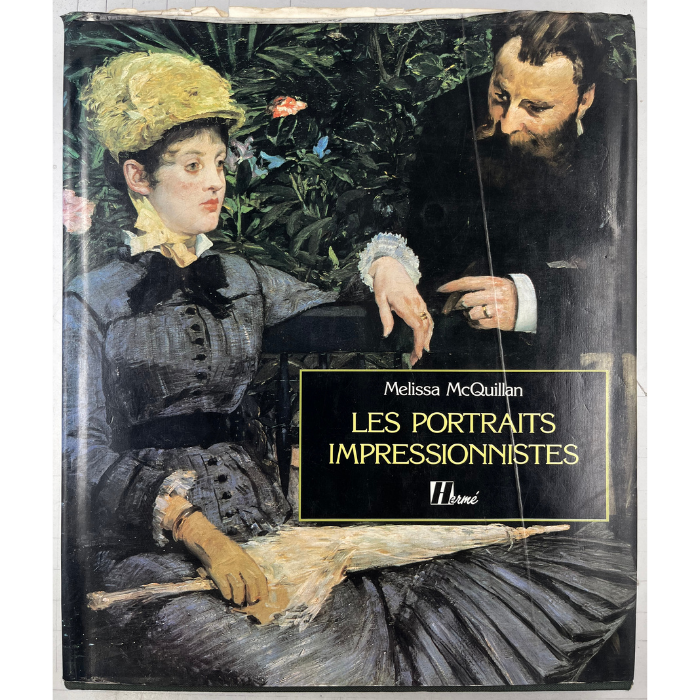
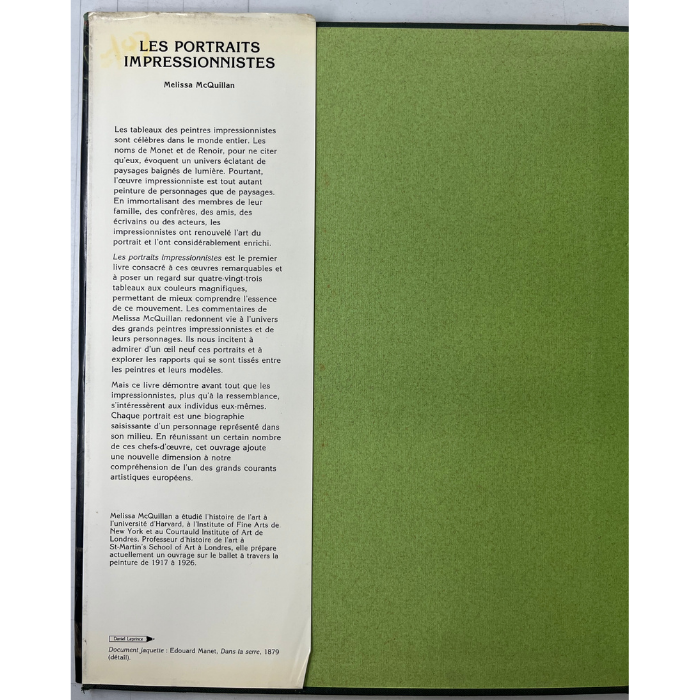
Melissa McQuillan's ''Les Portraits Impressionnistes'' fills an important gap in art historical literature. While countless books celebrate Impressionist landscapes, this volume turns our attention to the movement's equally significant contributions to portraiture. In doing so, it offers a fresh perspective on a well-studied period.
The thesis is compelling: the Impressionists transformed portraiture just as radically as they transformed landscape painting. By depicting people in their natural environments—family members at home, friends in cafes, writers in their studies—they broke with formal studio conventions and created portraits that felt alive, immediate, and psychologically revealing. Each portrait becomes not just a likeness but a ''striking biography'' of the subject.
McQuillan's credentials are impeccable—her training at Harvard, the Institute of Fine Arts in New York, and the Courtauld Institute in London gives her work scholarly authority. Her commentary is insightful without being overly academic, accessible to art lovers while satisfying to specialists.
The eighty-three color reproductions are beautiful and well-chosen. They trace the evolution of Impressionist portraiture from the early years (1864-1874) through the first exhibition period (1874-1880) to the later years when artists began exploring new directions (1880-1886). Seeing works by Manet, Renoir, Degas, Cassatt, and others gathered together reveals the richness and diversity of Impressionist portraiture.
For Sri Lankan readers, this book offers a window into a crucial period of French art history. The French language text may limit accessibility for some, but the visual content transcends language barriers. Art students and enthusiasts will find inspiration in these magnificent portraits.
The book's organization is logical and helpful. The introduction sets the context, the commentary on individual works provides insight, and the bibliography and index make it useful for further research.
The main limitation is language—it's written entirely in French, so readers without French proficiency will rely primarily on the images. However, for French-speaking readers or those learning French, it offers the pleasure of reading art criticism in the original language.
Overall, ''Les Portraits Impressionnistes'' is a valuable contribution to Impressionist studies. It illuminates an overlooked aspect of the movement and does so with scholarly rigor and visual beauty. Highly recommended for art historians, students of French painting, and anyone who loves Impressionist art.