Free Support 24/7
011 208 1308

Free Support 24/7
011 208 1308

Ratings: ★★★★★ (4.8/5)
Genre: Literary Fiction, Adventure, Fantasy, Philosophical Fiction
Book Review:
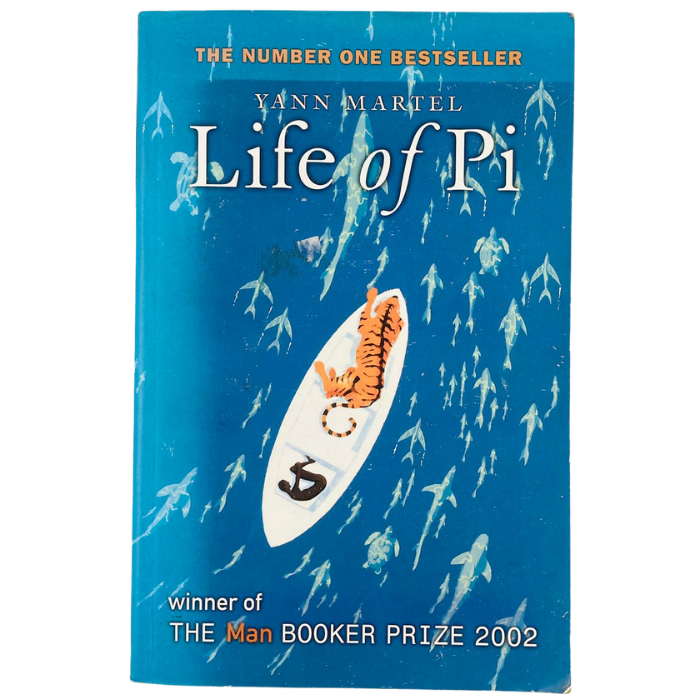
Yann Martel's ''Life of Pi'' is one of those rare novels that defies easy categorization. It's an adventure story, a philosophical meditation, a religious allegory, and a survival manual—all rolled into one extraordinary, unforgettable book. Winner of the Man Booker Prize and now a major motion picture from Academy Award-winning director Ang Lee, it has captured the hearts of millions of readers worldwide.
The novel begins in Pondicherry, India, where we meet Piscine Molitor Patel—''Pi'' for short. Pi grows up in a zoo owned by his family, surrounded by animals that teach him about behavior, territory, and survival. He's also a deeply curious boy who explores religion with the same intensity, embracing Hinduism, Christianity, and Islam simultaneously, much to the confusion of his teachers and family.
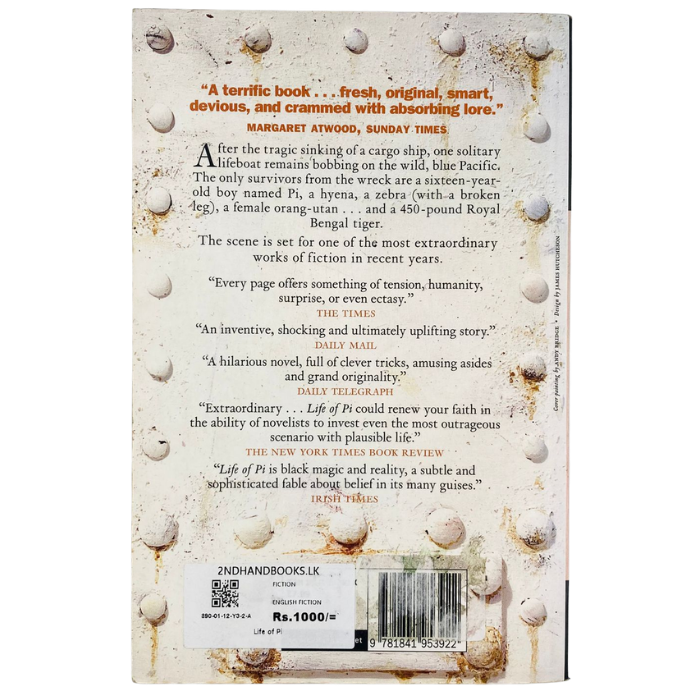
When Pi is sixteen, his family decides to emigrate to Canada, taking some of the zoo animals with them on a Japanese cargo ship. But somewhere in the Pacific, the ship sinks in a storm. Pi finds himself alone on a lifeboat in the middle of the ocean—and he's not quite alone. Sharing the boat with him is a zebra with a broken leg, a hyena, an orangutan, and a 450-pound Bengal tiger named Richard Parker.
What follows is one of the most extraordinary survival stories in literature. The hyena kills the zebra and the orangutan. The tiger kills the hyena. And then it's just Pi and Richard Parker, drifting across the Pacific, each trying to survive. Pi must figure out how to feed himself, how to catch fish, how to collect fresh water. He must also figure out how to coexist with a tiger—how to assert dominance without provoking an attack, how to share the boat without becoming dinner.
Martel's prose is clear, precise, and often beautiful. He describes the ocean, the sky, the animals, and Pi's struggles with a vividness that makes the impossible feel real. The novel is filled with details about animal behavior, survival techniques, and the logistics of living on a lifeboat that are fascinating in themselves.
But ''Life of Pi'' is more than just a survival story. It's also a meditation on faith and storytelling. Pi's ordeal tests his belief in God, and his story raises profound questions about truth. The novel's famous ending—which I won't spoil—forces readers to choose between two versions of events, and in doing so, to confront their own beliefs about what makes a story true.
The critical response has been extraordinary. The Times calls it ''a bewitching tale of adventure and friendship.'' Margaret Atwood praises it as ''a terrific book. It's fresh, original, smart, devious, and crammed with absorbing lore.'' The Guardian describes it as ''this enormously loveable novel is suffused with wonder.''
''Life of Pi'' is a book that will make you believe in the power of storytelling. It's funny, terrifying, moving, and profound—sometimes on the same page. Whether you're reading it for the first time or returning to it, it's an experience you won't forget.
Highly recommended. One of the best novels of the twenty-first century.