Free Support 24/7
011 208 1308

Free Support 24/7
011 208 1308

Ratings: ★★★★☆ (4.5/5)
Genre: Biography, Religion (Islam), History, Non-Fiction
Book Review:
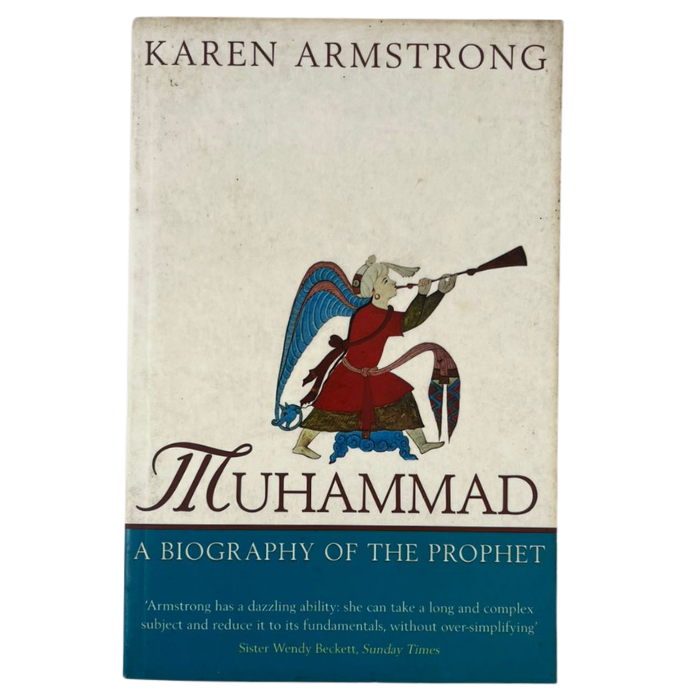
In the West, the figure of the Prophet Muhammad has often been misunderstood, misrepresented, and shrouded in prejudice. Karen Armstrong, one of the world's foremost scholars of religious history, sets out to correct this in her brilliant and compassionate biography, Muhammad: A Biography of the Prophet. This is a book that seeks not to proselytize, but to illuminate, to present Muhammad as a complex, human, and deeply spiritual figure in his proper historical context.
Armstrong begins by painting a vivid picture of 7th-century Arabia, a world of tribal warfare, polytheistic worship, and social injustice. It was into this world that Muhammad was born, an orphan who grew up to become a respected merchant. At the age of forty, he received his first revelation from God through the angel Gabriel, an experience that terrified and transformed him. He began to preach a message of radical monotheism, social justice, and compassion for the poor, a message that brought him into conflict with the powerful elite of his native Mecca.
Armstrong traces Muhammad's life with clarity and insight: his years of persecution in Mecca, his flight (Hijra) to the city of Medina, where he built the first Muslim community, his military struggles against his Meccan opponents, and his ultimate, triumphant return to Mecca. She shows us a man who was not only a prophet but also a political leader, a military commander, a husband, and a father. She does not shy away from the difficult aspects of his life, such as his involvement in warfare, but she places them in their historical and cultural context.
What makes this biography so valuable is Armstrong's ability to convey the spiritual and emotional core of Muhammad's experience. She helps the reader to understand the power of the Qur'anic revelations and the profound impact they had on him and his followers. She also draws illuminating comparisons with the other Abrahamic faiths, showing how Judaism and Christianity evolved in similar ways and faced similar challenges.
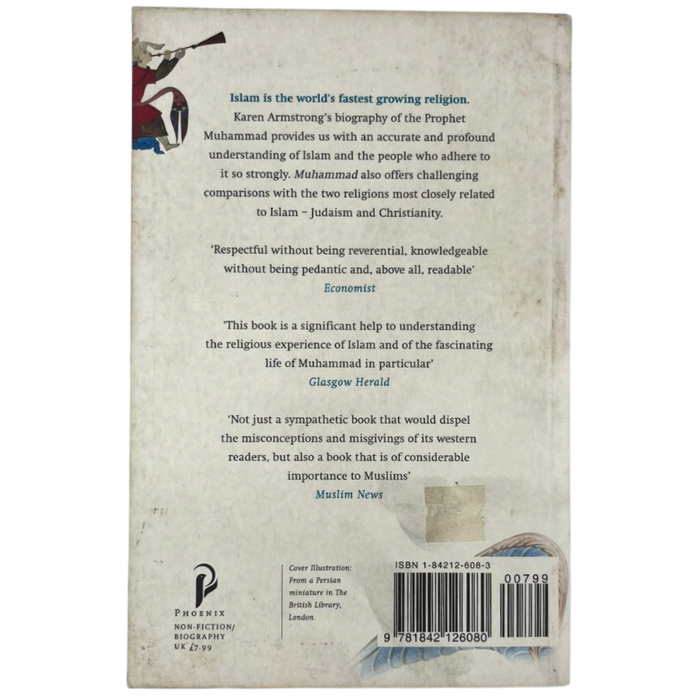
Muhammad is a book for anyone who wants to understand Islam, its founder, and its place in the world. It is a work of deep scholarship and profound humanity, written with the clarity and elegance that are Armstrong's trademarks. As the Economist noted, it is ''respectful without being reverential, knowledgeable without being pedantic and, above all, readable.'' This is the perfect introduction to a figure who has shaped the lives of billions.