Free Support 24/7
011 208 1308

Free Support 24/7
011 208 1308
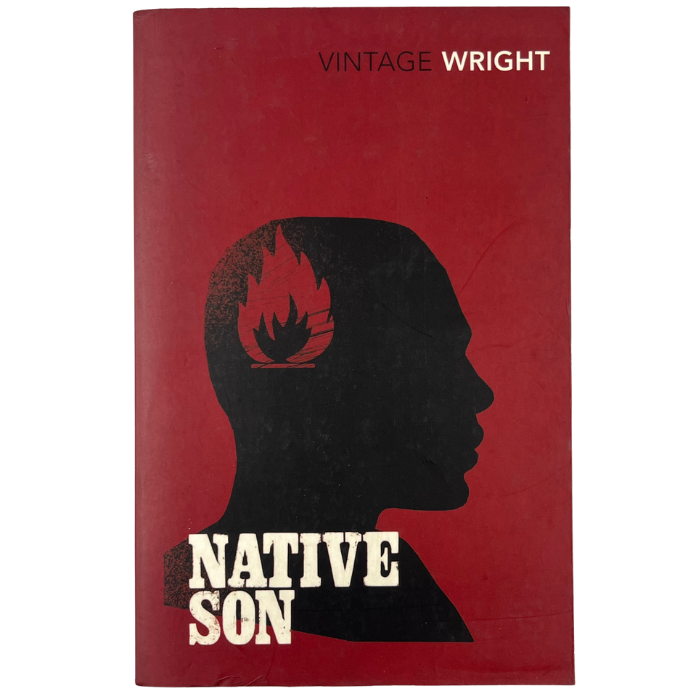
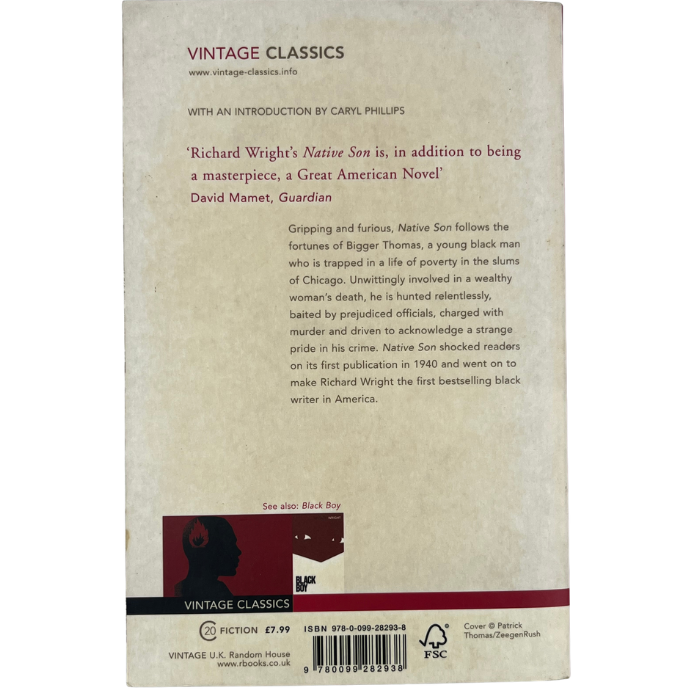

Ratings: ★★★★★ (4.8/5)
Genre: Literary Fiction, African American Literature, Classic, Social Commentary
Book Review:
Richard Wright's ''Native Son'' is not a comfortable book. It's not meant to be. From its first publication in 1940, it has shocked, disturbed, and challenged readers—and that is precisely its genius. As David Mamet writes in the Guardian, it is ''in addition to being a masterpiece, a Great American Novel.''
The novel tells the story of Bigger Thomas, a 20-year-old black man living in a one-room apartment in the Chicago slums with his mother, sister, and brother. The year is the 1930s. Bigger is poor, angry, and trapped—trapped by poverty, by racism, by the impossible choices that face a young black man in Depression-era America. He lives in a world that offers him nothing and expects nothing from him except submission.
When Bigger takes a job as a chauffeur for a wealthy white family, the Daltons, his life collides with theirs in ways no one could predict. A series of events—some accidental, some deliberate—leads to violence, murder, and a citywide manhunt. The second half of the novel follows Bigger's capture, his trial, and his conversations with his communist lawyer, Boris Max, who tries to save him from the electric chair.
What makes ''Native Son'' so extraordinary is Wright's refusal to soften or sentimentalize his protagonist. Bigger is not a sympathetic figure in any conventional sense. He is frightened, angry, and capable of terrible violence. He makes choices that are morally indefensible. And yet Wright forces us to understand him—to see how a society that systematically denies black humanity might produce someone like Bigger. As Wright himself wrote, ''I had written a book that even bankers' daughters could read and weep over and feel good about. I swore to myself that if I ever wrote another book, no one would weep over it; that it would be so hard and deep that they would have to face it without the consolation of tears.''
''Native Son'' is that book. It's hard and deep and unflinching. Wright's prose is raw and powerful, driving the narrative forward with an intensity that never lets up. The famous scene in which Bigger disposes of the body of his first victim is one of the most harrowing in American literature—not because of the violence itself, but because of Wright's unsparing depiction of Bigger's state of mind.
But the novel is also a work of profound social analysis. Through Bigger's story, Wright exposes the structural racism that pervades every aspect of American life—housing, employment, education, criminal justice. The Daltons, for all their liberal philanthropy, are complicit in a system that destroys people like Bigger. The communists, for all their theoretical commitment to racial equality, cannot truly understand him. The legal system, for all its claims to justice, is rigged against him from the start.
The novel's third section, ''Fate,'' contains some of Wright's most powerful writing. In a series of conversations with his lawyer, Bigger begins to articulate—for the first time in his life—something like a sense of his own humanity. ''What I killed for, I am!'' he declares. It's a terrifying statement, but also a tragic one—a man who can only assert his existence through violence, because society has denied him every other form of self-expression.
This Vintage Classics edition includes an excellent introduction by Caryl Phillips that contextualizes the novel within Wright's life and career, and within the broader tradition of African American literature. It's a valuable resource for readers approaching the novel for the first time.
''Native Son'' is essential reading—for students of American literature, for anyone seeking to understand the history of race in America, and for readers who believe that great fiction should challenge as well as entertain. It's a book that will stay with you long after you've turned the final page.