Free Support 24/7
011 208 1308

Free Support 24/7
011 208 1308

Ratings: ★★★★☆ (4.2/5)
Genre: Literary Fiction, Japanese Literature, Magical Realism
Book Review:
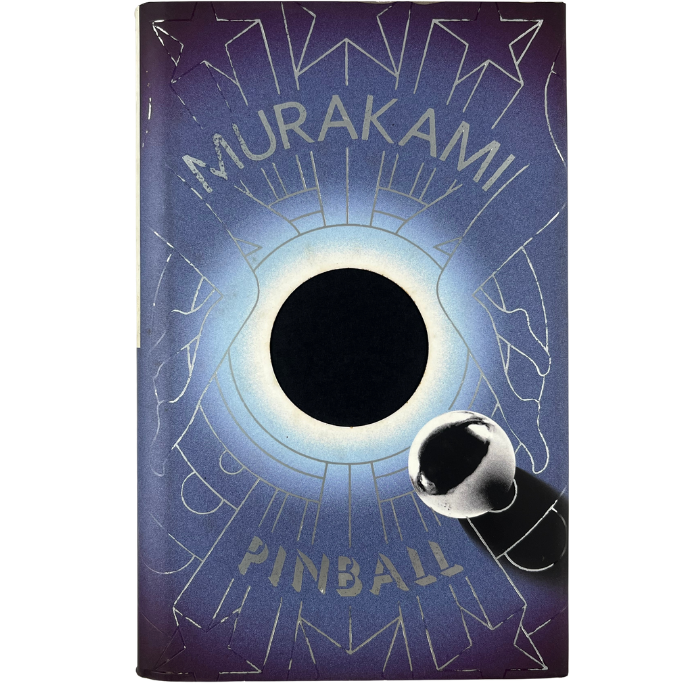
For fans of Haruki Murakami, ''Pinball, 1973'' is an essential piece of the puzzle—a fascinating glimpse into the early development of a literary master. While it may not have the sprawling complexity of ''The Wind-Up Bird Chronicle'' or the surreal grandeur of ''Kafka on the Shore,'' it contains all the seeds of what makes Murakami so compelling. The novel is the second in his ''Trilogy of the Rat,'' and it follows the familiar, unnamed narrator and his friend, the Rat, on two parallel paths. The narrator, now living in Tokyo, finds himself inexplicably drawn to find a specific pinball machine, a ''three-flipper, relay-race model'' that he once played obsessively. His quest is both ridiculous and profound, a perfect example of Murakami's ability to find deep meaning in the most mundane of obsessions. Meanwhile, the Rat has retreated from the world, haunted by a sense of loss and a failed relationship. The book is slim and feels almost like a sketch compared to his later works, but it's a sketch drawn with a distinctive hand. The prose, beautifully translated by Ted Goossen, is clean, simple, and slightly surreal. The appearance of the twin girls, who move into the narrator's apartment without explanation, is pure Murakami—enigmatic, magical, and utterly matter-of-fact. ''Pinball, 1973'' is a story about memory, nostalgia, and the things we lose and can never quite get back. It's about the search for meaning in a world that often feels empty and disconnected. It may not be the best introduction to Murakami (that would be ''A Wild Sheep Chase'' or ''Norwegian Wood''), but for those already under his spell, it's a delightful and essential read, a chance to see a master finding his voice.