

Free Support 24/7
011 208 1308


1 ×LKR 750.00

1 ×LKR 1,000.00

1 ×LKR 1,000.00
1 ×LKR 1,500.00

1 ×LKR 500.00
1 ×LKR 850.00

1 ×LKR 1,000.00
1 ×LKR 1,000.00
1 ×LKR 1,500.00

1 ×LKR 2,500.00

1 ×LKR 700.00
1 ×LKR 900.00
_Human_Biology_Student_Book103223-img.png)
1 ×LKR 5,500.00
Free Support 24/7
011 208 1308

ratings: ★★★★☆ (4.5/5)
Genre: Literary Criticism, Postcolonial Studies, Cultural Studies
Book Review:
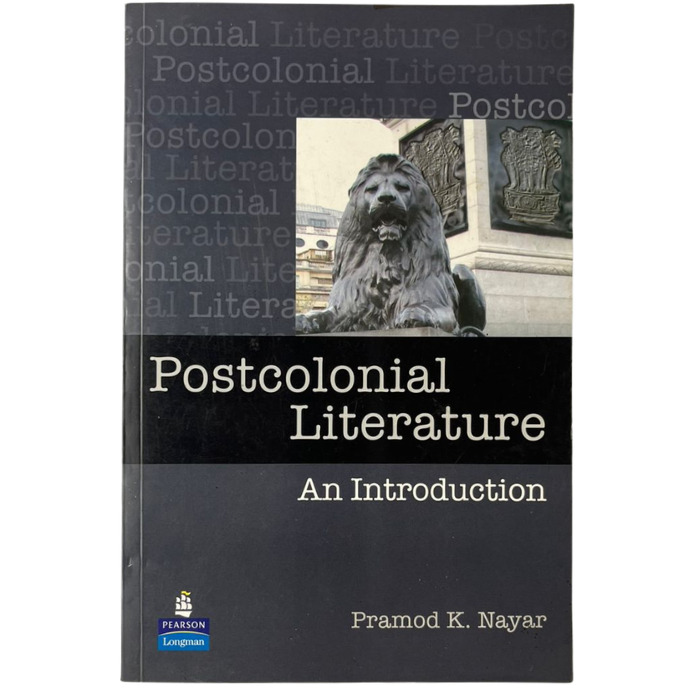
Pramod K. Nayar's ''Postcolonial Literature: An Introduction'' is a remarkably clear, accessible, and comprehensive guide to one of the most important and dynamic fields in contemporary literary studies. This book serves as an indispensable primer for students while also offering stimulating insights for specialists and general readers alike.
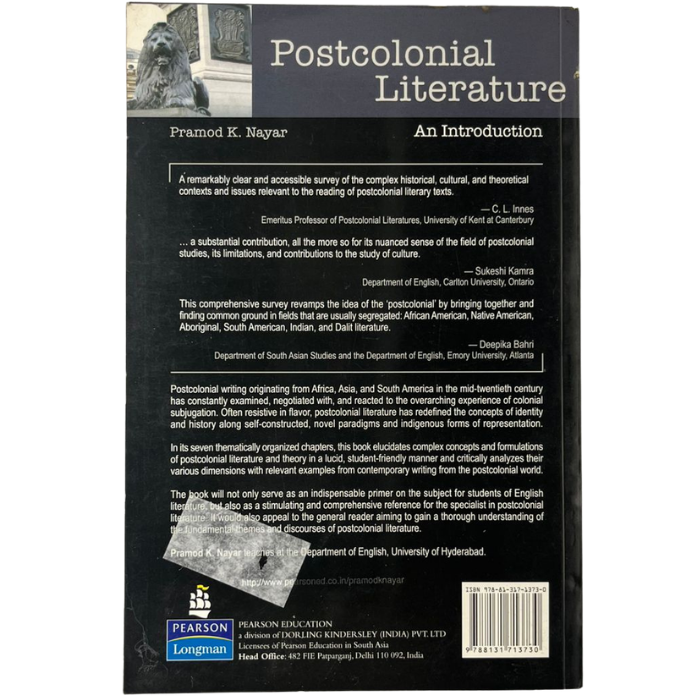
Nayar masterfully navigates the complex historical, cultural, and theoretical contexts that are essential for reading and understanding postcolonial literary texts. As C.L. Innes, Emeritus Professor at the University of Kent, praises, it is ''a remarkably clear and accessible survey of the complex... contexts and issues.'' The book does not simply define terms; it demonstrates how postcolonial writing—originating from Africa, Asia, and South America—has constantly examined, negotiated with, and reacted to the overarching experience of colonial subjugation.
One of the book's greatest strengths is its breadth and its commitment to finding common ground across fields that are often segregated. As Deepika Bahri of Emory University notes, Nayar's survey brings together African American, Native American, Aboriginal, South American, Indian, and Dalit literature, revealing shared concerns and strategies of resistance. He shows how this often resistive literature has redefined concepts of identity and history, forging new paradigms and indigenous forms of representation.
Structured into seven thematically organized chapters, the book elucidates complex concepts in a lucid, student-friendly manner, grounding theoretical discussions with relevant examples from contemporary writing across the postcolonial world. Sukeshi Kamra of Carlton University calls it ''a substantial contribution,'' praising its ''nuanced sense of the field of postcolonial studies, its limitations, and contributions to the study of culture.''
''Postcolonial Literature: An Introduction'' is more than just a textbook; it is a stimulating and comprehensive reference that captures the energy, diversity, and critical importance of this vital field of study. It is an essential resource for anyone seeking to understand the literature and thought that has emerged from the experience of colonialism and its aftermath.

041457-img.png)
104051-img.png)
132159-img.png)
153809-img.png)