Free Support 24/7
011 208 1308

Free Support 24/7
011 208 1308

Ratings: ★★★★☆ (4/5)
Genre: Political Science, Sociology, History, Sri Lankan Studies, Ethnic Conflict, Non-Fiction.
Book Review:
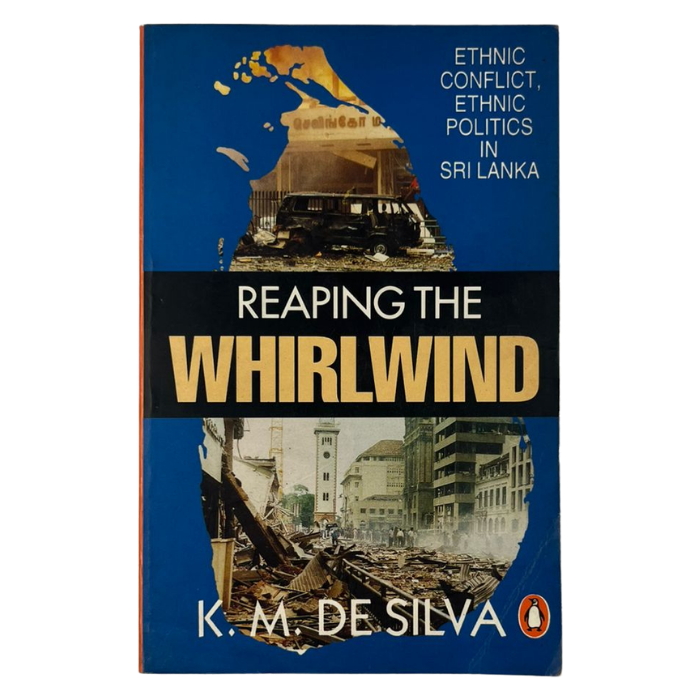
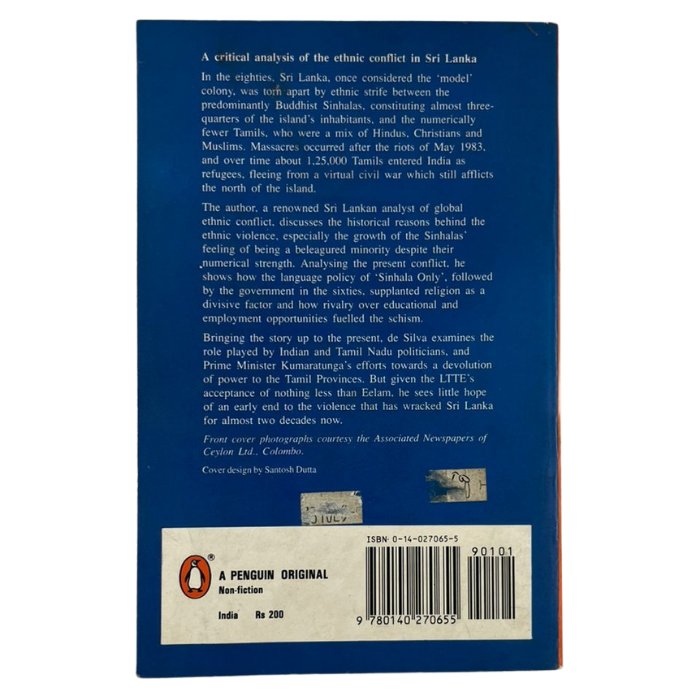
K. M. de Silva's ''Ethnic Conflict, Ethnic Politics in Sri Lanka: Reaping the Whirlwind'' is a seminal and authoritative work on one of the most tragic and complex conflicts of the late 20th century. Written by one of Sri Lanka's foremost historians and a leading global analyst of ethnic conflict, this book provides a comprehensive and deeply researched account of the roots and evolution of the island's ethnic strife.
De Silva masterfully traces the historical trajectory of the conflict, moving beyond simplistic narratives to explore its multifaceted origins. He examines the legacy of colonial rule, the rise of Sinhalese nationalist sentiment, and the growing sense of grievance among the Tamil minority. A key focus is the impact of post-independence state policies, particularly the ''Sinhala Only'' language policy of 1956, which de Silva argues supplanted religion as the primary divisive factor. He analyzes how competition for educational and employment opportunities further exacerbated communal tensions.
The book provides a detailed and sobering account of the descent into violence, from the early anti-Tamil riots to the devastating events of ''Black July'' in 1983, which marked the beginning of a full-scale civil war. De Silva also examines the role of external actors, particularly India and Tamil Nadu politicians, and analyzes the various failed attempts at negotiation and devolution of power. He offers a critical assessment of the LTTE's uncompromising demand for a separate state (Eelam) and the challenges it posed to any peaceful resolution.
While the book was written before the final military defeat of the LTTE in 2009, it remains an essential text for understanding the deep-seated causes and dynamics of the conflict. It is a work of immense scholarship, clarity, and balance, offering a crucial foundation for anyone seeking to comprehend Sri Lanka's troubled recent history. A must-read for students, policymakers, and anyone interested in the politics of ethnic conflict.