Free Support 24/7
011 208 1308

Free Support 24/7
011 208 1308

Ratings: ★★★★☆ (4.5/5)
Genre: Biography / Literary Biography / 18th Century Literature
Book Review:
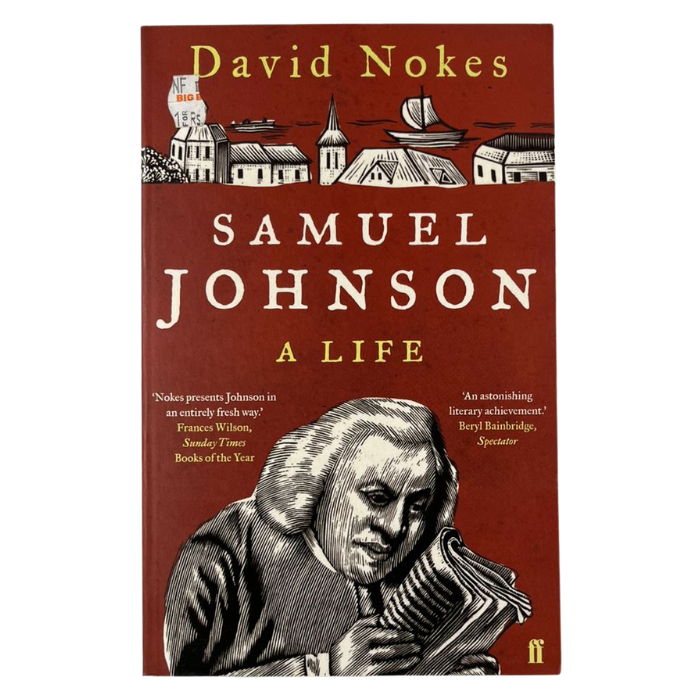
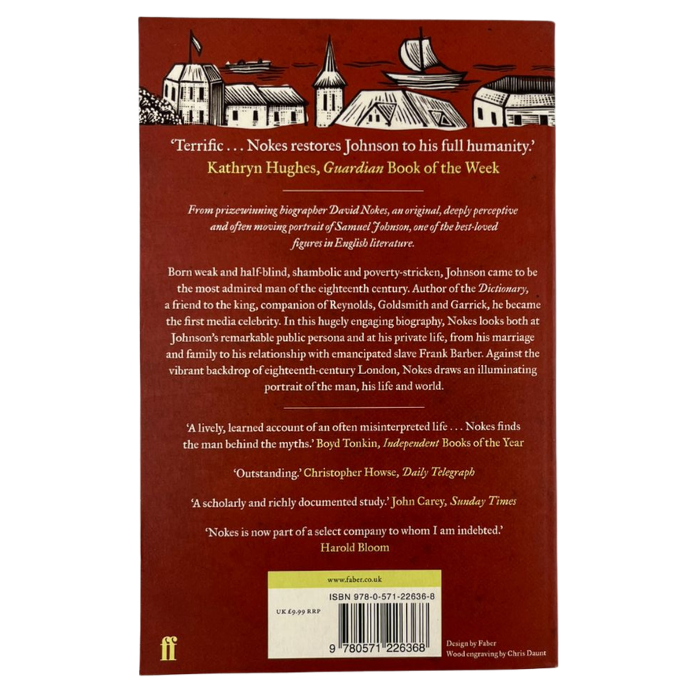
David Nokes's ''Samuel Johnson: A Life'' arrives with impressive credentials and even more impressive praise. Frances Wilson in the Sunday Times calls it ''an astonishing literary achievement.'' Beryl Bainbridge names it a Book of the Year. Kathryn Hughes in the Guardian describes it as ''terrific... Nokes restores Johnson to his full humanity.'' This is clearly a biography that has made an impact.
Samuel Johnson is one of the most formidable figures in English literature—author of the first great English dictionary, poet, essayist, critic, and the subject of what is often called the greatest biography in the language, James Boswell's ''Life of Johnson.'' To write a new biography of Johnson is to invite comparison with Boswell, and Nokes rises to the challenge.
What distinguishes Nokes's approach is his determination to find ''the man behind the myths,'' as Boyd Tonkin puts it in the Independent. Johnson has become a legendary figure—the great conversationalist, the moralist, the eccentric with his tics and his wit. Nokes shows us the human being behind the legend: the physically vulnerable man, born weak and half-blind; the struggling writer who knew poverty and failure; the husband and friend capable of deep affection; the man who formed an unlikely but profound relationship with Frank Barber, an emancipated slave who became his heir.
Nokes is particularly good on Johnson's private life. He explores Johnson's marriage to Tetty, a woman twenty years his senior; his friendships with Reynolds, Goldsmith, and Garrick; his struggles with depression and fear of madness; and his complex relationship with Boswell himself. At the same time, he never loses sight of Johnson's public achievements—the Dictionary, the literary criticism, the moral essays that made him the most admired man of his age.
The book is also a vivid portrait of eighteenth-century London. Johnson's London was the center of British cultural life, and Nokes brings it to life—the coffeehouses and clubs, the theaters and publishing houses, the streets where Johnson walked and talked.
The reviews collected on the back cover speak to the book's quality. John Carey in the Sunday Times calls it ''a scholarly and richly documented study.'' Christopher Howse in the Daily Telegraph says it's ''outstanding.'' And the great critic Harold Bloom writes, ''Nokes is now part of a select company to whom I am indebted.''
For students of eighteenth-century literature, this biography is essential. For readers interested in Johnson, it offers a fresh and humanizing perspective. And for anyone who loves biography at its best, it provides a model of how to bring a life to the page.