Free Support 24/7
011 208 1308

Free Support 24/7
011 208 1308


Ratings: ★★★★★ (5/5)
Genre: Non-Fiction, History, Popular Science, Anthropology, Philosophy, Sociology
Book Review:
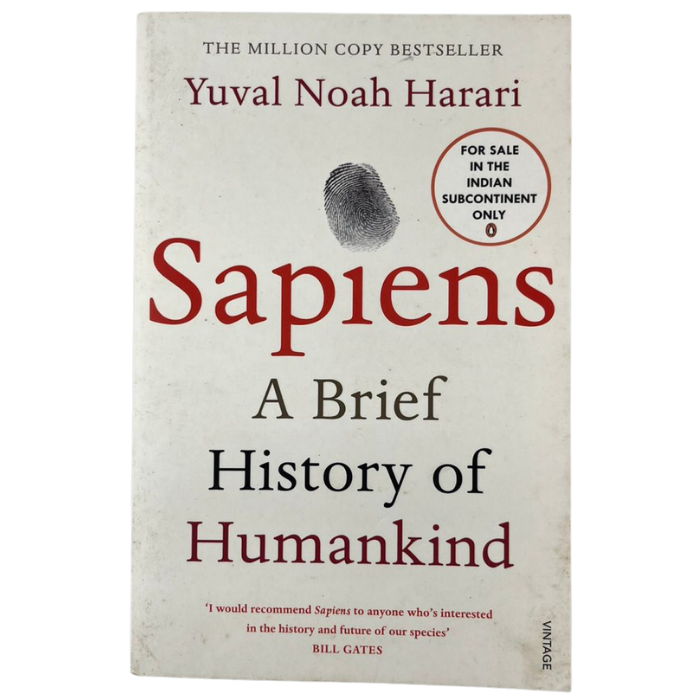
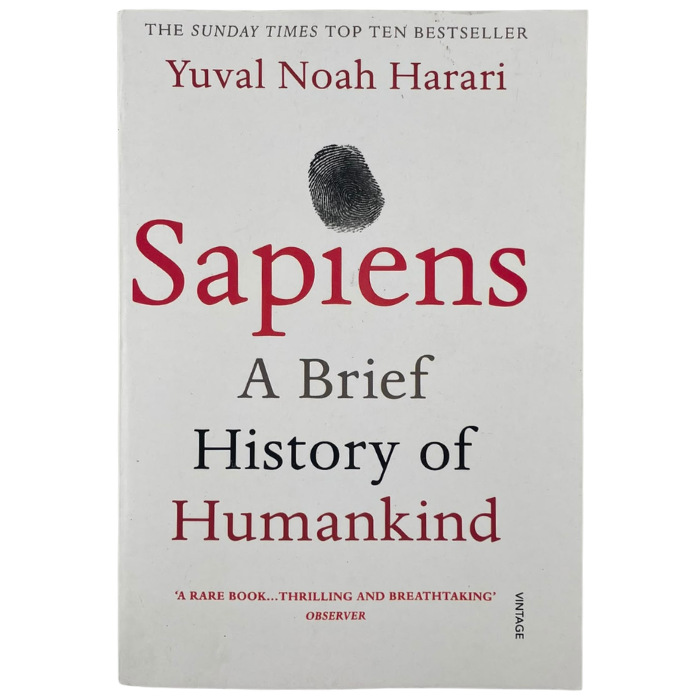
''Sapiens'' is a brilliant, mind-expanding, and profoundly thought-provoking book that will change the way you see the world and your place in it. Yuval Noah Harari has written a masterpiece that challenges everything we thought we knew about being human, weaving together history, biology, philosophy, and sociology into a compelling narrative that is both intellectually stimulating and surprisingly accessible.
The book takes us on an epic journey through the history of our species, from the emergence of Homo sapiens in Africa over 100,000 years ago to the present day. Harari divides this journey into four major revolutions:
The Cognitive Revolution (about 70,000 years ago) — when our ancestors developed language and the ability to believe in fictional stories, enabling large-scale cooperation.
The Agricultural Revolution (about 12,000 years ago) — when humans shifted from foraging to farming, leading to the rise of cities, kingdoms, and empires.
The Unification of Humankind — the gradual spread of money, religion, and empires that brought the world together.
The Scientific Revolution (about 500 years ago) — when humans began to acknowledge their ignorance and seek new knowledge, leading to rapid technological and social change.
What makes this book so extraordinary is Harari's ability to distill complex ideas into clear, engaging, and often provocative insights. He challenges our most cherished beliefs — about religion, nationalism, capitalism, human rights, and even happiness. He asks difficult questions: Are we happier than our hunter-gatherer ancestors? Is civilization a blessing or a curse? What does the future hold for Homo sapiens?
Harari's writing is accessible, witty, and full of surprising connections. He draws on a wide range of disciplines, from biology to economics to philosophy, making the book both intellectually rich and deeply engaging. The stories are fascinating, the arguments are compelling, and the conclusions are often unsettling.
However, some readers may find Harari's conclusions too deterministic or pessimistic. Also, the book's broad scope means it sometimes oversimplifies complex topics. But these are minor criticisms of an otherwise brilliant work.
Overall, ''Sapiens'' is a must-read for anyone who wants to understand the human condition — where we came from, how we got here, and where we might be going. It's a book that will make you think, question, and see the world with new eyes.