Free Support 24/7
011 208 1308

1 ×LKR 750.00
1 ×LKR 1,000.00
1 ×LKR 1,000.00

1 ×LKR 1,000.00
Free Support 24/7
011 208 1308

Ratings: ★★★★★ (4.6/5)
Genre: Literary Fiction, Magical Realism, Political Satire, Postcolonial Literature
Book Review:
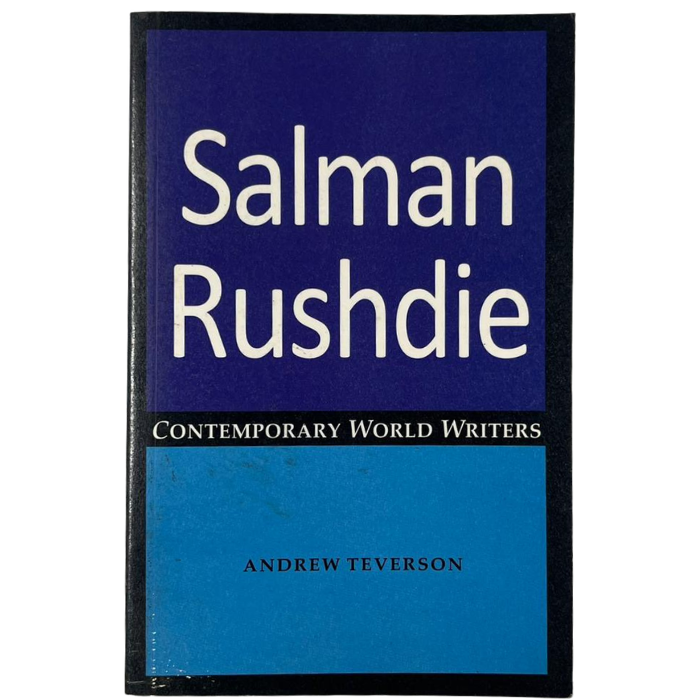
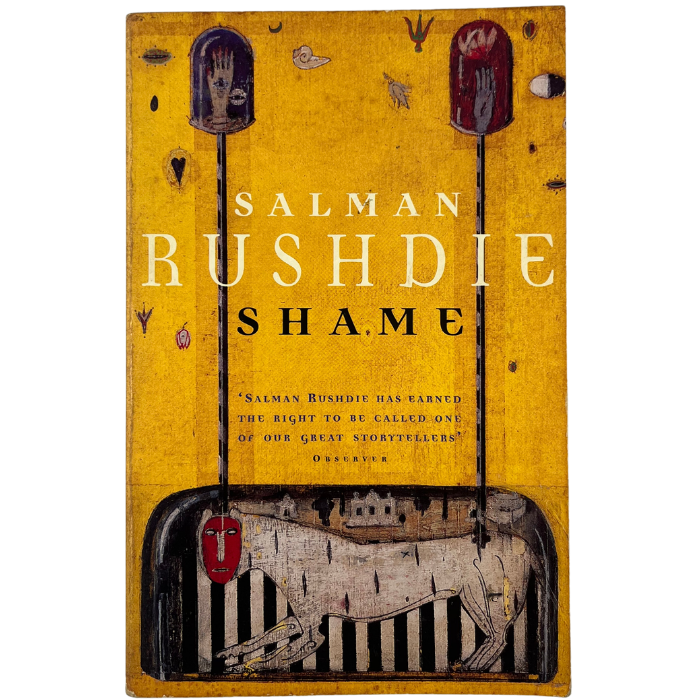
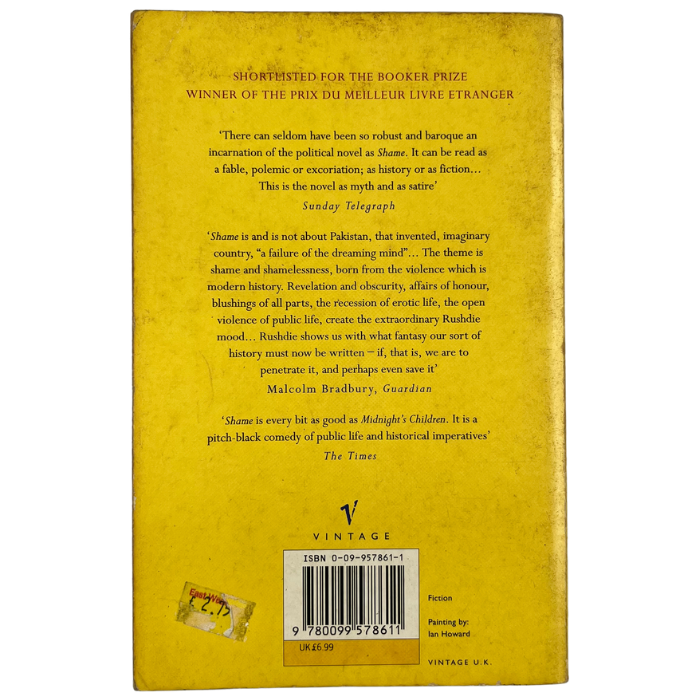
Salman Rushdie's ''Shame'' is a novel of extraordinary power and ambition—a work that confirms his place as one of our greatest storytellers. Shortlisted for the Booker Prize and winner of the Prix du Meilleur Livre Etranger, it's a book that defies easy categorization, blending history and myth, satire and tragedy, comedy and horror.
The novel is set in a country that Rushdie calls ''Peccavistan''—a fictional nation that is clearly Pakistan, though Rushdie insists it's not. ''Shame is and is not about Pakistan,'' he writes, ''that invented, imaginary country, 'a failure of the dreaming mind.''' This ambiguity is central to the novel's power. It allows Rushdie to explore real historical events—the political turmoil, the coups, the corruption—while also creating a mythic space where anything is possible.
The story follows two families: the Hyder family, led by the charismatic and scandalous Iskander Harappa, and the Shakil family, whose three brothers produce a son, Omar Khayyam Shakil, who grows up to become a notorious womanizer and physician. Through their intertwined fates, Rushdie explores the personal and political dimensions of shame—how it shapes individuals and nations, how it can be hidden or flaunted, how it destroys and creates.
The novel is filled with Rushdie's trademark magical realism. There are characters born with a physical manifestation of shame, women who transform into animals, and a world where the boundaries between the real and the fantastic blur. But the magic never feels arbitrary; it's always in service of deeper truths about the human condition.
Malcolm Bradbury, writing in the Guardian, captures the novel's essence: ''Revelation and obscurity, affairs of honour, blushes of all parts, the recession of erotic life, the open violence of public life, create the extraordinary Rushdie mood… Rushdie shows us with what fantasy our sort of history must now be written – if, that is, we are to penetrate it, and perhaps even save it.''
The Sunday Telegraph calls it ''the novel as myth and as satire,'' noting that ''there can seldom have been so robust and baroque an incarnation of the political novel as Shame.'' The Times declares it ''every bit as good as Midnight's Children'' and ''a pitch-black comedy of public life and historical imperatives.''
What makes ''Shame'' so remarkable is its ability to be simultaneously hilarious and horrifying. Rushdie's wit is razor-sharp, his satire devastating. But beneath the comedy is a deep anger at the violence and corruption that have shaped modern Pakistan—and, by extension, so much of the postcolonial world.
For fans of Rushdie, ''Shame'' is essential reading—a novel that stands alongside ''Midnight's Children'' as a masterpiece of postcolonial literature. For newcomers, it's a challenging but rewarding introduction to one of the most important writers of our time.
As the Observer writes: ''Salman Rushdie has earned the right to be called one of our great storytellers.'' ''Shame'' proves it. Highly recommended.