Free Support 24/7
011 208 1308

Free Support 24/7
011 208 1308

Ratings: ★★★★☆ (4/5)
Genre: Political Science / International Relations / Sri Lankan Studies
Book Review:
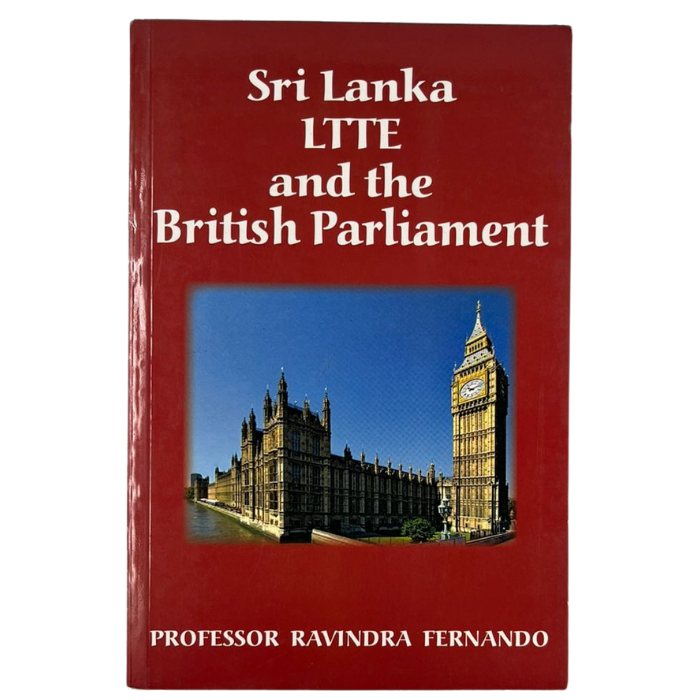
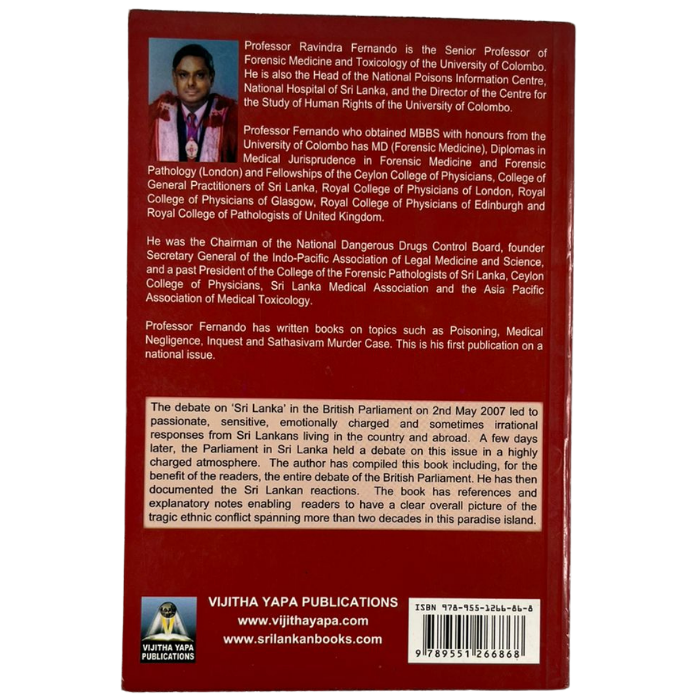
Professor Ravindra Fernando's ''Sri Lanka, LTTE and the British Parliament'' is a unique and valuable contribution to the documentation of a significant moment in Sri Lanka's contemporary political history. The author, a Senior Professor of Forensic Medicine at the University of Colombo with an extraordinary array of academic credentials, brings his analytical skills to a topic outside his usual field, with impressive results.
The book centers on the debate that took place in the British Parliament on May 2, 2007, regarding the situation in Sri Lanka. This debate, as Fernando notes, provoked ''passionate, sensitive, emotionally charged and sometimes irrational responses'' from Sri Lankans both at home and abroad. The subsequent debate in Sri Lanka's own Parliament was equally charged. Fernando's project is to document both the original debate and the reactions it generated, providing readers with the primary sources necessary to understand what happened.
The book's greatest strength is its commitment to documentation. Fernando includes the entire transcript of the British Parliamentary debate, making it available to readers who might not otherwise have access. He then catalogs the responses from various quarters in Sri Lanka—political, media, civil society—allowing readers to see the full spectrum of reaction. The references and explanatory notes help contextualize the material.
Professor Fernando's credentials are impressive: MBBS with honors from the University of Colombo, MD in Forensic Medicine, diplomas from London, and fellowships from multiple Royal Colleges in the UK and Sri Lanka. He has chaired the National Dangerous Drugs Control Board and served as president of several professional associations. While his previous books have focused on topics like poisoning, medical negligence, and the Sathasivam murder case, this book represents his first foray into national political issues.
For scholars of Sri Lankan politics, this book is a valuable resource. It collects primary source material that might otherwise be difficult to find. For students of international relations, it offers a case study of how a small nation's internal conflicts become subjects of debate in foreign parliaments. And for general readers interested in Sri Lanka, it provides insight into