Free Support 24/7
011 208 1308

Free Support 24/7
011 208 1308

ratings: ★★★★☆ (4.3/5)
Genre: Drama, Comedy, Classic
Book Review:
You probably know them as operas. Rossini's The Barber of Seville is a whirlwind of comic energy, and Mozart's The Marriage of Figaro is one of the most sublime works of art ever created. But before they were operas, they were plays—brilliant, witty, and politically explosive plays written by a man who was a watchmaker, a spy, a gunrunner, and one of the most fascinating figures of the 18th century: Pierre-Augustin Caron de Beaumarchais.
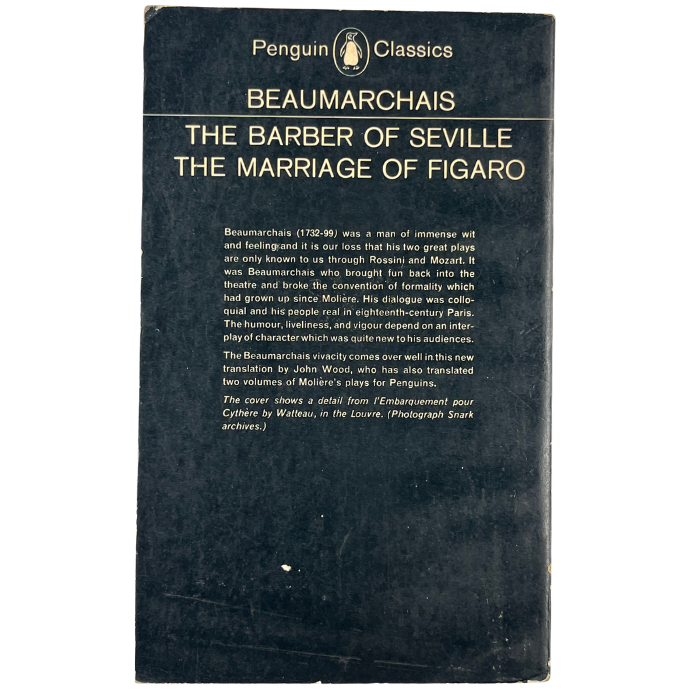
This Penguin Classics volume brings together Beaumarchais's two masterpieces in lively, readable translations by John Wood. Reading them is a revelation. You can hear the echoes of Mozart and Rossini, but you also encounter something new: the sharp, irreverent, and surprisingly subversive voice of Beaumarchais himself.
The Barber of Seville is pure comic delight. The plot is classic comedy of intrigue: the young Count Almaviva has fallen in love with Rosine, a beautiful young woman who is kept locked away by her elderly and jealous guardian, Dr. Bartolo. With the help of Figaro, the barber of Seville—a man of endless resource and wit—the Count must outwit Bartolo and win the girl. The play is a whirlwind of disguises, mistaken identities, and hilarious schemes.
The Marriage of Figaro is a different matter entirely. It is a darker, more complex, and more daring work. Figaro is now a servant in the household of Count Almaviva, and he is about to marry Susanna, the Countess's maid. But the Count, who has tired of his wife, is determined to exercise his ancient ''right'' to sleep with Susanna before the wedding night. The play becomes a battle of wits between master and servant, a conflict that exposes the hypocrisy and corruption of the aristocracy. It is a comedy, but it is a comedy with a sharp, revolutionary edge. It is no wonder that it was banned by the French king.
Beaumarchais's characters are wonderful creations. Figaro is the ultimate clever servant, a man of the people who is more than a match for his aristocratic masters. The Count is a complex figure, both charming and despicable. The Countess is a woman of profound dignity and sadness. And Susanna is the real brains of the operation, a woman who is more than capable of outwitting everyone.
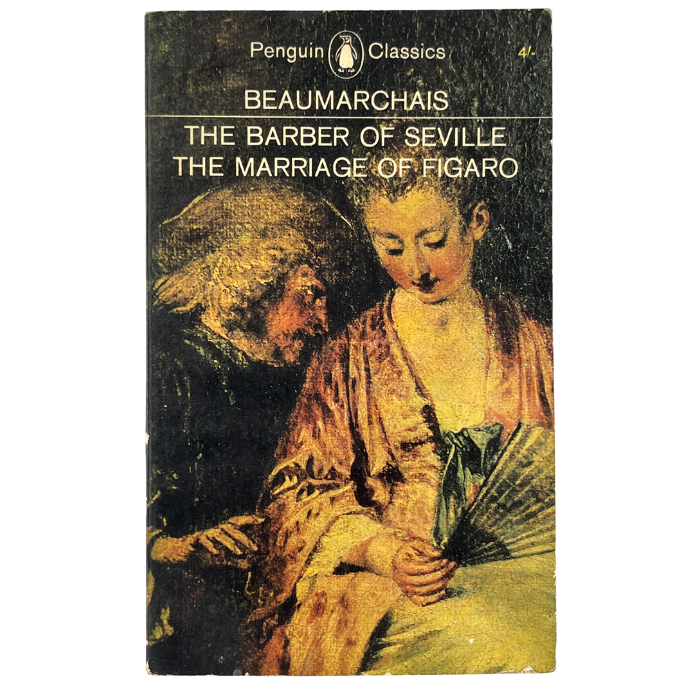
This Penguin Classics edition is a wonderful way to discover these masterpieces. John Wood's translations are lively and actable, capturing the wit and energy of the originals. The cover, a detail from Watteau's famous painting L'Embarquement pour Cythère, perfectly evokes the play's blend of elegance and subversive energy.
The Barber of Seville and The Marriage of Figaro are essential reading for anyone who loves great theatre. They are funny, smart, and surprisingly moving. They are also a fascinating window into a world on the brink of revolution. Read them, and you will understand why they inspired two of the greatest operas ever written. Highly recommended.