
Free Support 24/7
011 208 1308

Free Support 24/7
011 208 1308

Ratings: ★★★★★ (4.8/5)
Genre: Philosophy, Political Philosophy, Ethics, Economics, Social Science, Law, Non-Fiction.
Book Review:
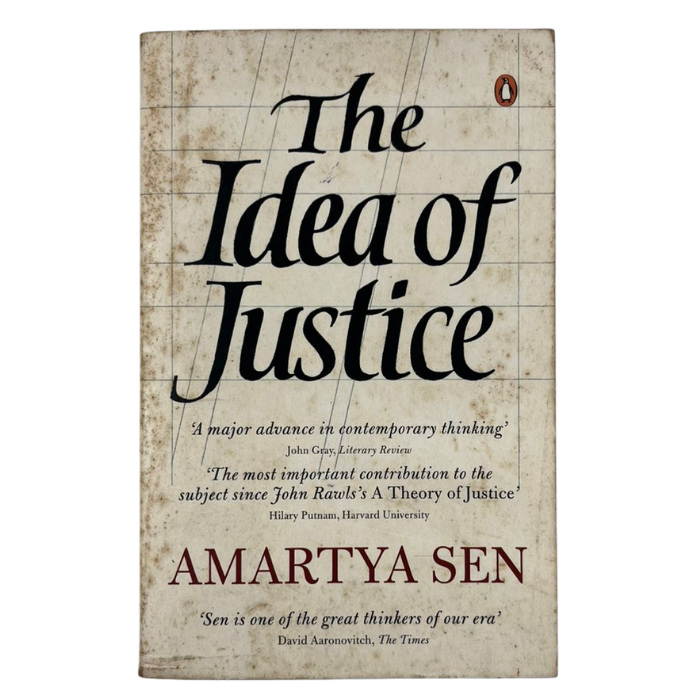
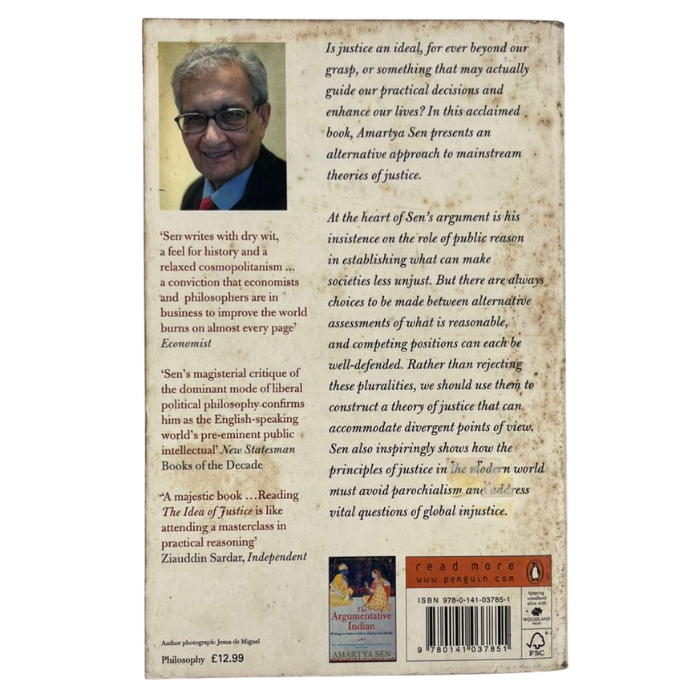
Amartya Sen's ''The Idea of Justice'' is a landmark work of political philosophy by one of the world's foremost public intellectuals. This magisterial book offers a profound and compelling alternative to the dominant theories of justice that have shaped modern thought.
Sen, a Nobel Prize-winning economist and philosopher, engages in a critical dialogue with the tradition of ''transcendental institutionalism,'' most famously represented by John Rawls's ''A Theory of Justice.'' He argues that the search for a perfectly just society, defined by ideal institutions, is both unrealistic and unnecessary. Instead, he proposes a ''realization-focused'' approach, grounded in the comparative assessment of actual societies. The key question, for Sen, is not ''what are perfectly just institutions?'' but rather ''how can we reduce manifest injustice in the world?''
Central to his argument is the idea that justice is not a monolithic concept but is shaped by public reasoning and democratic deliberation. He emphasizes the role of plurality, arguing that different reasonable people may have different, yet equally valid, perspectives on what constitutes justice. The challenge is not to eliminate this plurality but to create spaces for open and informed debate that can lead to the reduction of injustice. Sen also powerfully extends his analysis to the global stage, arguing that considerations of justice must transcend national boundaries and address issues of global inequality, human rights, and cosmopolitan responsibility.
''The Idea of Justice'' is a work of immense erudition, clarity, and moral passion. It is not a dry academic treatise but a vibrant and accessible invitation to think more deeply about how we can create a fairer world. Hailed by critics as ''a major advance in contemporary thinking'' (John Gray) and ''the most important contribution to the subject since John Rawls's A Theory of Justice'' (Hilary Putnam), this book is essential reading for anyone concerned with justice, equality, and the future of our societies.


070822-img.png)