Free Support 24/7
011 208 1308

Free Support 24/7
011 208 1308

Ratings: ★★★★☆ (4.3/5)
Genre: History, Biography, Group Biography, Non-Fiction
Book Review:
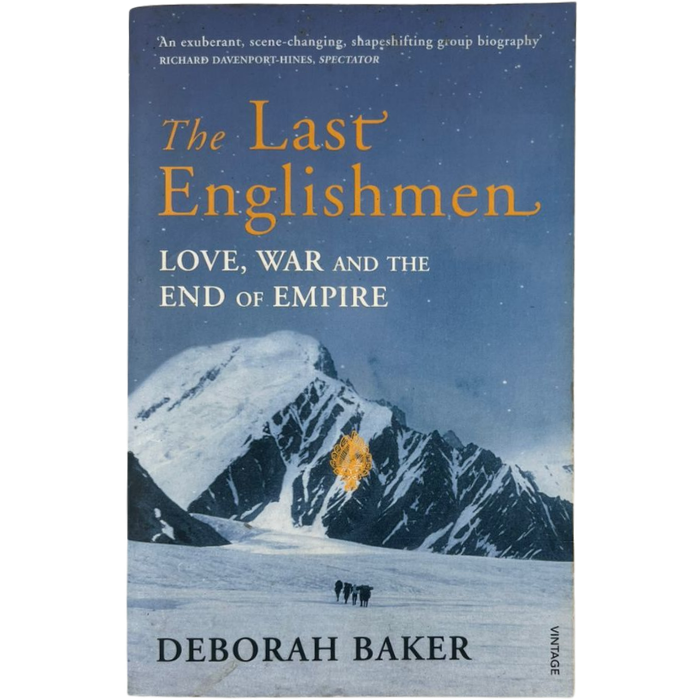
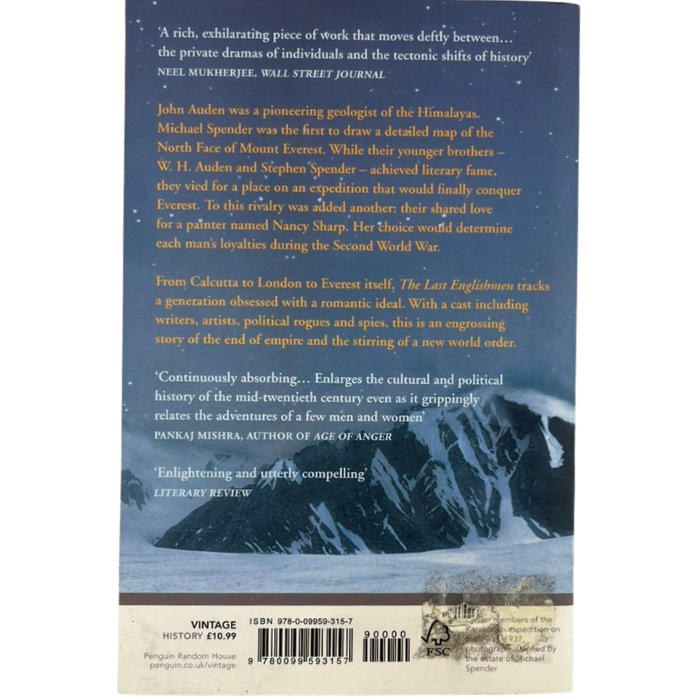
Deborah Baker's The Last Englishmen is a remarkable work of narrative non-fiction, a book that is at once a gripping adventure story, a poignant love triangle, and a sweeping historical panorama. It brings to life a generation of men and women who were caught between the fading glory of the British Empire and the birth of a new world order, and it does so with a novelistic flair that makes it utterly compelling.
The book centers on two extraordinary men: John Auden, a pioneering geologist who mapped the Himalayas, and Michael Spender, a surveyor who created the first detailed map of the North Face of Everest. They were brothers, respectively, of the famous poets W.H. Auden and Stephen Spender, but their own ambitions were no less grand. Both were obsessed with being part of a legendary expedition to conquer Everest, and their rivalry for a place on the team was intense.
This professional rivalry was complicated by a shared love for the same woman: Nancy Sharp, a talented and independent painter. Nancy's choice between the two men would have profound consequences, shaping not only their personal lives but also their loyalties during the Second World War. As the war engulfed the globe, John and Michael found themselves on opposite sides of the conflict in India, a nation itself on the brink of revolutionary change.
Baker's narrative ranges from the ice-bound slopes of Everest to the intellectual salons of London, from the bustling streets of Calcutta to the corridors of power in Delhi. She introduces us to a fascinating cast of characters, including writers, artists, political rogues, and spies. She weaves together their stories with remarkable skill, showing how the personal and the political, the intimate and the historical, are inextricably intertwined.
The Last Englishmen is a richly textured, continuously absorbing book. It is a story of adventure and ambition, of love and loss, of idealism and disillusionment. It captures the end of an era with extraordinary vividness, and it reminds us that history is not just a matter of grand events, but of the lives and choices of individuals. As Pankaj Mishra says, it ''enlarges the cultural and political history of the mid-twentieth century even as it grippingly relates the adventures of a few men and women.'' A truly enlightening and utterly compelling read.