Free Support 24/7
011 208 1308

Free Support 24/7
011 208 1308

Ratings: ★★★★☆ (4/5)
Genre: Philosophy / Science / Sociology / Interdisciplinary Studies
Book Review:
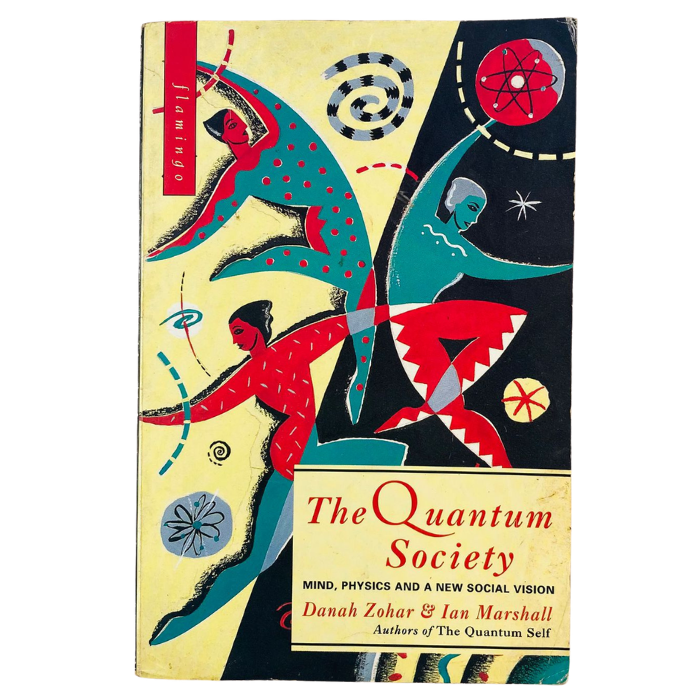
In The Quantum Society, Danah Zohar and Ian Marshall take on an ambitious project: to use the insights of quantum physics to rethink how we understand society, politics, and human relationships. Following the success of their earlier work The Quantum Self, which applied quantum theory to individual consciousness, they now turn their attention to the collective.
The central idea is provocative yet simple: just as quantum physics revealed that the universe is not a collection of separate, predictable particles but a web of relationships and possibilities, so too should we understand society not as a machine made of isolated individuals but as a dynamic, interconnected, and creative system. The authors draw on concepts like superposition (the ability to hold multiple possibilities simultaneously), entanglement (the deep interconnection of all things), and uncertainty (the limits of prediction) to build a new social vision rooted in values, creativity, and genuine pluralism.
The book is at its best when it challenges conventional thinking. Zohar and Marshall critique both the mechanistic models of traditional social science and the atomistic individualism of much modern political thought. They propose instead a vision of democracy as a quantum process—one that embraces diversity, encourages participation, and recognizes the fluid, ever-changing nature of community.
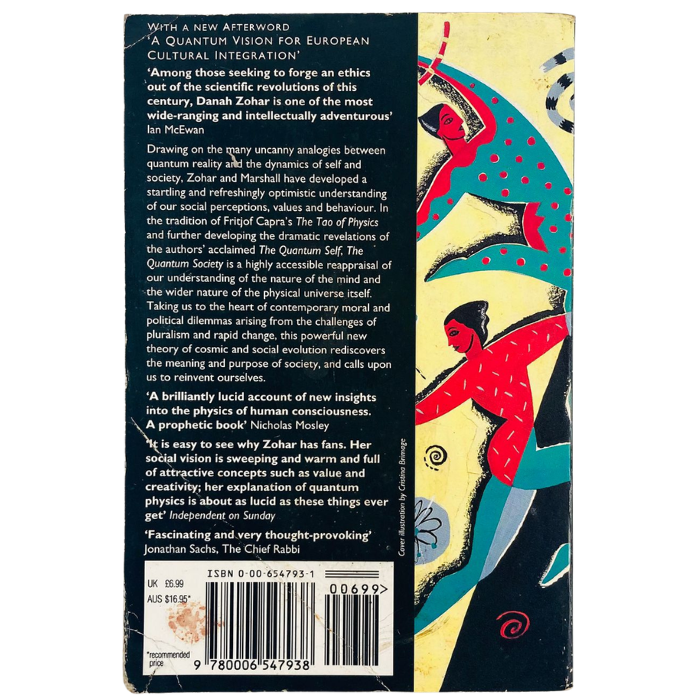
Ian McEwan praises the authors as ''among those seeking to forge an ethics out of the scientific revolutions of this century,'' and indeed, this book is as much about ethics and meaning as it is about physics. While some readers may find the quantum analogies stretched at times, the overall argument is thought-provoking and optimistic.
For anyone interested in the intersection of science and society, or seeking new frameworks for understanding our complex world, The Quantum Society offers a rich and rewarding read.