Free Support 24/7
011 208 1308


2 ×LKR 1,500.00
1 ×LKR 1,500.00
1 ×LKR 1,500.00

1 ×LKR 500.00
1 ×LKR 400.00

1 ×LKR 600.00
1 ×LKR 1,500.00

1 ×LKR 1,500.00
Free Support 24/7
011 208 1308
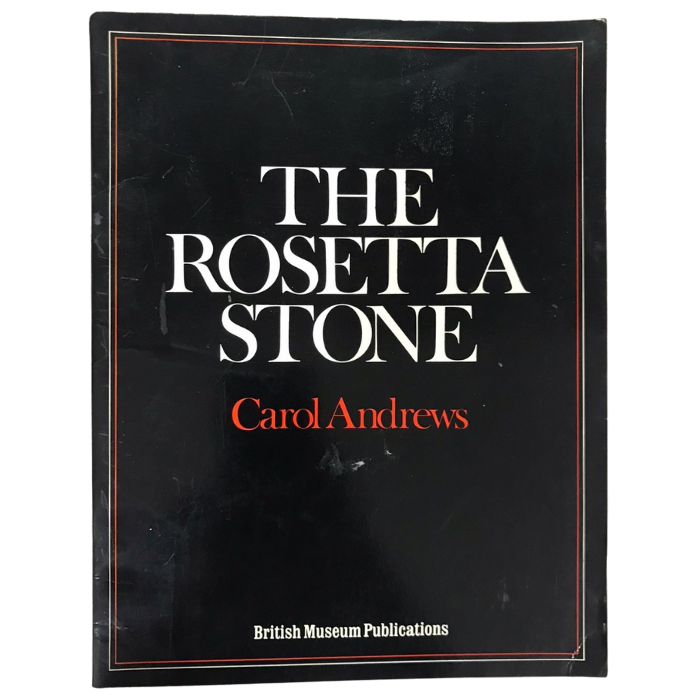


Genre: Archaeology, Egyptology, History, Ancient History, Reference, Museum Publication
Ratings: ★★★★★ (5/5)
Book Review:
Carol Andrews' ''The Rosetta Stone,'' published by the British Museum Publications, is the definitive, authoritative guide to one of the most iconic and important artefacts in human history. This concise yet comprehensive book serves as the official companion to the Stone itself, which resides in the British Museum.
The book expertly unpacks the monumental significance of this dark granodiorite slab. Discovered in 1799, the Rosetta Stone bears the same decree in three scripts: Ancient Egyptian hieroglyphs, Demotic script, and Ancient Greek. Andrews clearly explains how this trilingual inscription became the crucial key that allowed scholars, most notably Jean-François Champollion, to finally decipher Egyptian hieroglyphs in the 1820s, unlocking millennia of history.
The text covers the Stone's discovery by French soldiers in Egypt, its historical context during the Ptolemaic period, a detailed analysis of the inscription's content, and the fascinating story of its decipherment. Richly illustrated with photographs and diagrams, the book makes the complex subject of philology and archaeology accessible to a general audience.
More than just a history lesson, this book illuminates why the Rosetta Stone is a symbol of human curiosity and intellectual triumph. It is an essential read for anyone interested in archaeology, ancient Egypt, linguistics, or the history of writing. For visitors to the British Museum or armchair historians alike, this guide transforms viewing the Stone from a passive experience into a deep appreciation of its world-changing role.