Free Support 24/7
011 208 1308

Free Support 24/7
011 208 1308

ratings: ★★★★☆ (4.4/5)
Genre: Buddhist Philosophy, Religious Studies, Sutra Literature
Book Review:
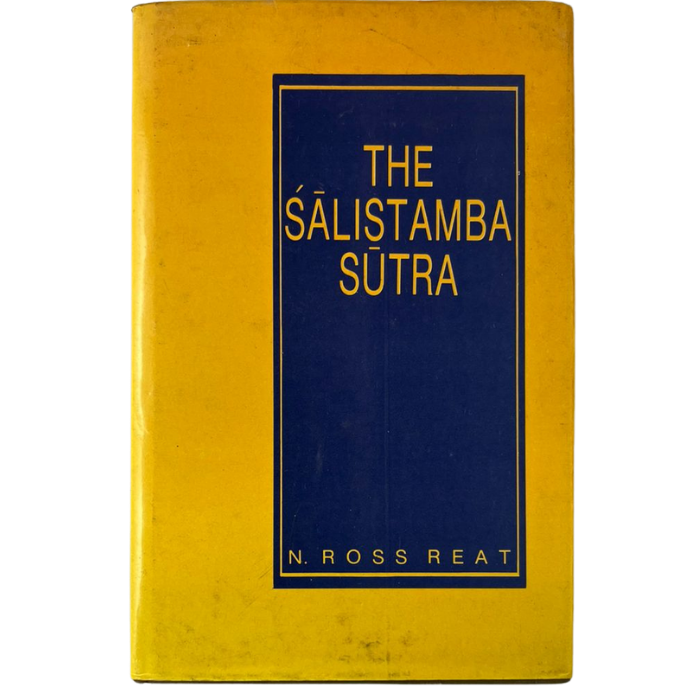
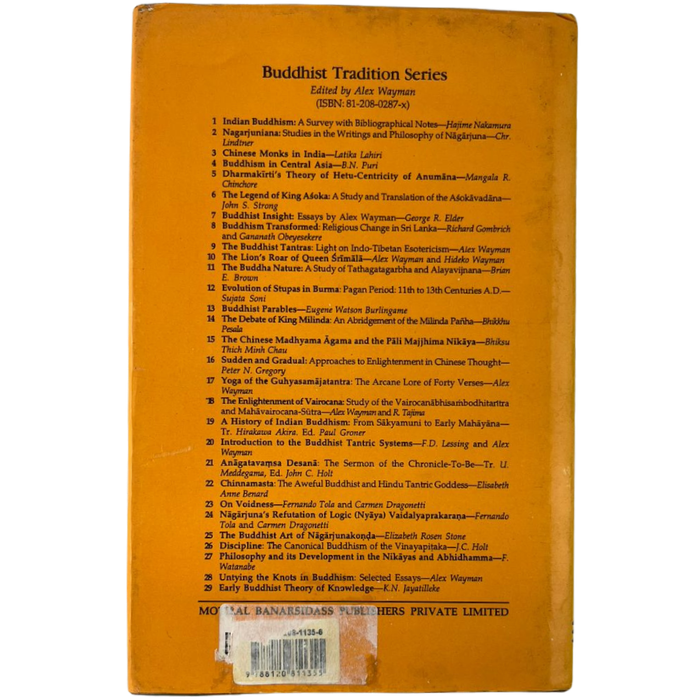
N. Ross Reat's ''The Salistamba Sutra'' is a valuable and scholarly contribution to the study of Mahayana Buddhist literature, appearing within the prestigious ''Buddhist Tradition Series'' edited by the renowned Alex Wayman. This series is known for its high-quality publications, including works by luminaries such as Hajime Nakamura, K.N. Jayatilleke, and Richard Gombrich, and Reat's study sits comfortably among them.
The Śālistamba Sūtra (the ''Rice Seedling Sūtra'') is a relatively short but profoundly important text. Its significance lies in its clear and systematic exposition of the doctrine of pratītyasamutpāda, or Dependent Origination, the cornerstone of Buddhist philosophy. Using the simple and powerful metaphor of a rice seedling growing from a seed, the sūtra explains how all phenomena arise in dependence on causes and conditions, and how this principle applies to the cycle of birth, suffering, and death.
Reat's work provides a critical introduction to the text, exploring its context within the broader Buddhist canon, its philosophical implications, and its connections to other key doctrines. He likely offers an analysis of the sūtra's structure, its main arguments, and its place in the development of Mahayana thought. The book serves as an excellent guide for students and scholars seeking to understand this foundational text.
For anyone engaged in the serious study of Buddhist philosophy, particularly the concepts of causality, emptiness (śūnyatā), and the nature of reality, ''The Salistamba Sutra'' as presented by Reat is an indispensable resource. It brings a crucial primary text into sharper focus, illuminating its teachings with scholarly clarity and placing it within the rich tradition of Buddhist thought.