Free Support 24/7
011 208 1308

Free Support 24/7
011 208 1308

Ratings: ★★★★☆ (4.5/5)
Genre: Literary Fiction / Australian Literature / Family Saga
Book Review:
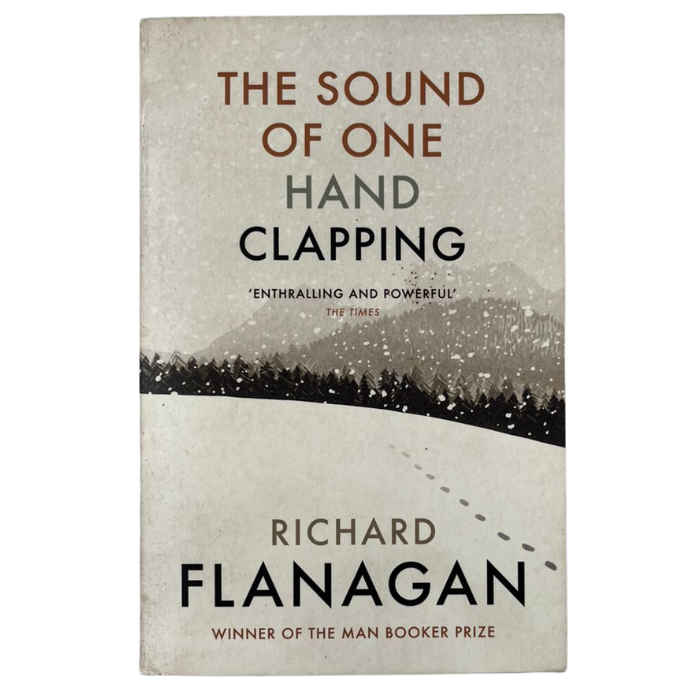
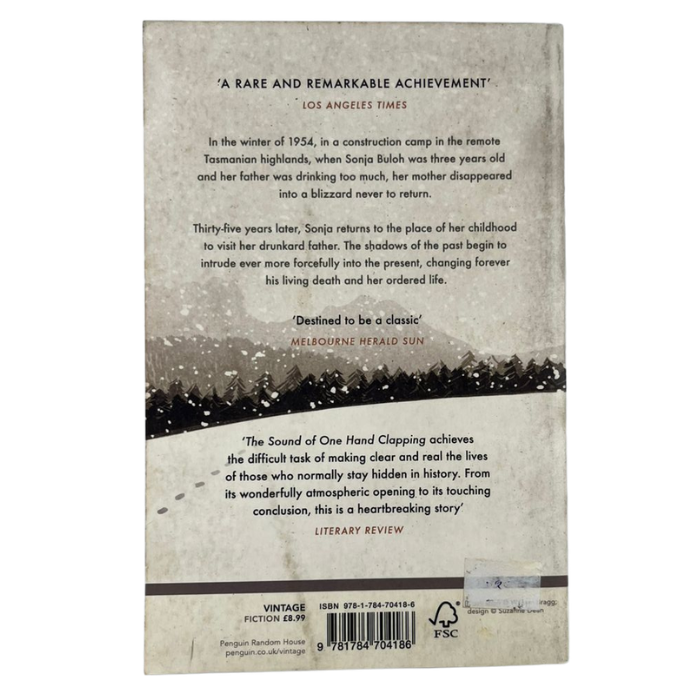
Richard Flanagan's ''The Sound of One Hand Clapping'' is a novel that arrives with extraordinary praise: ''A rare and remarkable achievement'' from the Los Angeles Times, ''destined to be a classic'' from the Melbourne Herald Sun, and ''enthralling and powerful'' from The Times. Having read it, I can confirm that this praise is well-deserved.
The novel opens in the winter of 1954, in a remote construction camp in the Tasmanian highlands. Sonja Buloh is three years old. Her father, Bojan, is a Slovenian immigrant working as a laborer, drinking too much, haunted by something we don't yet understand. One night, Sonja's mother walks into a blizzard and never returns. This event shapes everything that follows.
Thirty-five years later, Sonja returns to Tasmania, now a successful woman living in Sydney, to visit her father. The past, long buried, begins to surface. Flanagan weaves between past and present, showing us how trauma echoes across decades, how the sins and sorrows of parents become the inheritance of children.
What makes the novel so powerful is its attention to lives usually invisible in literature. These are immigrants, laborers, the poor—people who ''normally stay hidden in history,'' as the Literary Review notes. Flanagan, the son of a Tasmanian logger, writes about this world with authority and compassion. He knows these people, their struggles, their silences, their small dignities.
The prose is beautiful without being showy. Flanagan has a gift for atmosphere—the Tasmanian landscape becomes a character in its own right, beautiful and brutal. The snow, the mud, the rough camp, the makeshift homes—all are rendered with sensory vividness.
But the novel's greatest achievement is its emotional power. This is a heartbreaking story, as the reviews note. It deals with loss, guilt, forgiveness, and the possibility of redemption. The relationship between Sonja and her father is drawn with extraordinary subtlety—the love that persists despite everything, the wounds that never fully heal, the possibility of understanding that comes too late.
For readers who appreciate literary fiction of the highest order, this book is essential. For those interested in Australian literature, it's a landmark work. And for anyone who believes that novels can illuminate the darkest corners of human experience, ''The Sound of One Hand Clapping'' will not disappoint.
Flanagan would go on to win the Man Booker Prize for ''The Narrow Road to the Deep North,'' but this earlier work shows the same gifts: deep humanity, beautiful prose, and the courage to look unflinchingly at suffering. It deserves its reputation as a modern classic. Highly recommended.