Free Support 24/7
011 208 1308

Free Support 24/7
011 208 1308

Ratings: ★★★★☆ (4.3/5)
Genre: Theatre Studies, Performing Arts, Sri Lankan History, Ethnic Studies, Cultural Studies
Book Review:
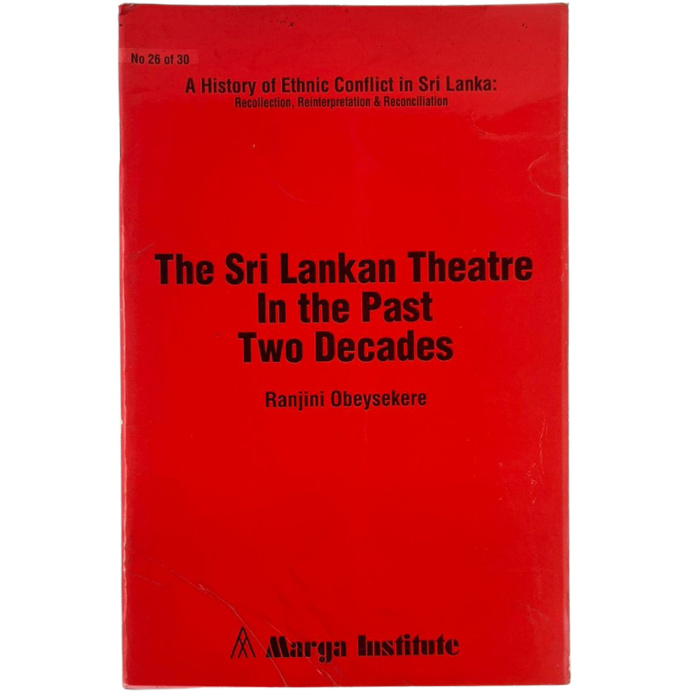
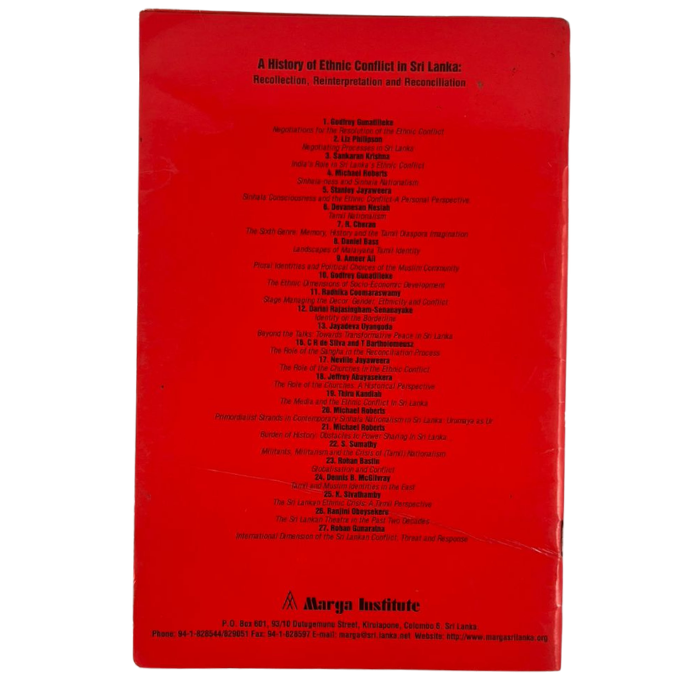
Ranjini Obeysekere's ''The Sri Lankan Theatre in the Past Two Decades'' offers a unique and valuable perspective on one of the most turbulent periods in Sri Lankan history. As the 26th volume in the ambitious series ''A History of Ethnic Conflict in Sri Lanka: Recollection, Reinterpretation & Reconciliation,'' this book approaches ethnic conflict not through conventional political or historical analysis, but through the lens of theatrical expression.
The choice of theatre as a window into ethnic conflict is inspired. Theatre, perhaps more than any other art form, directly engages with live audiences and contemporary issues. It has the capacity to reflect social tensions, give voice to marginalized perspectives, and create spaces for dialogue and empathy. Obeysekere examines how Sri Lankan playwrights, directors, and performers responded to the escalating ethnic conflict of the past two decades, and how theatre both reflected and shaped public consciousness.
The book's strength lies in its detailed analysis of specific productions, playwrights, and theatrical movements. Obeysekere brings deep knowledge of both Sri Lankan culture and theatrical practice to her subject, allowing her to read performances as texts that reveal underlying social and political dynamics. She explores how theatre grappled with questions of identity, belonging, violence, and reconciliation.
As part of a larger series on ethnic conflict, this volume contributes to the project's overarching goals of ''Recollection, Reinterpretation & Reconciliation.'' By examining how theatre has remembered and reinterpreted conflict, Obeysekere suggests possibilities for reconciliation that move beyond political agreements to cultural and emotional healing.
For students of Sri Lankan culture, theatre scholars, and anyone interested in how societies process conflict through art, this book is invaluable. It demonstrates that understanding ethnic conflict requires not just political and historical analysis, but attention to the cultural expressions through which communities understand themselves and each other. Obeysekere's work reminds us that theatre is not merely entertainment but a vital space where societies confront their deepest divisions and imagine new possibilities for coexistence.