Free Support 24/7
011 208 1308

Free Support 24/7
011 208 1308

Ratings: ★★★★☆ (4.3/5)
Genre: Martial Arts, Judo, Sports Instruction
Book Review:
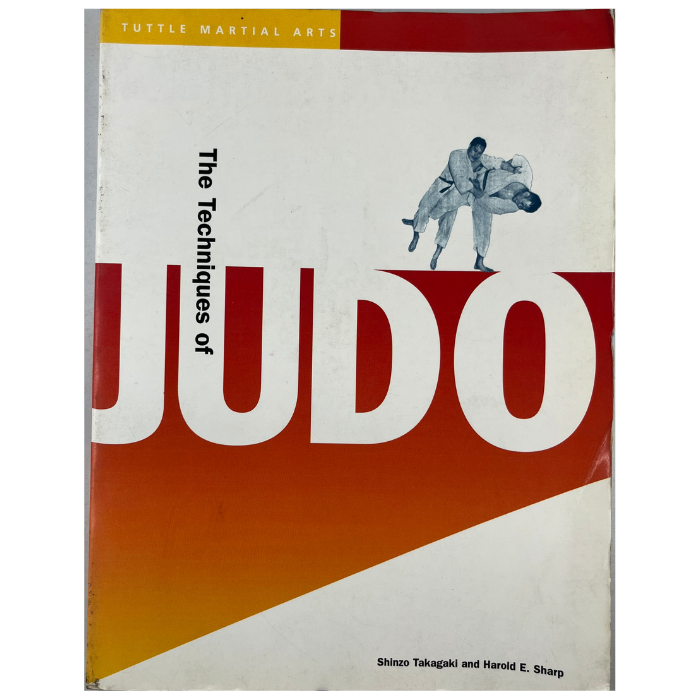
When a book is co-authored by a ninth-degree black belt and special instructor at the Kodokan—the spiritual home of judo—it commands attention. Shinzo Takagaki and Harold E. Sharp's ''The Techniques of Judo'' brings authentic, authoritative instruction from the highest levels of the judo world to readers everywhere.
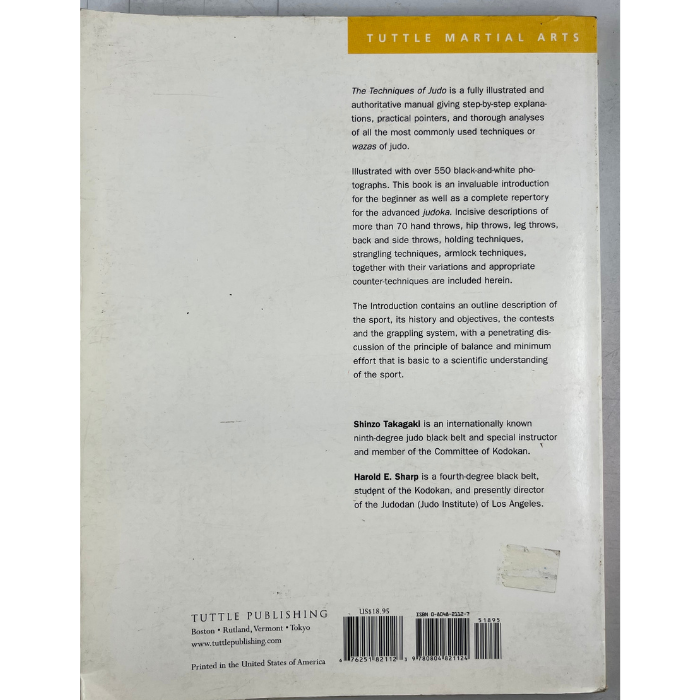
This book's enduring value lies in its comprehensive, systematic approach. With over 550 black-and-white photographs, it documents more than 70 techniques: hand throws, hip throws, leg throws, back and side throws, holding techniques, strangling techniques, and armlock techniques. Each technique is presented with its variations and appropriate counter-techniques, giving readers a complete understanding of how moves relate to each other.
The photographs are essential to the book's effectiveness. Judo is a physical art that cannot be learned from text alone—seeing the positions, movements, and applications is crucial. The black-and-white format focuses attention on form without distraction.
The introduction deserves special mention. It provides not just historical context but a penetrating discussion of the principles of balance and minimum effort that underlie all judo techniques. Understanding these principles transforms rote learning into genuine comprehension.
The authors' credentials are impeccable. Takagaki's ninth-degree black belt and position at the Kodokan represent the pinnacle of judo achievement. Sharp's perspective as a fourth-degree black belt and director of a major American judo institute bridges Japanese tradition and Western practice.
For Sri Lankan judoka, this book offers direct access to authentic instruction. Whether training in a formal dojo or studying independently, practitioners can learn from masters. The techniques are universal—judo is practiced the same way worldwide.
The book is suitable for all levels. Beginners will find clear, step-by-step instruction. Advanced practitioners will appreciate the complete repertory and the discussion of counter-techniques. Instructors will value it as a teaching resource.
The main limitation is that it focuses on techniques rather than training methods, competition strategy, or the philosophical aspects of judo. But within its scope, it's comprehensive.
Overall, ''The Techniques of Judo'' is a classic martial arts manual that has stood the test of time. It brings authentic Kodokan instruction to readers worldwide. Highly recommended for anyone serious about learning judo.
