Free Support 24/7
011 208 1308

Free Support 24/7
011 208 1308
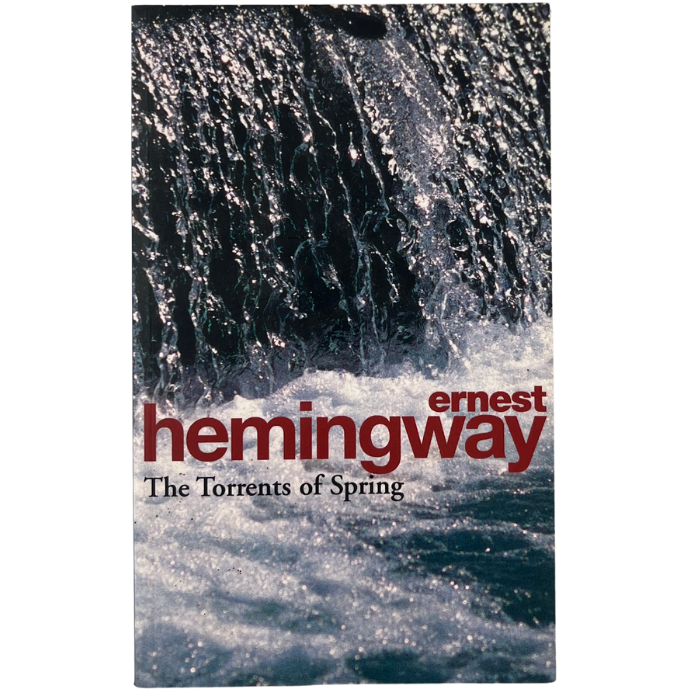

Ratings:★★★★☆ (4/5)
Genre: Literary Fiction, Satire, Parody, Humor
Book Review:
Ernest Hemingway is known for his spare prose, his stoic heroes, and his profound influence on 20th-century literature. But ''The Torrents of Spring'' reveals a different side of the master—a playful, irreverent, and surprisingly funny writer who wasn't afraid to mock the very literary traditions he would later help define.
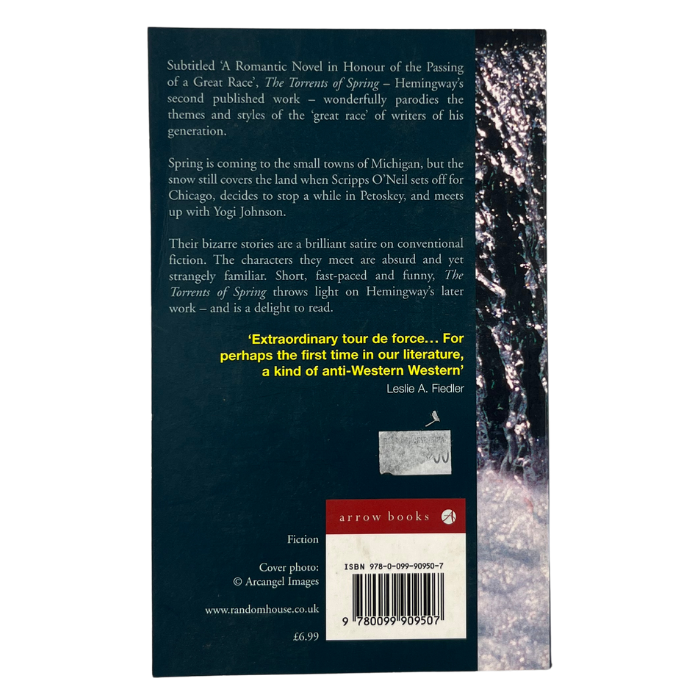
Subtitled ''A Romantic Novel in Honour of the Passing of a Great Race,'' this is Hemingway's second published work, and it's unlike anything else he ever wrote. It's a parody, a satire aimed primarily at Sherwood Anderson, whose work Hemingway admired but also felt needed skewering. Anderson's ''Dark Laughter'' is the main target, but Hemingway also takes aim at Gertrude Stein, James Joyce, and other luminaries of the modernist movement.
The plot is deliberately absurd. Spring is coming to the small towns of Michigan, but the snow still covers the land. Scripps O'Neil, a man who has left his wife, sets off for Chicago but decides to stop for a while in Petoskey. There he meets Yogi Johnson, a man searching for something he can't name. Together they encounter a series of bizarre characters: an Indian woman who works in a diner, a British expatriate with strange theories, and a variety of others who seem to have wandered in from a different kind of novel entirely.
What follows is a wild, fast-paced romp that defies expectations. Hemingway's prose, usually so controlled, here becomes playful and experimental. The dialogue is ridiculous, the situations are absurd, and the whole thing reads like a writer letting off steam, having fun, and showing off his range.
But beneath the humor is a serious point. Hemingway is mocking the pretensions of the literary establishment, the tendency to take oneself too seriously, the clichés that had already begun to form in modernist writing. He's also, perhaps, carving out space for his own style—showing what he's not, so readers can better understand what he is.
The critical reception has been interesting. Leslie A. Fiedler called it an ''extraordinary tour de force... for perhaps the first time in our literature, a kind of anti-Western Western.'' Others have seen it as a minor work, a curiosity in the Hemingway canon. But for fans of Hemingway, it's a fascinating glimpse into his development as a writer—a playful, youthful work that shows him experimenting, taking risks, and having fun.
''The Torrents of Spring'' is not the place to start with Hemingway. For that, read ''The Sun Also Rises'' or ''A Farewell to Arms.'' But for those already familiar with his work, this little book is a delight—a chance to see a master at play. It's short, funny, and surprisingly sweet. Recommended for Hemingway completists and anyone interested in literary satire.