Free Support 24/7
011 208 1308
Free Support 24/7
011 208 1308

Ratings: ★★★★★ (4.5 / 5)
Genre: Drama, Comedy, Classics, Greek Literature
Book Review:
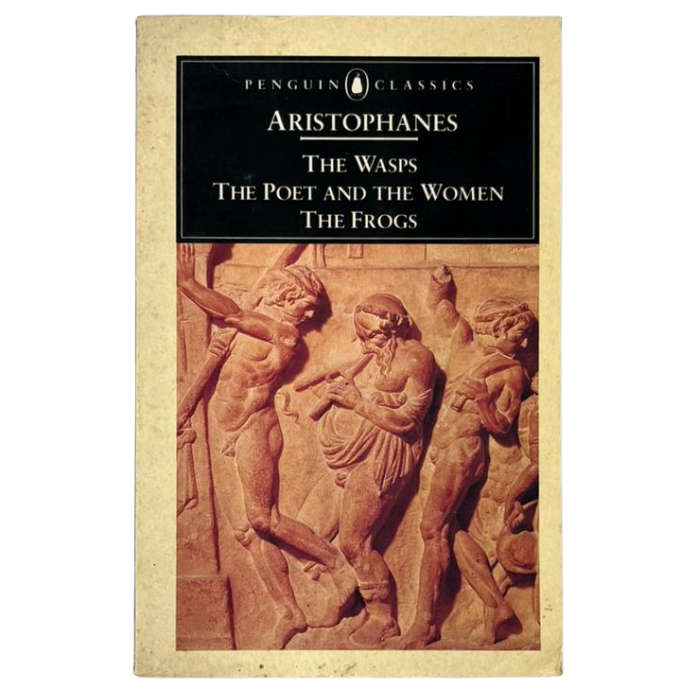
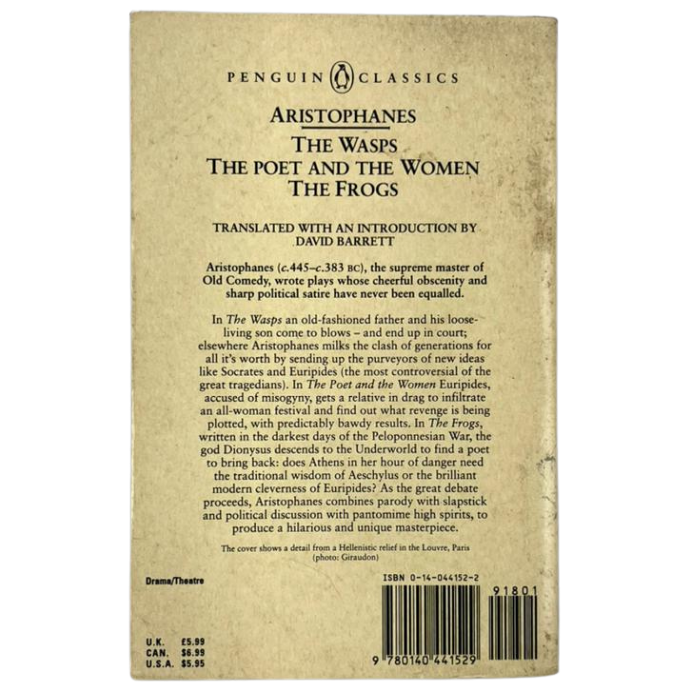
Aristophanes is the supreme master of Old Comedy—the only Athenian comic playwright whose work survives, and one of the most brilliant satirists who ever lived. This Penguin Classics volume brings together three of his greatest plays, translated with wit and verve by David Barrett.
The Wasps: A hilarious battle between an old-fashioned father addicted to jury duty and his modern, pleasure-loving son. It's a timeless clash of generations, filled with slapstick and sharp social commentary.
The Poet and the Women (also known as Thesmophoriazusae): Euripides, accused of misogyny, sends a relative in drag to infiltrate an all-woman festival to discover what revenge they are plotting. The result is predictably bawdy and uproariously funny.
The Frogs: Written in the darkest days of the Peloponnesian War, this masterpiece follows the god Dionysus as he descends to the Underworld to bring back a poet who can save Athens. The great debate between Aeschylus (representing traditional wisdom) and Euripides (representing modern cleverness) is one of the most brilliant scenes in all of drama—a mix of parody, political discussion, and pantomime high spirits.
Aristophanes wrote plays that were cheerfully obscene, politically sharp, and utterly fearless. He mocked everyone—politicians, philosophers (especially Socrates), tragedians (especially Euripides), and even the gods. His work is a window into Athenian society at its most turbulent, and a reminder that some things—like the clash of generations, the battle of the sexes, and the power of laughter—never change.
David Barrett's translation captures the energy and humor of the originals, making them accessible to modern readers without losing their edge. The introduction provides valuable context for understanding Aristophanes' world.
Whether you're a student of classics, a lover of comedy, or simply someone who enjoys brilliant writing, this collection is essential reading. Aristophanes will make you laugh—and think—across 2,500 years.