Free Support 24/7
011 208 1308

Free Support 24/7
011 208 1308

Ratings: ★★★★☆ (4.5/5)
Genre: Military History / Political Science / Sri Lankan Studies
Book Review:
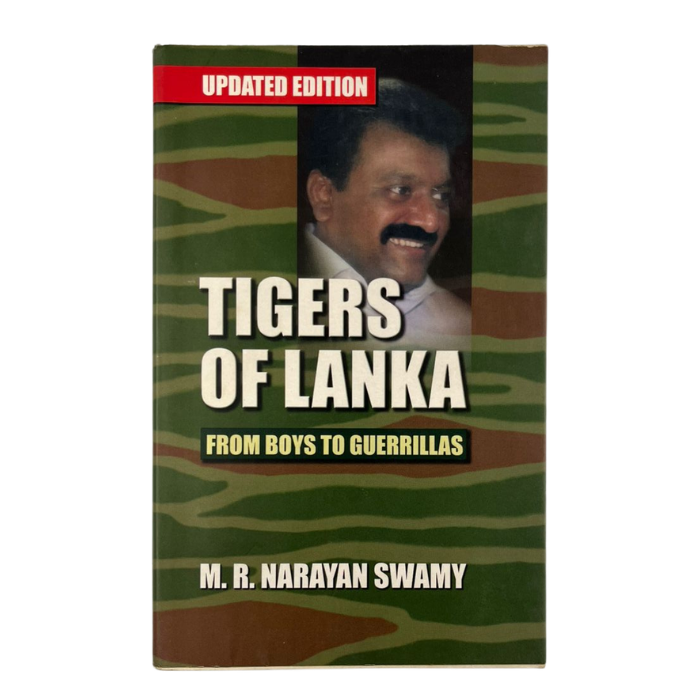
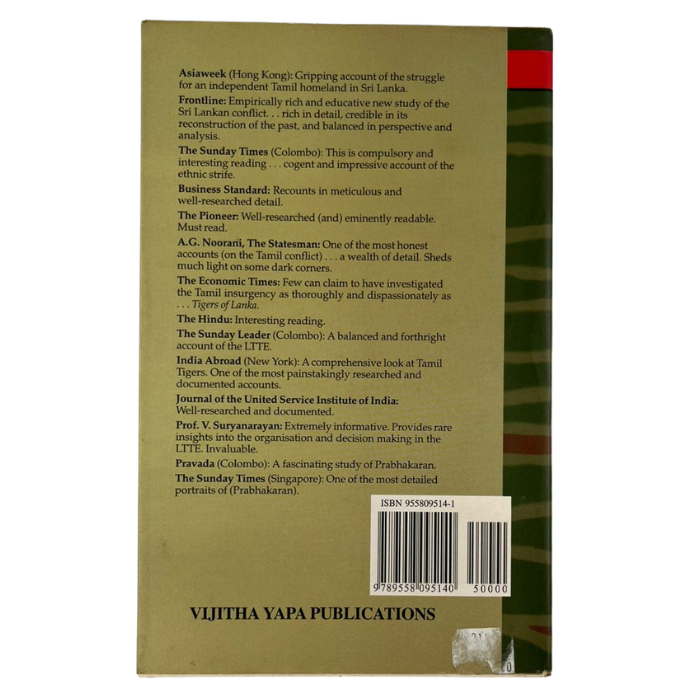
M.R. Narayan Swamy's ''Tigers of Lanka'' is widely regarded as one of the most authoritative and balanced accounts of the Liberation Tigers of Tamil Eelam (LTTE), the insurgent group that fought for a separate Tamil homeland in Sri Lanka for over two decades. As the cover reveals, it has received praise from publications across Asia and beyond—from Asiaweek and Frontline to The Sunday Times and The Hindu.
What makes this book so valuable is the access its author obtained. Narayan Swamy, an Indian journalist, covered the Sri Lankan conflict from its early days and managed to interview key figures in the LTTE, including its legendary and elusive leader, Velupillai Prabhakaran. These interviews provide rare insights into the thinking of the organization's leadership, its internal dynamics, and its decision-making processes.
The book traces the LTTE's evolution from a small group of militant youth in the 1970s to one of the most sophisticated and feared insurgent organizations in the world. Narayan Swamy explores how the Tigers developed their military capabilities, including their innovative use of suicide attacks, their naval wing (the Sea Tigers), and their ability to challenge a modern state for decades. He also examines the political dimensions of the conflict: the grievances that fueled the insurgency, the failures of negotiations, and the complex role of India.
What sets this book apart is its balance. Narayan Swamy is neither an apologist for the LTTE nor a propagandist for the Sri Lankan government. He presents the facts as he found them, allowing readers to draw their own conclusions. The praise from reviewers reflects this: ''balanced in perspective and analysis'' (Frontline), ''a balanced and forthright account'' (The Sunday Leader, Colombo), ''one of the most honest accounts'' (A.G. Noorani, The Statesman).
The book is also meticulously researched. Reviewers note its ''wealth of detail'' (The Statesman), ''meticulous and well-researched detail'' (Business Standard), and status as ''one of the most painstakingly researched and documented accounts'' (India Abroad, New York). For scholars and students of the conflict, this makes it an invaluable resource.
Professor V. Suryanarayan's endorsement captures its value: ''Extremely informative. Provides rare insights into the organisation and decision making in the LTTE. Invaluable.''
For anyone seeking to understand the Sri Lankan civil war, the LTTE, or the dynamics of insurgent movements more broadly, ''Tigers of Lanka'' is essential reading. It is a model of serious journalism—thorough, balanced, and deeply informed. Highly recommended.