Free Support 24/7
011 208 1308

Free Support 24/7
011 208 1308
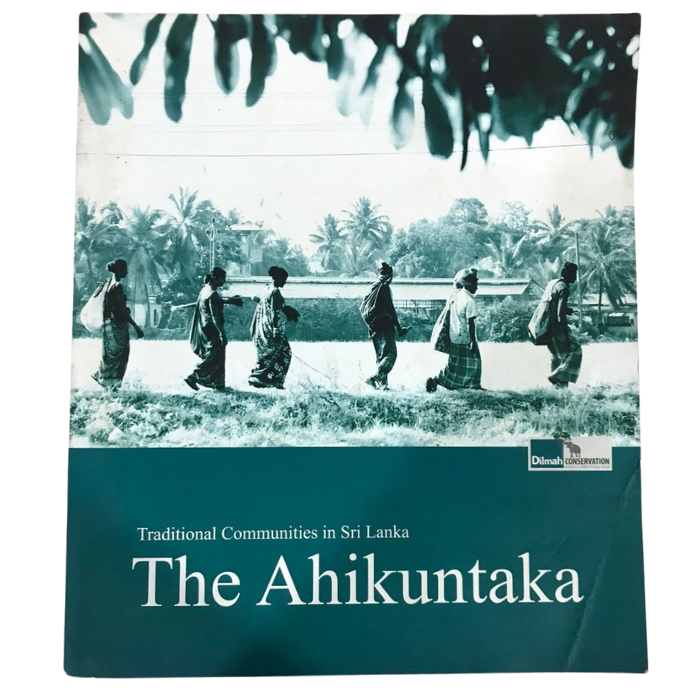


Genre: Anthropology, Sociology, Sri Lankan Studies, Cultural Studies, Ethnography, Nonfiction, Conservation
Ratings: ★★★★☆ (4.5/5)
Book Review:
''Traditional Communities in Sri Lanka: The Ahikuntaka'' is a significant and visually striking contribution to the understanding of Sri Lanka's rich cultural mosaic. Published by Dilmah Conservation, this book shines a necessary spotlight on the Ahikuntaka community—often known as the ''Sri Lankan gypsies'' or snake charmers—a nomadic group with a deep yet frequently overlooked history on the island.
The book serves as a compelling ethnographic and sociological record. It moves beyond stereotypes to explore the community's unique social structure, livelihoods (historically centered around snake charming, fortune-telling, and metalwork), spiritual beliefs, and intricate oral traditions. Through a combination of narrative text and likely rich photographic documentation (characteristic of Dilmah Conservation publications), it brings their daily lives, rituals, and crafts into clear focus.
A key strength is its context within Dilmah's philosophy of ''making business a matter of human service.'' The publication itself is an act of cultural conservation, acknowledging that biodiversity and cultural heritage are inextricably linked. It addresses the challenges of modernity, displacement, and social integration faced by the Ahikuntaka, fostering empathy and understanding.
This book is an invaluable resource for students of anthropology, sociology, and Sri Lankan studies, as well as for any reader interested in the island's subcultures. It is more than an academic text; it is a respectful portrait that preserves and honors the identity of a community at a time of great social change. For those seeking to comprehend the full diversity of Sri Lanka, this volume is an essential and enlightening read.