Free Support 24/7
011 208 1308

Free Support 24/7
011 208 1308

Ratings: ★★★★★ (4.6 / 5)
Genre: Military History, European History, Napoleonic Wars
Book Review:
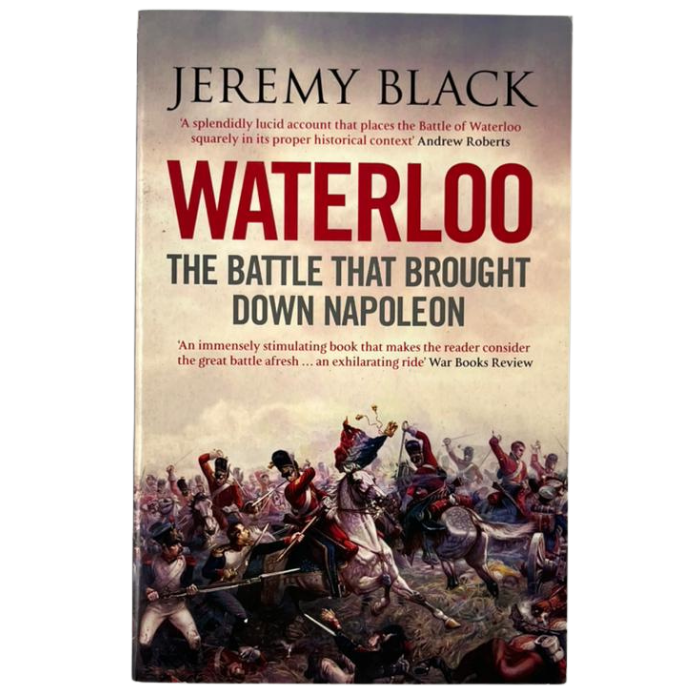
The Battle of Waterloo, fought on Sunday, June 18, 1815, remains one of the most argued-over battles in history. But in the hands of Jeremy Black, one of the world's foremost military historians, this iconic confrontation receives a masterful and concise reinterpretation that places it firmly in its proper historical context.
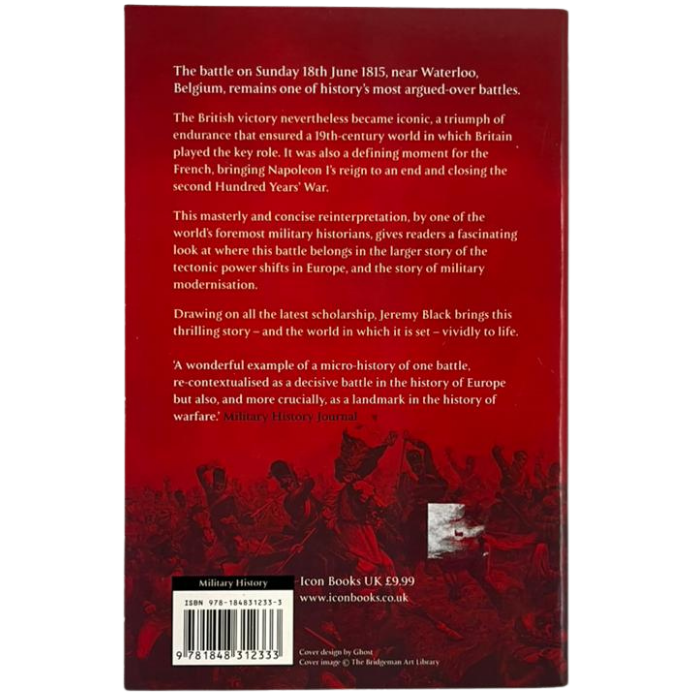
Waterloo: The Battle That Brought Down Napoleon is far more than a simple account of who did what on the battlefield. Black, drawing on all the latest scholarship, gives readers a fascinating look at where this battle belongs in the larger story of the tectonic power shifts in Europe and the story of military modernization. The British victory was not just a triumph of endurance—it ensured a 19th-century world in which Britain played the key role. For the French, it was a defining moment that brought Napoleon I's reign to an end and closed the second Hundred Years' War.
What makes Black's account so valuable is his ability to see the big picture. He doesn't just describe the famous charges, the desperate defenses, and the fateful arrival of the Prussians. He explains why Waterloo mattered—and why it still matters. He explores the technological, political, and social forces that shaped the battle and were shaped by it.
Andrew Roberts praises it as ''a splendidly lucid account that places the Battle of Waterloo squarely in its proper historical context.''
War Books Review calls it ''an immensely stimulating book that makes the reader consider the great battle afresh... an exhilarating ride.''
Military History Journal describes it as ''a wonderful example of a micro-history of one battle, re-contextualised as a decisive battle in the history of Europe but also, and more crucially, as a landmark in the history of warfare.''
For anyone interested in military history, the Napoleonic era, or simply a thrilling story brilliantly told, Waterloo is essential reading. Jeremy Black brings this world-changing event vividly to life.