Free Support 24/7
011 208 1308

Free Support 24/7
011 208 1308

Ratings: ★★★★★ (4.7 / 5)
Genre: Memoir, Biography, African Literature, Political Prisoner, Non-Fiction
Book Review:
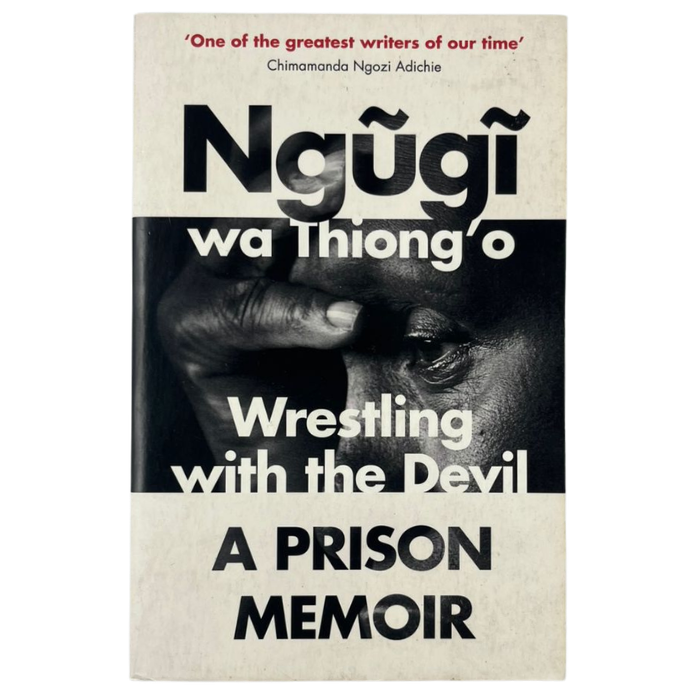
Ngugi wa Thiong'o is one of Africa's most important and influential writers, a novelist, playwright, and essayist whose work has consistently challenged power and given voice to the oppressed. Wrestling with the Devil is his account of the year he spent as a political prisoner in Kenya's Kamiti Maximum Security Prison, and it is a testament to the resilience of the human spirit and the transformative power of imagination.
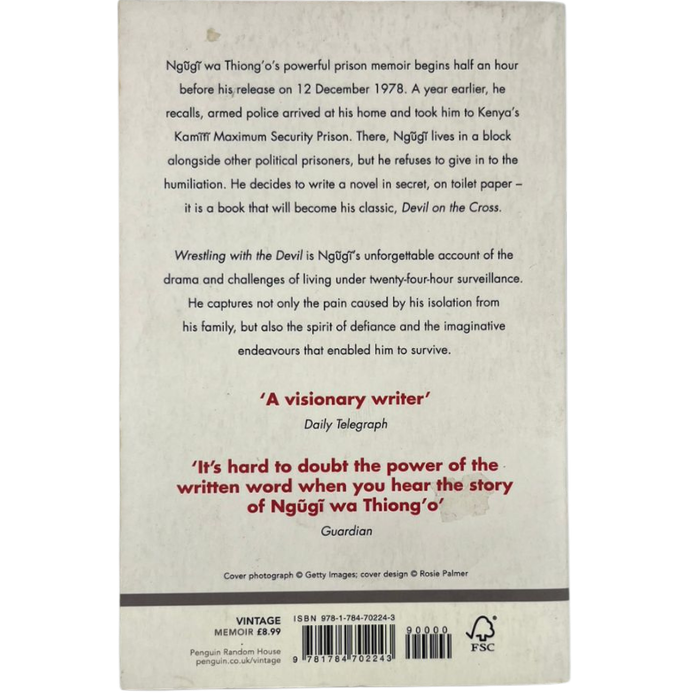
The memoir opens with a powerful image: Ngugi, after a year of imprisonment, is counting down the final half-hour before his release. From there, he flashes back to the day armed police arrived at his home, tore him from his family, and threw him into a cell. For the next year, Ngugi lived in a block with other political prisoners, subjected to constant surveillance, humiliation, and the agony of isolation from his wife and young children.
But Wrestling with the Devil is not simply a chronicle of suffering. It is a story of defiance and creativity. Denied any writing materials, Ngugi decided that he would not let his captors silence him. He began to write a novel in secret, on the only paper he could find: toilet paper. That novel, written in instalments and hidden from the guards, would become Devil on the Cross, one of his most celebrated works. The memoir captures the drama of this clandestine act of creation, the thrill of writing under the noses of the guards, and the sustaining power of the stories he was telling himself.
Ngugi's prose is clear, direct, and deeply moving. He captures not only the pain and degradation of prison life, but also the small acts of kindness among prisoners, the moments of dark humor, and the unbreakable spirit of resistance. He reflects on the role of the writer in society, the power of language, and the courage required to speak truth to power.
Wrestling with the Devil is an unforgettable book, a powerful addition to the literature of imprisonment and a profound meditation on freedom, creativity, and the human will to survive. It is essential reading for anyone interested in African literature, in the politics of resistance, or simply in the incredible story of a man who refused to be silenced. As Chimamanda Ngozi Adichie says on the cover, Ngugi is ''one of the greatest writers of our time,'' and this memoir shows us why.

130402-img.png)