Free Support 24/7
011 208 1308

Free Support 24/7
011 208 1308


Ratings: ★★★★☆ (4.5/5)
Genre: Buddhist Studies / Religious Studies / Gender Studies
Book Review:
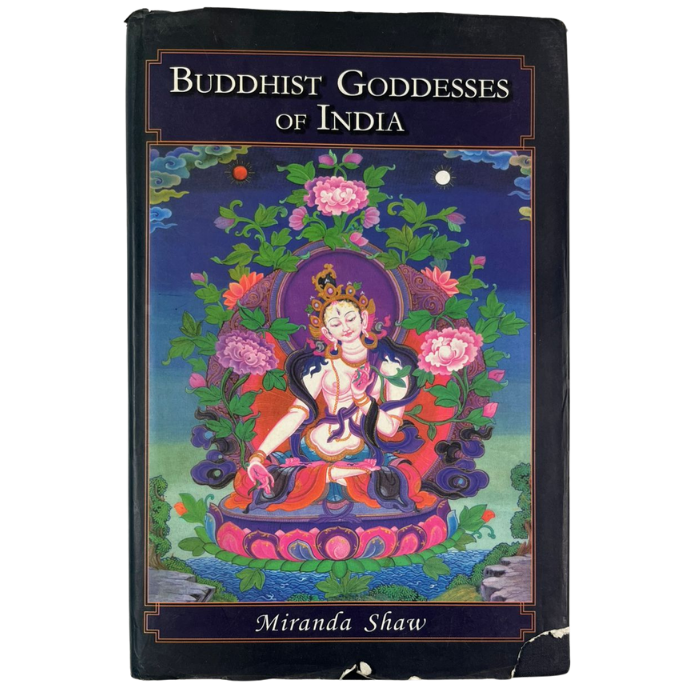
Miranda Shaw's ''Buddhist Goddesses of India'' is a groundbreaking and meticulously researched work that illuminates a often overlooked dimension of Buddhist tradition: the rich array of feminine divine figures that have been venerated across the Indian subcontinent for centuries. Following her acclaimed ''Passionate Enlightenment: Women in Tantric Buddhism,'' Shaw once again demonstrates her ability to bring fresh perspectives to Buddhist studies.
The book's scope is impressive. Shaw traces the development of Buddhist goddesses from their origins in early Indian Buddhism through their flourishing in Mahayana and Vajrayana traditions. She examines a wide range of figures: Tara, the most famous Buddhist goddess, who embodies compassion and protective power; Prajnaparamita, the goddess of transcendent wisdom; Vasudhara, the goddess of abundance; and many others, including local and regional deities who were incorporated into the Buddhist pantheon.
What makes Shaw's approach so valuable is her combination of textual analysis, art historical research, and attention to lived practice. She doesn't just tell us what the scriptures say about these goddesses; she shows how they were visualized in paintings and sculptures, how they were invoked in rituals, and how devotees experienced their presence. The result is a multidimensional portrait that brings these figures to life.
Shaw is particularly attentive to questions of gender and power. She explores how Buddhist goddesses both reflected and challenged prevailing attitudes toward women and the feminine. Some goddesses embody qualities—compassion, wisdom, protective power—that transcend gender categories. Others engage in iconographic traditions that raise complex questions about the female body and enlightenment. Shaw handles these sensitive topics with scholarly rigor and feminist insight.
The book is beautifully illustrated, with numerous plates showing representations of goddesses in various artistic traditions and historical periods. These images are not merely decorative; they are integral to Shaw's argument about how these figures were understood and experienced.
For readers already familiar with Shaw's work, this book will be a welcome addition. For those new to her scholarship, it serves as an excellent introduction to her approach. And for anyone interested in Buddhism, goddess traditions, or the intersection of religion and gender, ''Buddhist Goddesses of India'' is essential reading.
The publication by Munshiram Manoharlal, a respected Indian publisher of scholarly works on religion and philosophy, ensures that the book meets high production standards. It is a volume that belongs in every serious library of Buddhist studies.
Highly recommended for scholars, students, and general readers interested in exploring the feminine divine in Buddhism. Shaw has given us a work of lasting value.