Free Support 24/7
011 208 1308

Free Support 24/7
011 208 1308

Ratings: ★★★★☆ (4/5)
Genre: Philosophy, Buddhism, Eastern Philosophy, Religion, History, Sri Lankan Studies.
Book Review:
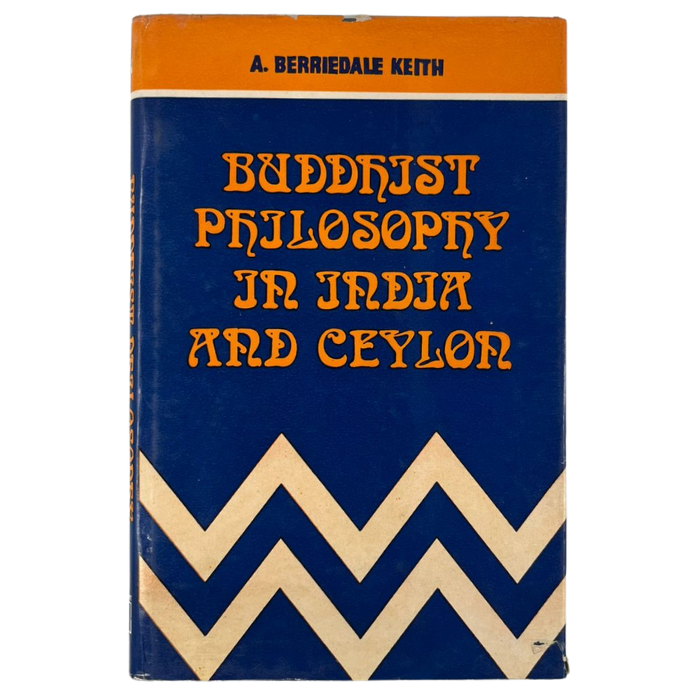
A. Berriedale Keith's ''Buddhist Philosophy in India and Ceylon'' remains a significant scholarly resource for understanding the philosophical underpinnings and historical development of Buddhism. Keith, a renowned Orientalist, brings his deep knowledge of Sanskrit and Pali texts to bear on this comprehensive study.
The book meticulously traces the evolution of Buddhist thought from its origins in the Indian subcontinent, examining its relationship with Vedic and Upanishadic traditions, to its flourishing and unique development in Ceylon (Sri Lanka). Keith explores core doctrines such as the Four Noble Truths, the Noble Eightfold Path, the concepts of karma and rebirth, and the intricate debates surrounding the self (Atman) and non-self (Anatta). He also delves into the distinctions between the major schools of Buddhism, particularly the Theravada and Mahayana traditions.
Written in a clear, academic style, this work is best suited for students of philosophy, religious studies, and Indology. While some of its conclusions may reflect early 20th-century scholarship, it provides a solid foundation and a valuable historical perspective on the philosophical journey of Buddhism across two key ancient civilizations. It is a worthy addition to any serious collection on Buddhist thought.