Free Support 24/7
011 208 1308

Free Support 24/7
011 208 1308

Ratings: ★★★☆☆ (3.5 / 5)
Genre: Ancient Astronauts, Pseudoarchaeology, Unexplained Mysteries, Non-Fiction
Book Review:
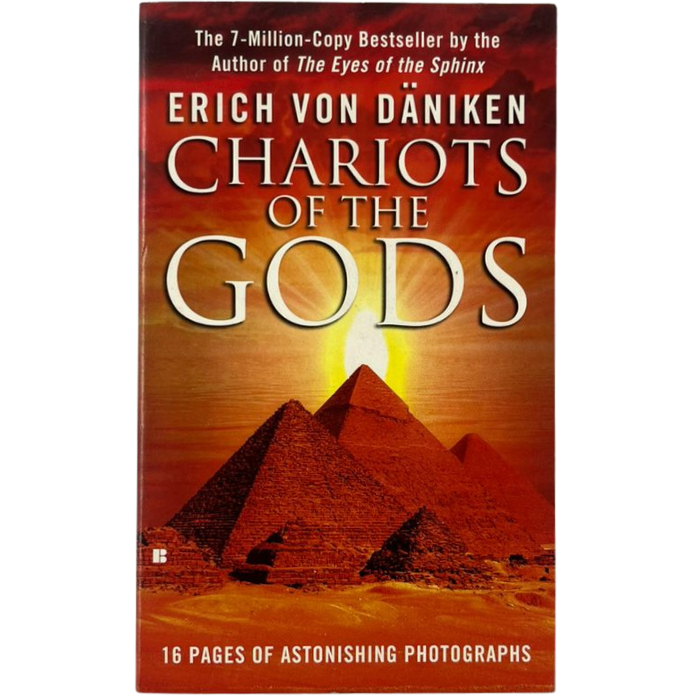
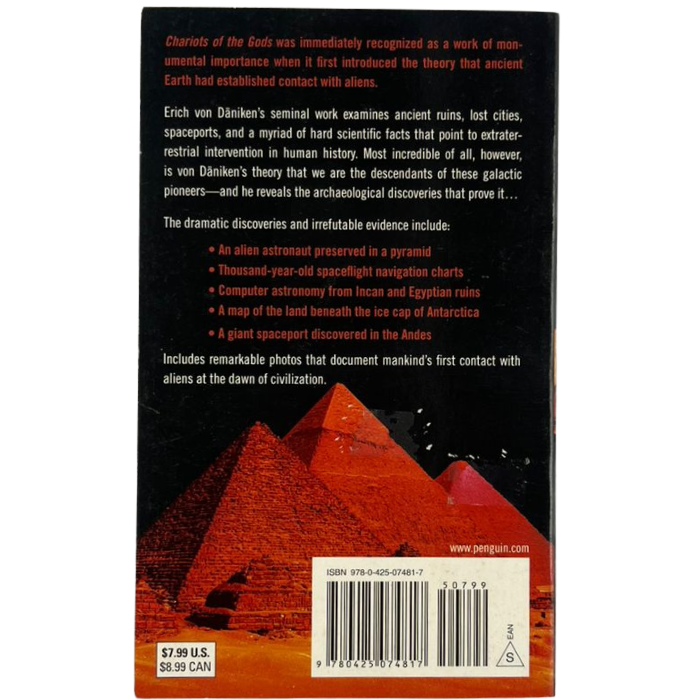
Erich von Däniken's Chariots of the Gods is a cultural phenomenon. First published in 1968, this book took the world by storm, selling millions of copies and sparking a global fascination with the idea that Earth was visited by extraterrestrial beings in its ancient past. It is a book that asks the most provocative questions: Were the great monuments of antiquity—the pyramids, Stonehenge, the Easter Island statues—built with the help of advanced technology from another world? Are the gods described in ancient texts actually astronauts in spaceships?
Von Däniken's thesis, known as the ''ancient astronaut theory,'' is presented with breathless enthusiasm. He takes readers on a whirlwind tour of the globe, pointing out archaeological anomalies that he believes cannot be explained by conventional history. He interprets ancient cave paintings as depictions of astronauts, describes the Nazca Lines in Peru as a landing strip for alien spacecraft, and suggests that the biblical Ark of the Covenant was an electrical device. The book is filled with questions and speculations, all designed to make the reader question everything they thought they knew about the past.
The book's strength lies in its ability to inspire wonder and curiosity. It encourages readers to look at ancient mysteries with fresh eyes. However, it is important to note that the vast majority of archaeologists, historians, and scientists have thoroughly debunked von Däniken's theories, pointing out factual errors, misrepresentations of evidence, and a lack of scientific rigor. The book is not accepted as a work of science, but rather as a work of speculative and pseudoarchaeological fiction.
For readers interested in the history of ideas, or in understanding the origins of the popular ''ancient aliens'' genre, Chariots of the Gods is essential reading. It is a fascinating, if deeply flawed, book that has captivated millions and continues to provoke debate. Approach it with an open mind, but also a healthy dose of skepticism. It is a journey into the world of ''what if,'' rather than a reliable guide to what was.