Free Support 24/7
011 208 1308

Free Support 24/7
011 208 1308

ratings: ★★★★★ (4.8/5)
Genre: Buddhist Philosophy, Religious Studies, Epistemology, Sri Lankan Scholarship
Book Review:
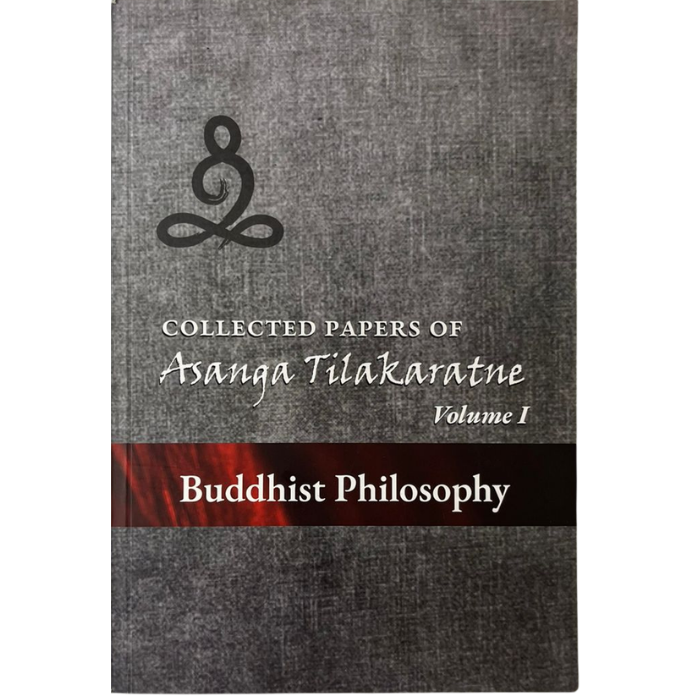
''Collected Papers of Asanga Tilakaratne: Volume I - Buddhist Philosophy'' is a monumental collection that showcases the profound and influential scholarship of one of Sri Lanka's foremost contemporary Buddhist philosophers. This volume brings together a selection of Tilakaratne's most important papers, offering readers a comprehensive view of his rigorous and insightful engagement with Buddhist thought.
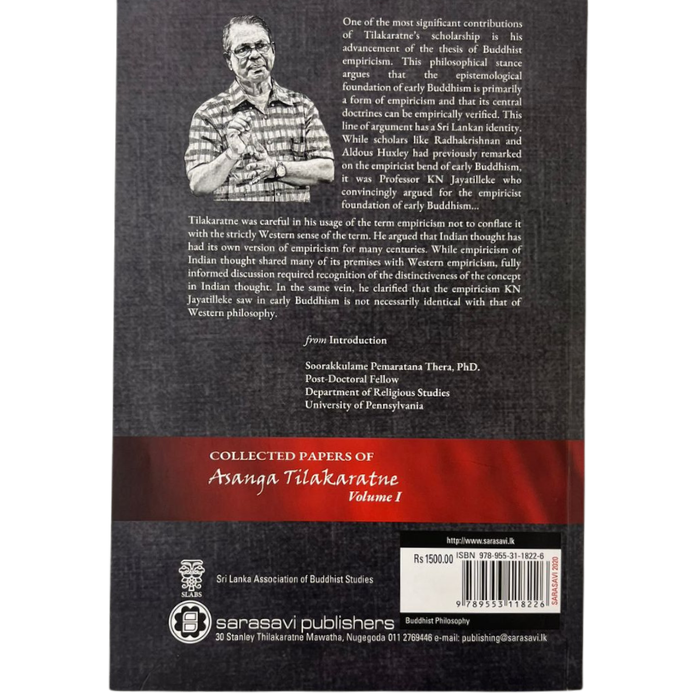
The central and most compelling theme of this collection is Tilakaratne's nuanced exploration of ''Buddhist Empiricism.'' Building upon the foundational work of his predecessor, Professor K.N. Jayatilleke, Tilakaratne carefully articulates the thesis that early Buddhism's epistemological foundation is primarily empirical. He argues that its core doctrines are not mere articles of faith but are subject to verification through personal experience and investigation.
What makes Tilakaratne's contribution so significant is his careful and critical handling of the term ''empiricism'' itself. He is meticulous in distinguishing the Buddhist version of empiricism from its strictly Western counterparts. He demonstrates that while Indian thought, particularly Buddhism, shares certain premises with Western empiricism (such as reliance on experience), it possesses its own distinctive character and framework. A fully informed philosophical discussion, he insists, must recognize this distinctiveness.
This volume is not just a collection of essays; it is a testament to a lifetime of dedicated philosophical inquiry. Tilakaratne's writing is clear, scholarly, and deeply respectful of both the Buddhist tradition and the Western philosophical canon. The introduction by Dr. Soorakkulame Pemaratana Thera of the University of Pennsylvania provides an excellent overview of Tilakaratne's significance.
For any serious student of Buddhist philosophy, epistemology, or comparative philosophy, this book is an indispensable resource. It represents the best of Sri Lankan Buddhist scholarship and makes a vital contribution to the global understanding of Buddhism as a rational and empirically-grounded tradition.