Free Support 24/7
011 208 1308

Free Support 24/7
011 208 1308

Ratings: ★★★★☆ (4.5/5)
Genre: Folklore / Cultural Studies / Sri Lankan Studies
Book Review:
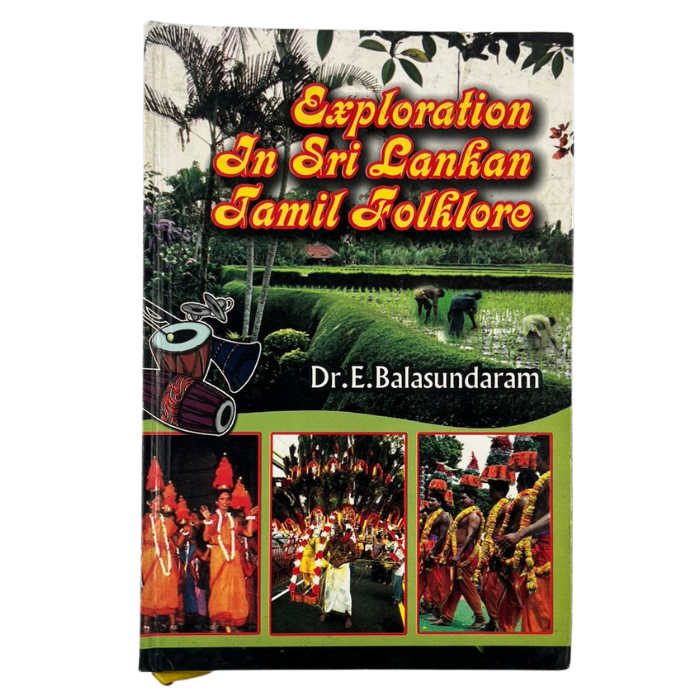
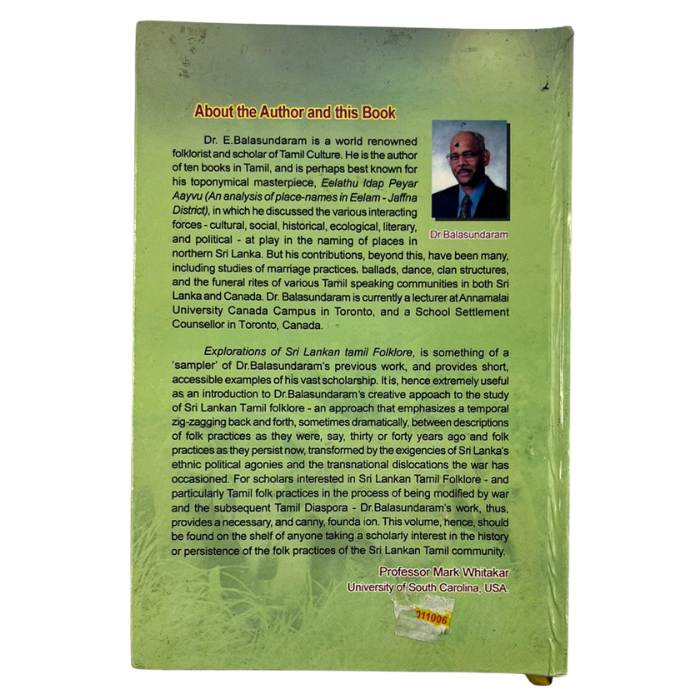
Dr. E. Balasundaram's ''Exploration in Sri Lankan Tamil Folklore'' is a valuable contribution to the study of Tamil culture in Sri Lanka, offering readers an accessible entry point into the work of a world-renowned folklorist. As Professor Mark Whitaker of the University of South Carolina notes in his introduction, this volume serves as a ''sampler'' of Balasundaram's previous work, providing short, accessible examples of his vast scholarship.
Balasundaram is uniquely qualified to write this book. The author of ten books in Tamil, he is perhaps best known for his toponymical masterpiece, ''Eelathu Idap Peyar Aayvu'' (An Analysis of Place-Names in the Jaffna District of Sri Lanka), in which he examined the cultural, social, historical, ecological, literary, and political forces that shaped place-names in northern Sri Lanka. But his contributions extend far beyond this, encompassing studies of marriage practices, ballads, dance, clan structures, and funeral rites among Tamil-speaking communities in both Sri Lanka and Canada.
What makes this book particularly valuable is its innovative approach. Balasundaram emphasizes what Whitaker calls ''a temporal zig-zagging back and forth'' between descriptions of folk practices as they were thirty or forty years ago and as they persist now, transformed by the exigencies of Sri Lanka's ethnic conflict and the transnational dislocations of the Tamil diaspora. This approach captures the dynamic nature of folklore, showing how traditions adapt and change in response to historical circumstances.
The book covers a wide range of topics, each illuminated by Balasundaram's deep knowledge and creative approach. Readers will learn about traditional marriage customs, the role of ballads in Tamil culture, the significance of dance, the structure of clans, and the rituals surrounding death. Throughout, Balasundaram shows how these practices are not static relics of the past but living traditions that continue to evolve.
For scholars interested in Sri Lankan Tamil folklore, this book is essential reading. For students of anthropology and cultural studies, it offers a model of how to study folklore in contexts of conflict and diaspora. And for anyone seeking to understand Tamil culture in Sri Lanka, it provides a window into a rich and complex tradition.
Balasundaram currently lectures at Annamalai University Canada Campus in Toronto and works as a School Settlement Counsellor, bringing his scholarly expertise to bear on the challenges facing Tamil communities in the diaspora. This book reflects that dual commitment to scholarship and community.