Free Support 24/7
011 208 1308

Free Support 24/7
011 208 1308

Ratings: ★★★☆☆ (3.5/5)
Genre: Erotic Romance, Contemporary Romance, BDSM Fiction, Adult Fiction
Book Review:
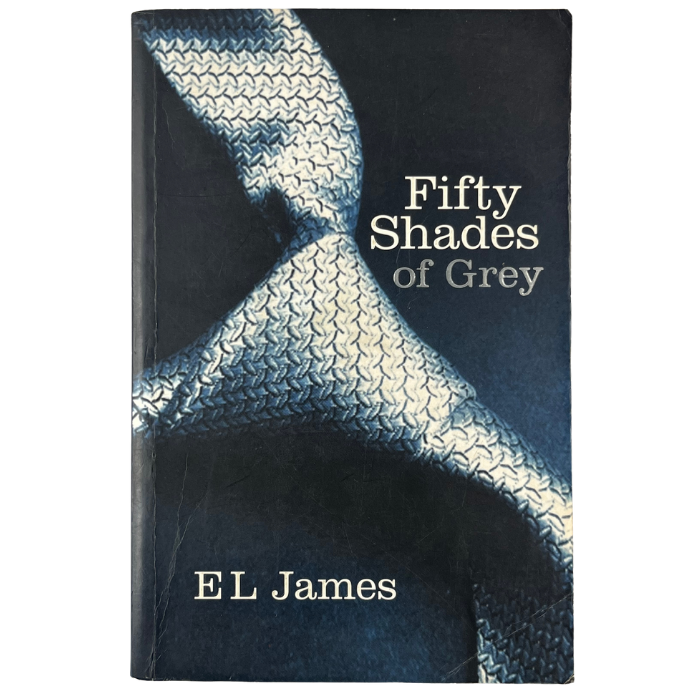
Few novels in recent memory have sparked as much conversation, controversy, and cultural impact as E.L. James's ''Fifty Shades of Grey.'' Love it or hate it, this book is a phenomenon—a publishing sensation that brought erotic fiction into the mainstream and sold over 100 million copies worldwide. But beyond the hype and the heated debates, what is the book actually like?
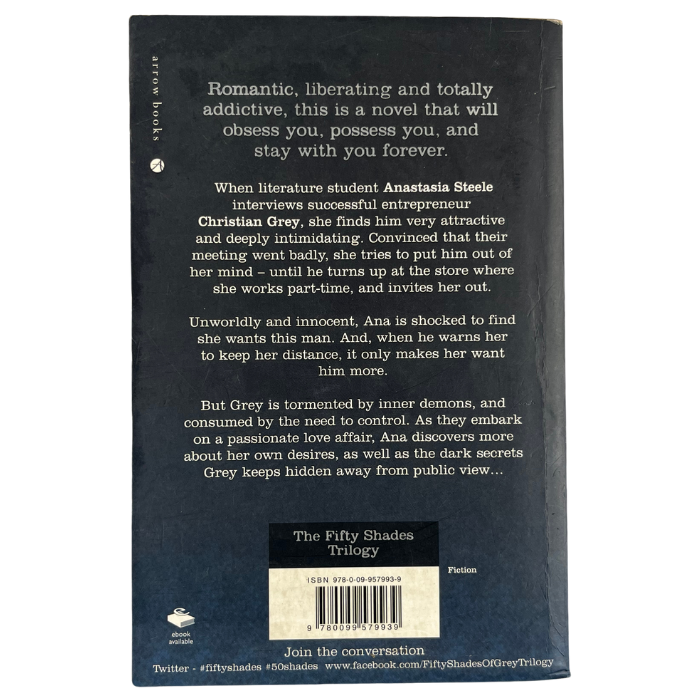
The story begins innocently enough: Anastasia Steele, a quiet, awkward literature student, interviews Christian Grey, a handsome and impossibly successful young billionaire, for her college newspaper. Their chemistry is immediate, though Ana is intimidated by Christian's intensity. When he shows up at the hardware store where she works part-time, their relationship begins in earnest.
But Christian is not your typical romantic hero. He's a man consumed by the need for control, haunted by inner demons from a traumatic childhood. He introduces Ana to his world of BDSM—bondage, discipline, dominance, submission, sadism, and masochism—and proposes a contract that would make her his submissive. Ana, innocent and inexperienced, must decide if she can accept his terms, even as she falls deeper under his spell.
The novel is written entirely from Ana's perspective, which gives readers intimate access to her thoughts, her confusion, her arousal, and her growing self-awareness. James's prose is simple and accessible, though critics have noted its reliance on repetition and cliché. (The phrase ''inner goddess'' appears frequently enough to become its own meme.) The dialogue can be stilted, and the pacing sometimes drags, particularly in the middle sections where the contract negotiations stretch on.
What the book does effectively is capture the intensity of new desire—the obsession, the inability to think of anything else, the physical yearning that consumes everything. Ana's journey of sexual awakening is compelling, and her internal conflict between what she wants and what she's afraid of feeling is relatable. Christian Grey, for all his flaws, is a fascinating character—damaged, controlling, but also vulnerable in ways that make him intriguing.
However, the novel has faced significant criticism, and much of it is valid. The power dynamics in the relationship are deeply problematic; Christian's behavior—tracking Ana's phone, showing up uninvited, dictating what she eats and wears—would be classified as abusive in any real-world context. The romanticization of this controlling behavior has concerned many readers and critics. Additionally, the portrayal of BDSM has been criticized by members of the kink community as inaccurate and potentially harmful, presenting a lifestyle based on trust and mutual consent as something dark and damaging.
Despite these issues, ''Fifty Shades of Grey'' clearly struck a chord with millions of readers. It opened conversations about female desire, sexuality, and fantasy that had long been taboo in mainstream culture. It gave women permission to explore their own fantasies and desires, at least in the privacy of their own reading. For that reason alone, its cultural significance cannot be dismissed.
Is it great literature? No. Is it an entertaining, page-turning read that will keep you engaged? For many readers, yes. It's the literary equivalent of a guilty pleasure—a book you might feel embarrassed to be seen reading on the train, but that you can't put down once you start.
Approach it with an awareness of its flaws, and you might find yourself swept up in its world. Just remember: Christian Grey is a fantasy, not a relationship goal.

040929-img.png)